
What makes kemari a living link to Japan’s past?
kemari: Japan’s ancient courtly ball game Kemari traces back more than a thousand years to imperial courts and ritual gardens. Because it began among Heian…

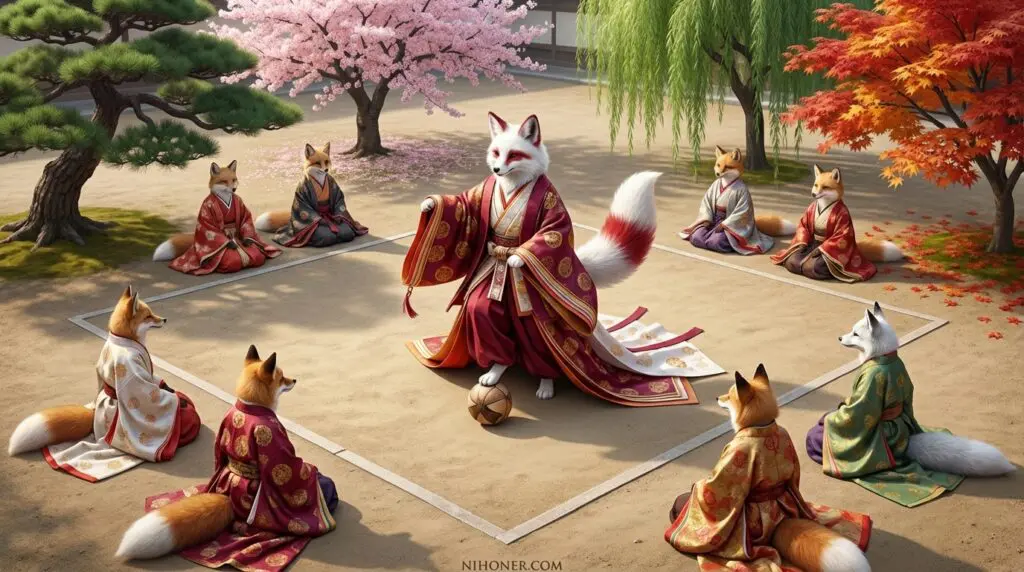
kemari: Japan’s ancient courtly ball game Kemari traces back more than a thousand years to imperial courts and ritual gardens. Because it began among Heian…

Are 運ぶ (hakobu) and 箱 (hako) related? Etymology and cognacy in Japanese Are 運ぶ (hakobu) and 箱 (hako) related? Etymology and cognacy in Japanese is…

object of state change (を) in Japanese grammar: Honorifics and State-Change Forms The object of state change (を) in Japanese grammar anchors this article on…

Japanese Particle も Usage The nuance and emphatic use of も is deceptively compact yet richly expressive. Here も is romanized as mo and translates…

Are 箱 (hako) and 運ぶ (hakobu) related? Etymology is the central question of this article. This introduction sets the scope and explains the method. It…

Understanding the Nuance of も in Japanese Grammar: Inclusive も Explained This article explores the nuance of も in Japanese grammar (inclusive も). It focuses…

Japanese で particle usage Japanese で particle usage matters more in conversation than many learners expect. Because particles carry nuance, a single particle changes meaning…

In the Year of the Horse: A Guide to Japan’s Horse Shrines In the Year of the Horse, Japan’s horse shrines glow with particular meaning.…

かしこい (kashikoi, “intelligent”): a quick historical curiosity What this introduction covers Many learners encounter the modern adjective かしこい (kashikoi, “intelligent”) and then find older forms.…

This article explores the etymology of verbs starting with あや Do verbs like 怪しむ, 謝る, 誤る, 操る, and 肖る share a common origin? We ask…