Why Itadakimasu and Gochisousama deshita meaning and etiquette matter?


Understanding Itadakimasu and Gochisousama Deshita: Meaning and Etiquette
In the realm of Japanese dining culture, two phrases hold significant importance: “Itadakimasu” and “Gochisousama deshita.” For many, these words might just seem like simple expressions of gratitude, similar to saying grace before or after a meal. However, they carry a depth that reflects the unique Japanese perception of food, respect, and interconnectedness.
“Itadakimasu,” meaning “I humbly receive,” is said before eating, focusing on gratitude for the ingredients and those who prepared the meal. In contrast, “Gochisousama deshita,” or “That was a feast,” is expressed post-meal to appreciate the effort and care put into its preparation. Understanding these phrases goes beyond vocabulary; it delves into values deeply rooted in Japanese customs and spiritual beliefs.
Itadakimasu and Gochisousama deshita Meaning and Etiquette
Itadakimasu (itadakimasu) meaning “I humbly receive” is the kenjougo form of the verb morau (morau) meaning “to receive” and it expresses respect before eating. Because the kanji 頂 (kanji: 頂, itadaki) carries meanings like “the top of the head” and “to receive,” the phrase links language to humility and gratitude.
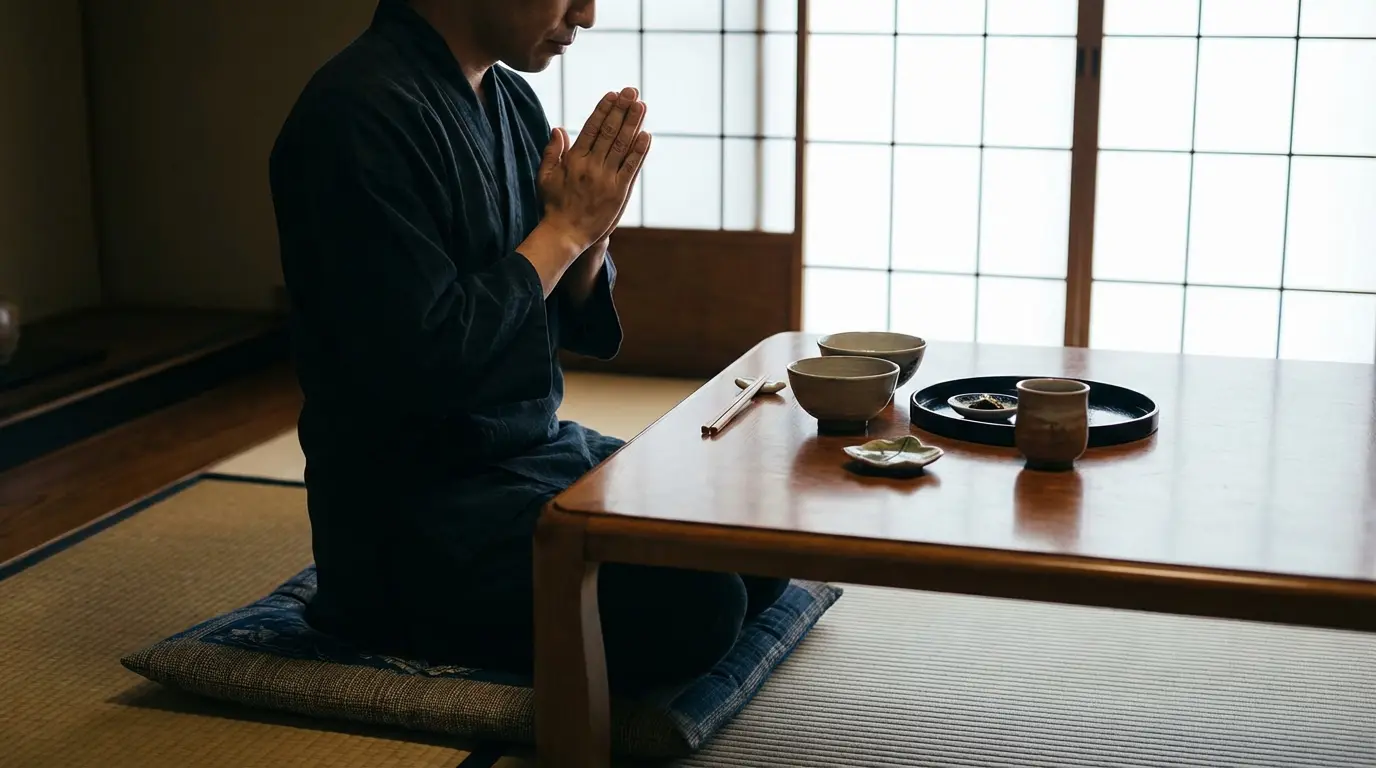
In practice, people often perform gassho (gassho) meaning “palms pressed together” as a short bow and then begin the meal. In addition, Itadakimasu reflects Buddhist and Shinto influence by acknowledging that ingredients and living things have value and spirit, and that eating is receiving a gift from nature.
Etiquette wise, meals normally do not start until everyone has the chance to say it. For example, in group dining wait until all plates arrive, then give the phrase and a small bow. Also, Itadakimasu can be used when accepting food items or simple offerings, but not for non-physical favors where arigatou gozaimasu is more appropriate.
If you want to practice the timing and gestures, try the guided practice exercises on Nihoner to build confidence and track small wins: practice exercises.
Progress tracking promise: Join for free and see clear steps to improve meal time etiquette while tracking your progress at your own pace: Join Nihoner.
Checkpoint: Say Itadakimasu to show gratitude and start a meal with mindfulness.
Gochisousama Desu and Gochisousama Deshita
Gochisousama desu and Gochisousama deshita are the polite phrases said after a meal to show thanks and respect.
Gochisousama desu means “thank you for the meal” in casual polite contexts. Gochisousama deshita signals the meal is finished and adds formality. Use the past form for restaurants or when someone served you. The choice highlights timing and respect in dining etiquette.
The word 馳走 (gochisou) is written with kanji 馳走. 馳走 (gochisou) meaning “feast” comes from 馳 which contains the horse radical 馬 (uma) meaning “horse”. Historically the kanji evokes a host who hurried to gather food. This image explains why the phrase thanks effort and generosity.
Quick Usage Guide
- Say Gochisousama desu to the cook or host after you finish eating.
- Use Gochisousama deshita when you are leaving a restaurant or speaking more formally.
- Combine the phrase with a slight bow to show appreciation.
Premium Pronunciation Help
For accurate intonation, Nihoner premium offers native audio to hear how phrases should sound. This feature helps you mimic natural rhythm and nail polite endings. Learn more at Nihoner Premium and practice aloud.
Micro Win Invitation
Try saying Gochisousama desu after your next meal and notice the positive response. Register for guided practice and small victories: Nihoner Registration.
Checkpoint: Use the past form for formal thanks and a small bow to show sincerity.
This comparison summarizes Itadakimasu and Gochisousama deshita meaning and etiquette.
For clarity, the table below highlights practical differences.
| Phrase | Meaning | When to Say | Gesture | Kanji and Etymology | Typical Usage | Cultural Significance |
|---|---|---|---|---|---|---|
| Itadakimasu | • “I humbly receive” • kenjougo of morau (morau) meaning “to receive” | • Before eating • When all food is served • In group dining wait for others | • gassho (gassho) meaning “palms pressed together” • slight bow | • 頂 (kanji: 頂, itadaki) meaning “top of the head; to receive” • links humility and receiving | • Home meals, school lunches • When accepting food or small offerings | • Shows gratitude to nature and ingredients • Reflects Buddhist and Shinto influence |
| Gochisousama desu / Gochisousama deshita | • “Thank you for the meal” • Expresses appreciation for effort and generosity | • After eating • Use desu when speaking casually now • Use deshita for past or more polite contexts such as leaving a restaurant | • Slight bow toward host or server • Can be spoken aloud to the cook | • 馳走 (kanji: 馳走, gochisou) • 馳 contains the horse radical 馬 (uma) meaning “horse” • Evokes a host hurrying to prepare a feast | • To the cook, host, or server • When someone paid or provided the meal | • Acknowledges labor and generosity • Completes the meal ritual |
Understanding Itadakimasu and Gochisousama deshita
Understanding Itadakimasu and Gochisousama deshita meaning and etiquette is a small step with big cultural impact. For learners, these phrases connect language to social values. They teach respect, timing, and mindfulness at the table. In addition, mastering them helps you navigate meals with confidence in Japan.
Nihoner.com acts as an all in one platform built for real progress, not just memorization. The site gives clear lessons and measurable steps so you know what to study next. Features include:
- Large dictionary with native style pronunciation for authentic listening practice
- Structured courses that guide you from basics to real conversation
- Smart SRS flashcards that reinforce what you forget and strengthen recall
- Quizzes and game based practice for active review and retention
- Cultural guides that explain etiquette, timing, and gestures
Because Nihoner focuses on speed, clarity, and consistency, you will see steady improvement. In other words, the path to speaking with confidence becomes clearer and more reliable. In addition, progress tracking shows where you have improved and what to practice next.
Confidence booster: Try a short daily practice and watch your meal time phrases feel natural. Register for guided lessons and ongoing support here: guided lessons and ongoing support.
Checkpoint: Learn the words, follow the gestures, and practice regularly to speak with genuine confidence.
Frequently Asked Questions (FAQs)
When should I say Itadakimasu?
Say Itadakimasu (itadakimasu) meaning “I humbly receive” before you begin eating. It is the kenjougo form of morau (morau) meaning “to receive” and shows gratitude for ingredients and people. In group dining wait until everyone has a serving. Many people press their palms together in gassho (gassho) meaning “palms pressed together” then bow slightly.
Is Itadakimasu the same as saying grace?
No. Itadakimasu expresses horizontal gratitude to food and those involved. It reflects Buddhist and Shinto influence rather than addressing a single deity. Therefore the focus is on interconnectedness and respect for life.
When do I use Gochisousama desu versus Gochisousama deshita?
Gochisousama desu (gochisousama desu) means “thank you for the meal” when speaking casually after finishing. Use Gochisousama deshita (gochisousama deshita) to add formality or to thank a host in a restaurant. The word 馳走 (gochisou) combines 馳 with the horse radical 馬 (uma) meaning “horse” and evokes a host hurrying to prepare a feast.
What gestures or table items relate to these phrases?
A slight bow is common after saying either phrase. Use a hashioki (hashioki) meaning “chopstick rest” to signal you have finished. Placing chopsticks on the rest shows polite completion.
Can I use Itadakimasu for non food items or favors?
Use Itadakimasu when accepting food or small offerings. For favors or non physical help say arigatou gozaimasu (arigatou gozaimasu) meaning “thank you”.
Progress visibility promise: Join to follow clear steps and track your dining etiquette progress at your own pace. Registration for Membership.