Which Year of the Horse Shrines Should You Visit?

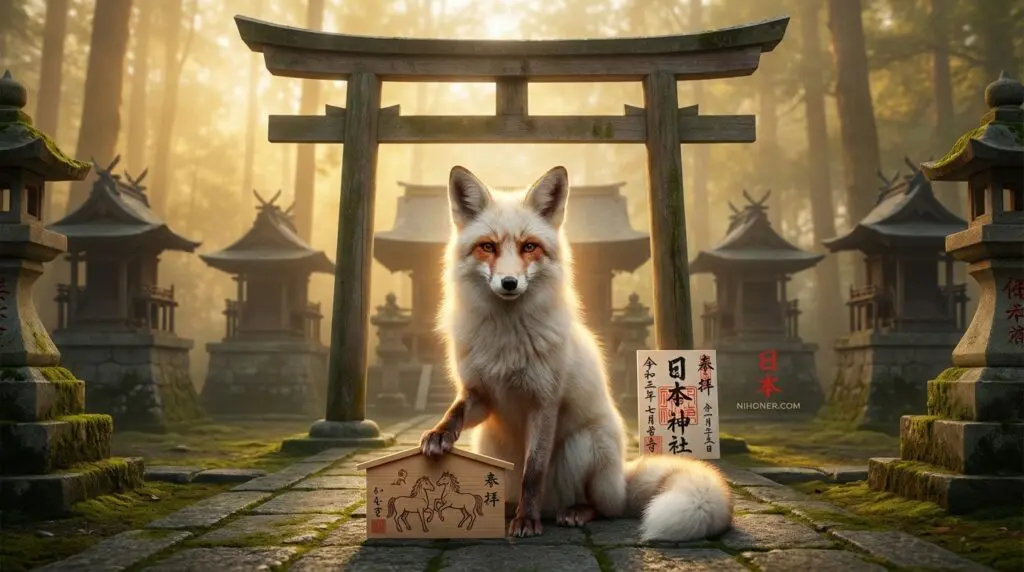
In the Year of the Horse: A Guide to Japan’s Horse Shrines
In the Year of the Horse, Japan’s horse shrines glow with particular meaning. Across shrines, lacquered horse effigies and wind-tossed banners stir memories of an older world. Step into mossy torii gates and you will sense the long bond between people and horse. This guide invites travelers to witness that bond.
Horses arrived in Japan from the Asian continent by the fifth century, and they quickly took on sacred roles. The Shoku Nihongi records horses presented to the deities, therefore priests treated them as messengers of kami. From the Heian period, ceremonies with decorated horses became national rituals to pray for rain, good weather, and peace. As a result, horse imagery settled deep into shrine life.
Shinto still honors sacred horses today. For example, Kamigamo Shrine keeps a sacred horse, and Ise Shrine receives a gift horse from the imperial household. Meanwhile regional shrines stage processions and rites that echo samurai era ceremonies. You will find goshuin stamp offerings, ema with horse motifs, and mikuji fortunes shaped like equine figures.
Travel here on foot and with patience. Each shrine reveals layers of history, folklore, and ritual. Therefore this travel guide focuses on five must visit horse themed shrines. It will help you plan reverent and memorable visits across Japan.
Year of the Horse: From Arrival to Sacred Status
Horses first appear in Japanese records in the fifth century. They arrived from the Asian continent, most likely via Korea, and changed warfare and transport. Because of their power, early elites prized horses as symbols of authority and wealth. Over time, people began to see them as messengers to the gods.
The Shoku Nihongi records horses offered to deities, therefore priests treated them as sacred animals and living offerings. For more context, see an accessible summary of horse worship and Shinto practices at Greenshinto. Meanwhile modern guides outline how horses remain important at shrines today, as shown in this travel feature: Nippon.com.
Year of the Horse: Heian Ceremonies and Court Rituals
During the Heian period, ceremonies with decorated horses grew into state rituals. Therefore rulers used mounted parades to pray for rain, good weather, and national peace. The imperial court also staged inspections and races, which later influenced local festivals. The Kyoto Imperial Palace provides information on historic court horse rites at Kyoto Gosho.
Key milestones
- Fifth century arrival from the continent and rapid court adoption
- Shoku Nihongi notes live horse offerings to kami
- Heian ceremonial parades and kakeuma style rites
- Later evolution into ema horse plaques and goshuin stamp motifs
Anecdote and quote
At Kamo Shrine, an imperial pasture once kept warhorses for training and ritual races. As a result, locals still recall the seven horse procession from May 6. One visitor wrote, “Watching the sacred horse pass the torii felt like touching a thousand years of prayer.”
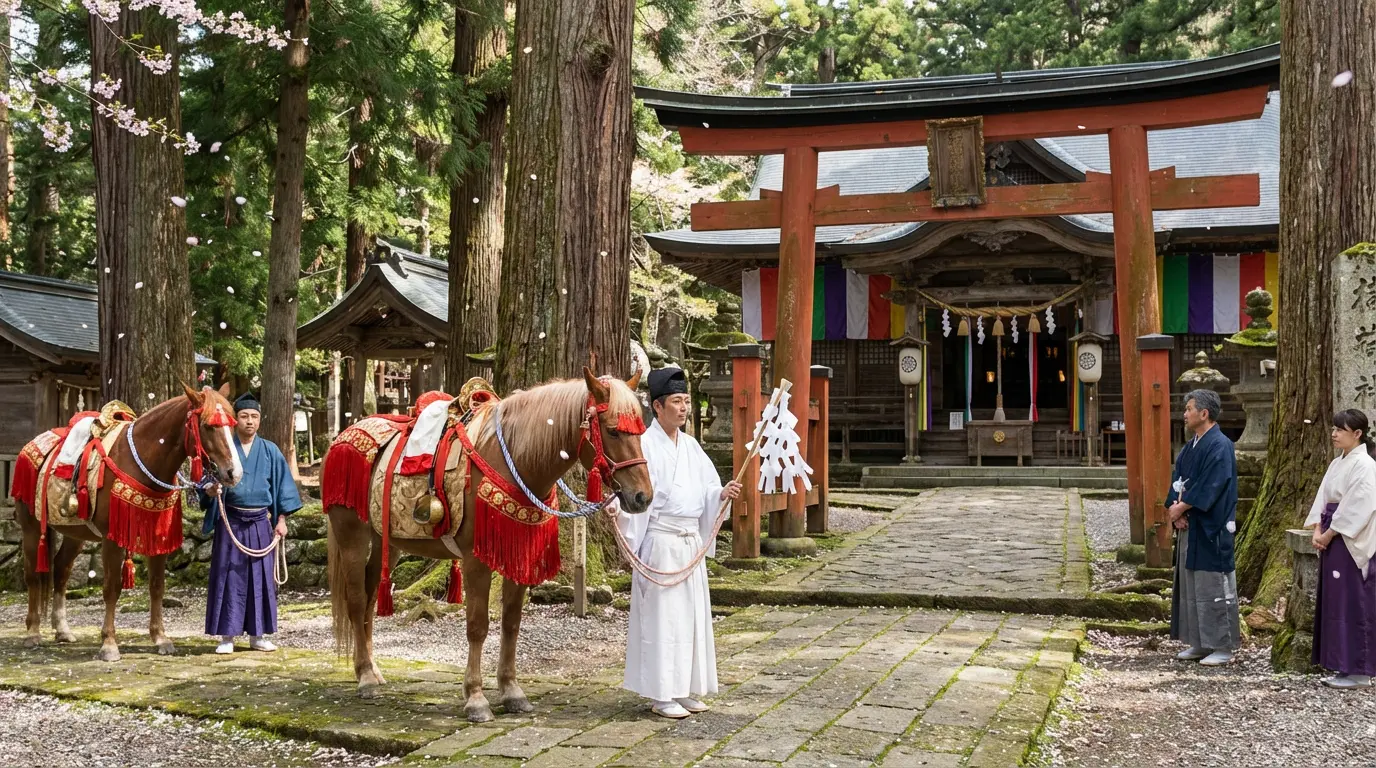
A reverent Shinto horse ceremony at a shrine with two elaborately decorated horses, attendants in traditional robes, a mossy stone path, and a vermilion torii gate framed by falling cherry blossom petals.
Year of the Horse: Five Horse-themed Shrines to Visit
Discover five shrines where horses shape ritual, story, and festival. Each site links ancient practice with present-day devotion. Therefore plan visits with respect for ceremony and quiet observation.
Fujinomori Shrine, Kyoto
- Historical background: Founded according to tradition in 203 by Empress Jingū and later protected Kyoto’s southern approaches under Emperor Kanmu. The shrine blends imperial legend with local devotion.
- Cultural and religious significance: The shrine preserves musha gyōretsu warrior processions and horse motifs used to pray for victory and protection.
- Festivals and rituals: The Shinshinsai festival in November offers exclusive goshuin stamps and horse-shaped mikuji fortunes. The Fujinomori Stakes at Kyoto Racetrack links sport and shrine thanks.
- Folklore and stories: Locals attribute victories and seasonal blessings to shrine prayers. As a result, racehorse owners have long offered thanks here.
- Practical note: Look for ema (ema, eh-ma, wooden prayer plaques) bearing horse paintings, and ask at the office about limited goshuin stamp (goshuin, go-shoo-in, shrine seal) designs.
Read a practical travel piece with shrine highlights at Nippon Guide.
Kamigamo Shrine, Kyoto
- Historical background: Founded in 736, Kamigamo once hosted imperial pastures for warhorses. Emperor Tenji established the first national pasture nearby.
- Cultural significance: Kamigamo keeps a sacred horse in rites and preserves ancient kakeuma style rites that recall mounted court rituals.
- Festivals and rituals: A traditional May procession echoes imperial races. Therefore visitors see rites that date to the Heian era.
- Folklore: Nearby Mikarino no Mori protects rare Kiso horses, keeping local horse lore alive.
For further context on horses in Shinto, see Green Shinto.
Ise Jingu, Mie Prefecture
- Background: Ise receives a horse gift from the imperial household for certain rituals.
- Significance: The horse serves as a living offering and a link to the imperial household’s devotional role.
- Visitor tip: Respect shrine rules and photograph only where allowed. Visit the official site for access details.
Official visitor information: Ise Jingu.
Arakawa Komagata Shrine, Tōno
- Background: Located in the Arakawa Highlands, the shrine reflects Tōno’s horse country traditions.
- Rituals and festivals: A May procession features a sacred horse, based on folklore of a mountain deity who rides a white horse.
- Story: The shrine preserves oshirasama lore collected by folklorist Yanagita Kunio, therefore the site feels deeply local.
Miho Training Center and Bareki Shrine site, Shizuoka
- Background: The Miho Training Center opened on former Bareki Shrine grounds in 1978.
- Cultural role: The site connects modern racehorse training with older shrine-based vows and thanks offerings.
- Highlights: Visitors can sense continuity between shrine prayers and present equestrian practice.
Practical tips for all visits
- Buy or write an ema for a wish, and then leave it at the shrine.
- Collect a goshuin stamp in your book, because it records your visit with sacred ink.
- Draw an omikuji fortune (omikuji, o-mi-ku-ji, paper fortune) to take local practice home.
Each shrine shows how the Year of the Horse lives across places, rituals, and lives.
| Shrine Name | Location | Historical Era Founded | Key Festivals and Rituals | Unique Horse related Features | Notable Facts or Stories |
|---|---|---|---|---|---|
| Fujinomori Shrine | Kyoto | Traditional founding attributed to 203 (Empress Jingū); championed under Emperor Kanmu | Shinshinsai festival in November; musha gyōretsu warrior procession; linked to Fujinomori Stakes racing culture | Exclusive horse shaped mikuji fortunes (omikuji, o-mi-ku-ji, paper fortune); horse ema (ema, eh-ma, wooden prayer plaque); limited goshuin stamp designs (goshuin, go-shoo-in, shrine seal) | Owners have offered thanks for race victories, including ties to Tamamo Cross and the Tennōshō Emperor’s Cup |
| Kamigamo Shrine | Kyoto | Founded 736; imperial pasture for warhorses established by Emperor Tenji | May processions and a seven horse race echoing court events | A sacred horse features in rites; nearby Mikarino no Mori protects rare Kiso horses | Site of imperial horse training and long court connections |
| Ise Jingu | Mie Prefecture | Ancient; central to imperial Shinto traditions | Rituals sometimes include a horse donated by the imperial household | A living horse is presented as a devotional offering | Direct link to the imperial household’s devotional role |
| Arakawa Komagata Shrine | Tōno, Iwate | Local shrine with roots in regional folklore | May festival featuring a sacred horse procession | Folklore of a mountain deity who rides a white horse; oshirasama narratives | Connected to The Legends of Tōno and Yanagita Kunio’s collecting of local lore |
| Miho Training Center / Bareki Shrine site | Shizuoka | Miho Training Center opened 1978 on former shrine grounds | Noted for racehorse training rather than ancient festivals | Demonstrates continuity between shrine vows and modern racing culture | Visitors can observe training stables near a site of historic devotion |
Common offerings and terms: ema (eh-ma, wooden prayer plaque); goshuin stamp (goshuin, go-shoo-in, shrine seal); mikuji fortunes (omikuji, o-mi-ku-ji, paper fortune).
Conclusion
The Year of the Horse theme ties together history, ritual, and travel in a vivid way. Visiting horse themed shrines reveals centuries of belief and living practice. At each site, shrine art, ceremonial horses, and seasonal festivals connect visitors to Japan’s spiritual past. Therefore travelers gain cultural insight and meaningful memories.
These shrines reward slow travel and careful attention. Walk the stone paths and observe rituals quietly, because many rites remain active and sacred. Collect a goshuin stamp (goshuin, go-shoo-in, shrine seal) and leave an ema (ema, eh-ma, wooden prayer plaque) to join a long line of supplicants. In addition, drawing an omikuji fortune (omikuji, o-mi-ku-ji, paper fortune) offers a small, personal ritual to keep.
For language learners and cultural travelers, Nihoner.com provides practical tools to deepen understanding before arrival. The platform offers a large dictionary and a clear pronunciation trainer to help you speak with confidence. Structured courses teach grammar and useful phrases, while cultural insights explain rituals, etiquette, and shrine customs. As a result, users make real progress for everyday use in Japan.
Plan visits with respect and curiosity. Whether you travel in the Year of the Horse or another year, these horse shrines reward reverence, study, and time on the ground. Use learning tools like Nihoner.com to enrich your experience and to make each shrine visit more meaningful.
Frequently Asked Questions (FAQs)
What does the Year of the Horse mean in Japan and why visit horse-themed shrines?
The Year of the Horse is a zodiac year tied to energy, movement, and travel. Historically, horses shaped warfare and ritual in Japan, therefore shrines honor them as sacred messengers. Visiting during this theme helps you see centuries of practice. You witness ceremonies, sacred horses, and local festivals that connect past and present.
Can I see sacred horses at shrines?
Yes, some shrines keep living sacred horses. For example, Kamigamo Shrine maintains a ceremonial horse and Ise Jingu receives imperial gift horses. However access varies by shrine and event. Always ask shrine staff before approaching, and follow directions during rituals.
What etiquette should visitors observe at horse shrines?
Bow at the torii and cleanse hands at the temizuya. Speak softly and step back from procession routes. Do not touch horses or effigies without permission. In addition, support shrine practice by buying an ema (ema, eh-ma, wooden prayer plaque), collecting a goshuin stamp (goshuin, go-shoo-in, shrine seal), or drawing an omikuji fortune (omikuji, o-mi-ku-ji, paper fortune).
When are festivals and rituals most active?
Major events occur in spring and early summer, for example Musha gyoretsu processions on May 5 and seven-horse events in early May. The Shinshinsai festival in November offers special goshuin and horse-shaped mikuji. Check local calendars because dates sometimes change.
How should I prepare for visits?
Learn a few polite phrases, because basic Japanese shows respect. Bring a goshuincho book for stamps. Wear comfortable shoes for stone paths. Finally, travel slowly and listen, because these sites reward quiet attention.