What are Blossoms in Tokyo best viewing sites?


Blossoms in Tokyo: Plum and Cherry Viewing Guide
Blossoms in Tokyo arrive as a layered celebration. Plum blossoms appear from late January into mid February and signal the start of spring, while cherry blossoms follow in March. This guide covers timing, best parks, and festivals so you can plan visits with confidence. You will find festival dates and entry details for top sites. It is practical and travel focused.
We outline peak windows, daily tips, and easy transit options so you waste less time. In addition, learn how bloom progression affects viewing days. Therefore you will know when to reserve time for hanami.
Progress tracking promise: Keep your seasonal vocabulary and festival notes organized by registering for free membership at Nihoner. This free account helps you connect language learning to what you see in the parks.
Checkpoint: Plum blooms come first with best viewing in February, and cherry peak is typically in late March.
Blossoms in Tokyo: Early Plum Season and Timing
Plum blossoms mark spring before cherry blossoms arrive. Plum blossoms typically open from late January through mid February. Many top sites reach their best viewing in mid to late February. Bloom progression can take two to three weeks from first flowering to peak. Therefore plan a flexible window for visits.
Clarity helps here. Check festival dates and daily hours before you go. For example, Koishikawa Kōrakuen runs February 7 to March 1. Admission is Adults ¥300 and Seniors ¥150. The garden is open 9:00am to 5:00pm with last admission at 4:30pm.
Blossoms in Tokyo: Plum Festivals and Where to Go
Tokyo hosts many ume matsuri and plum blossom festivals across parks and shrines. Below are festival highlights and practical notes.
- Hanegi Park: About 650 plum trees and relaxed local crowds. Best for a quiet walk.
- Setagaya Plum Blossom Festival: February 7 to March 1. Family friendly events for local culture.
- Yushima Tenjin Plum Blossom Festival: February 8 to March 8. Free entry and a shrine atmosphere.
- Ushi Tenjin Kitano Shrine Plum Blossom Festival: February 1 to 25. Free entry and small stalls.
- Kameido Tenjin Shrine Plum Blossom Festival: February 7 to March 8. Free entry with riverside views.
- Ikegami Baien Plum Garden: Festival starts February 22. Admission Adults ¥100 Children ¥20.
- Jindai Botanical Garden Plum Blossom Festival: February 10 to March 1. Entry ¥500. Open 9:30 to 17:00. Closed Mondays.
- Kyodo no Mori Plum Blossom Festival: January 31 to March 8. Adults ¥300.
- Sankeien Garden Plum Festival: February 7 to March 3. Adults ¥900.
Quick checklist for beginners
- Aim for mid February for most plum gardens
- Check park hours and last admission
- Bring a camera and light layer for cool mornings
Try a micro win and learn one festival name today. For clearer pronunciation use Nihoner’s AI pronunciation trainer to hear native audio and repeat with confidence. Learn about premium plans here Nihoner Pricing
Progress tracking promise: Save festival names and notes by registering for free membership at Nihoner.com Nihoner Free Membership. This helps you link vocabulary to visits.
Checkpoint: Visit plum gardens in February for the earliest seasonal color.
Blossoms in Tokyo: Cherry blossom timeline and peak bloom
Cherry blossoms follow plum season and create a city wide spectacle. First flowering for Tokyo in 2026 is forecast for March 20. Full bloom is often around March 27. Bloom progression usually runs two to three weeks from the first flowering to peak. After full bloom it can take three to five days before petals begin to fall. As a result, plan for a narrow viewing window.
The hanami calendar focuses on a short peak window. Cherry blossoms typically offer a week to ten days of prime viewing. In addition, remember that weather can speed up or slow down the bloom. For clarity, check local forecasts the week you travel.
sakura (sakura) meaning “cherry blossom” used to refer to the trees and seasonal viewing events. hanami (hanami) meaning “flower viewing” used to describe picnics and gatherings under the trees.
Blossoms in Tokyo: Where to go and hanami tips
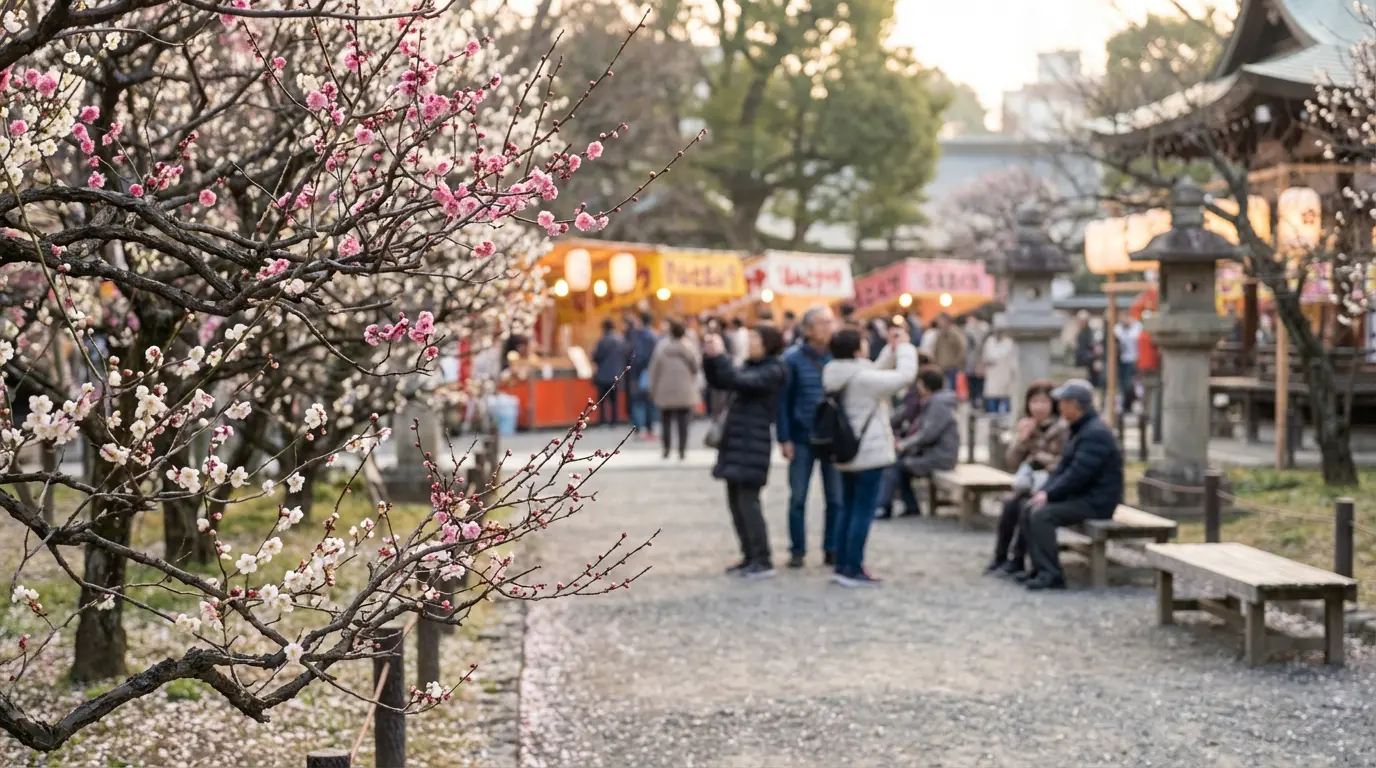
Popular parks for sakura viewing include Ueno Park, Shinjuku Gyoen, Chidorigafuchi, Meguro River, Yoyogi Park, and Sumida Park. Each site has its own atmosphere. For example, riverside rows of trees create a different feel than formal garden lanes.
Practical hanami calendar notes
- First flowering to full bloom usually six to eight days
- Peak viewing is typically a week to ten days long
- Check local forecasts for exact peak dates
- Bring a light layer for cool mornings and an extra battery for photos
Try this now: Learn one sakura related word today and repeat it aloud for confidence. Micro wins build momentum and reduce anxiety as you practice.
Identity based encouragement: Please register at Nihoner.com to save seasonal vocabulary and access cultural guides that deepen your hanami understanding. For a guided start, try this beginner course.
Checkpoint: Cherry peak is usually late March, so plan a flexible three-day window for best chances of seeing full bloom.
| Festival or Viewing Spot | Dates in 2026 | Location | Admission | Key features |
|---|---|---|---|---|
| Koishikawa Kōrakuen Plum Blossom Festival | Feb 7 to Mar 1 | Bunkyo Ward, Tokyo | Adults ¥300 Seniors ¥150 | Garden open 9:00am to 5:00pm last admission 4:30pm |
| Hanegi Park plum viewing | Peak mid to late February | Setagaya Ward, Tokyo | Free | About 650 plum trees quiet local atmosphere |
| Setagaya Plum Blossom Festival | Feb 7 to Mar 1 | Setagaya area, Tokyo | Varies | Family friendly events and local stalls |
| Yushima Tenjin Plum Blossom Festival | Feb 8 to Mar 8 | Yushima, Bunkyo Ward | Free | Shrine atmosphere and easy access to cultural stalls |
| Ushi Tenjin Kitano Shrine Plum Blossom Festival | Feb 1 to Feb 25 | North Tokyo shrine | Free | Small stalls and neighborhood crowd |
| Kameido Tenjin Shrine Plum Blossom Festival | Feb 7 to Mar 8 | Koto Ward, Tokyo | Free | Riverside views and photogenic bridges |
| Ikegami Baien Plum Garden festival | From Feb 22 | Ota Ward, Tokyo | Adults ¥100 Children ¥20 | Intimate plum garden with traditional layout |
| Jindai Botanical Garden Plum Blossom Festival | Feb 10 to Mar 1 | Chofu area, Tokyo | Entry ¥500 | Open 9:30 to 17:00 closed Mondays large collection |
| Kyodo no Mori Plum Blossom Festival | Jan 31 to Mar 8 | Fewer formal locations in west Tokyo | Adults ¥300 | Woodland setting and festival programming |
| Sankeien Garden Plum Festival | Feb 7 to Mar 3 | Yokohama, near Tokyo | Adults ¥900 | Historic garden with architectural features and special exhibits |
| Odawara Plum Blossom Festival | Early to late Feb | Odawara area, Kanagawa | Free | Events across Odawara Flower Garden and Odawara Castle |
| Mito Kairakuen Plum Festival | Feb 11 to Mar 22 | Mito, Ibaraki Prefecture | Entry ¥320 | Large classic plum garden beyond Tokyo for day trips |
| Cherry blossom viewing highlights | Forecast first flowering Mar 20 full bloom Mar 27 | Ueno Park Shinjuku Gyoen Chidorigafuchi Meguro River Yoyogi Park Sumida Park | Varies by site | Prime viewing typically late March to early April week long peak window |
Micro win invitation: Keep festival names and vocabulary together for clarity and visible progress. Register for a free Nihoner account to save locations and practice words before you go here.
Conclusion
Exploring plum and cherry blossoms in Tokyo is both scenic and culturally rich. Plum trees color parks in February and lead into the famous sakura displays in late March. Visiting these sites gives context to seasonal words and local festivals, and therefore it deepens your travel experience.
Nihoner is an all-in-one platform designed for learners who want real progress. The site offers structured courses that build vocabulary step by step. In addition, there is a pronunciation trainer with native audio, quizzes, and cultural content that links language to places like Hanegi Park and Koishikawa Kōrakuen. This approach creates clear learning paths and practical skills you can use while visiting festivals.
Confidence booster: Register for free and start saving festival names and vocabulary before your trip here. Tracking your progress is simple and visible in your account. For learners who want extra help, the platform grows with you through lessons and review exercises.
Experience these natural traditions firsthand. Try Nihoner to deepen your connection to Japan and its seasonal culture.
Frequently Asked Questions (FAQs)
When is the best time to see plum and cherry blossoms in Tokyo?
Plum blossoms typically open from late January through mid February. Most plum gardens peak in mid to late February. Cherry first flowering for Tokyo in 2026 is forecast for March 20 and full bloom around March 27. Bloom progression can take two to three weeks from first flowering to peak. Therefore plan a flexible window for visits.
Where should I go for reliable plum and cherry viewing?
For plum blossoms try Hanegi Park, Koishikawa Kōrakuen, Yushima Tenjin, Kameido Tenjin Shrine, and Ikegami Baien. For cherry blossoms try Ueno Park, Shinjuku Gyoen, Chidorigafuchi, Meguro River, and Yoyogi Park. For example Koishikawa Kōrakuen offers garden paths and timed hours.
Do I need tickets and what do they cost?
Many shrine festivals are free. Some gardens charge entry. For example Koishikawa Kōrakuen is Adults ¥300 Seniors ¥150. Jindai Botanical Garden entry is ¥500. Ikegami Baien charges Adults ¥100 Children ¥20. Sankeien Garden entry is ¥900.
What language tips help at festivals?
Learn a few simple phrases and festival names for clarity. sakura (sakura) meaning “cherry blossom” used when talking about the trees. hanami (hanami) meaning “flower viewing” used for picnic events. Try one phrase today like ume no niwa wa doko desu ka? (ume no niwa wa doko desu ka) meaning “Where is the plum garden?” This builds micro wins and reduces hesitation.
What cultural etiquette should visitors follow?
Be respectful of other visitors. Keep paths clear and dispose of trash properly. Ask before photographing people. Follow posted rules and local staff guidance to keep events pleasant for everyone.
Micro wins invitation: For clarity and steady progress save festival names and short phrases now. Register for free at Nihoner to store vocabulary and access cultural guides.
Checkpoint: Aim for mid February for plum viewing and late March for cherry peak.