How to craft the Ozoni recipe at home?


Ozoni Recipe
Ozoni recipe opens the New Year in Japan with a warm bowl of history, flavor, and hope. Each spoonful links families to ancestors and to wishes for health and longevity. As you explore this guide, you will learn how Ozoni varies across regions, from Kansai’s creamy white miso with round mochi to Kanto’s clear dashi with rectangular rice cakes, and you will discover simple techniques to recreate these comforting soups at home.
Beyond soup, osechi dishes bring color, symbolism, and a festive rhythm to the table. However, because mochi can pose a choking risk, we will also cover safety tips and portion guidance, and we will share step-by-step instructions, ingredient swaps, and plating ideas so you can honor tradition while creating a joyful, safe New Year feast that fills your home with aroma, color, and the kind of shared memories that last a lifetime and joy for friends and family.
Exploring the Ozoni Recipe: Regional Variations and Ingredients
Ozoni recipe — regional styles explained
Japan’s New Year soup shows regional pride and history. Two main styles dominate the map. Kansai favors a white miso base. Kanto prefers a clear dashi with soy sauce. Both styles celebrate good health, longevity, and family ties.
Kansai style
Kansai ozoni uses awase dashi made from kombu and bonito flakes. Then cooks in white miso for a creamy, slightly sweet broth. The mochi is round and often grilled or boiled until soft. Typical Kansai ingredients include:
- Awase dashi made from kombu and katsuobushi
- White miso (shiro miso)
- Round mochi rice cakes
- Satoimo taro and daikon radish
- Kintoki ninjin carrot and pink and white fish cake
- Mitsuba and a touch of yuzu for aroma
Kanto style
In contrast, Kanto ozoni uses a clear dashi seasoned with soy sauce. The broth tastes light and savory, and it highlights umami. Mochi often appears in a rectangular shape and may be grilled first. Common Kanto ingredients include:
- Clear dashi with bonito flakes and kombu
- Soy sauce for seasoning
- Rectangular grilled mochi rice cakes
- Chicken or shiitake mushrooms for depth
- Komatsuna or spinach, carrot, and yuzu zest
- Garnish of mitsuba or thinly sliced greens
Cultural meanings and local flavors
Each ingredient carries symbolism. Mochi represents strength and longevity, and therefore families eat it to welcome a healthy year. Round mochi suggests harmony in Kansai, while rectangular mochi reflects regional tradition in Kanto. Fish cake colors signal celebration and good fortune. Root vegetables like gobo and taro evoke stability and a fruitful harvest.
Moreover, variations reflect local produce and taste. Kansai cooks prefer milder, slightly sweet miso notes because local palates historically favored gentle flavors. Kanto cooks favor bolder soy sauce and clear dashi, because the region values strong umami and coastal ingredients. For background on regional traditions, see Japan Guide. For a Kansai-style recipe and ingredient notes, see RecipeTin Japan. Another helpful Kansai recipe source is Ryukoch.
Tips in brief
- Use good dashi to build flavor quickly. However, adjust salt and miso to taste.
- Add mitsuba and yuzu at the end for freshness.
- Serve mochi in small portions and remind guests to eat carefully, because mochi can pose a choking risk.
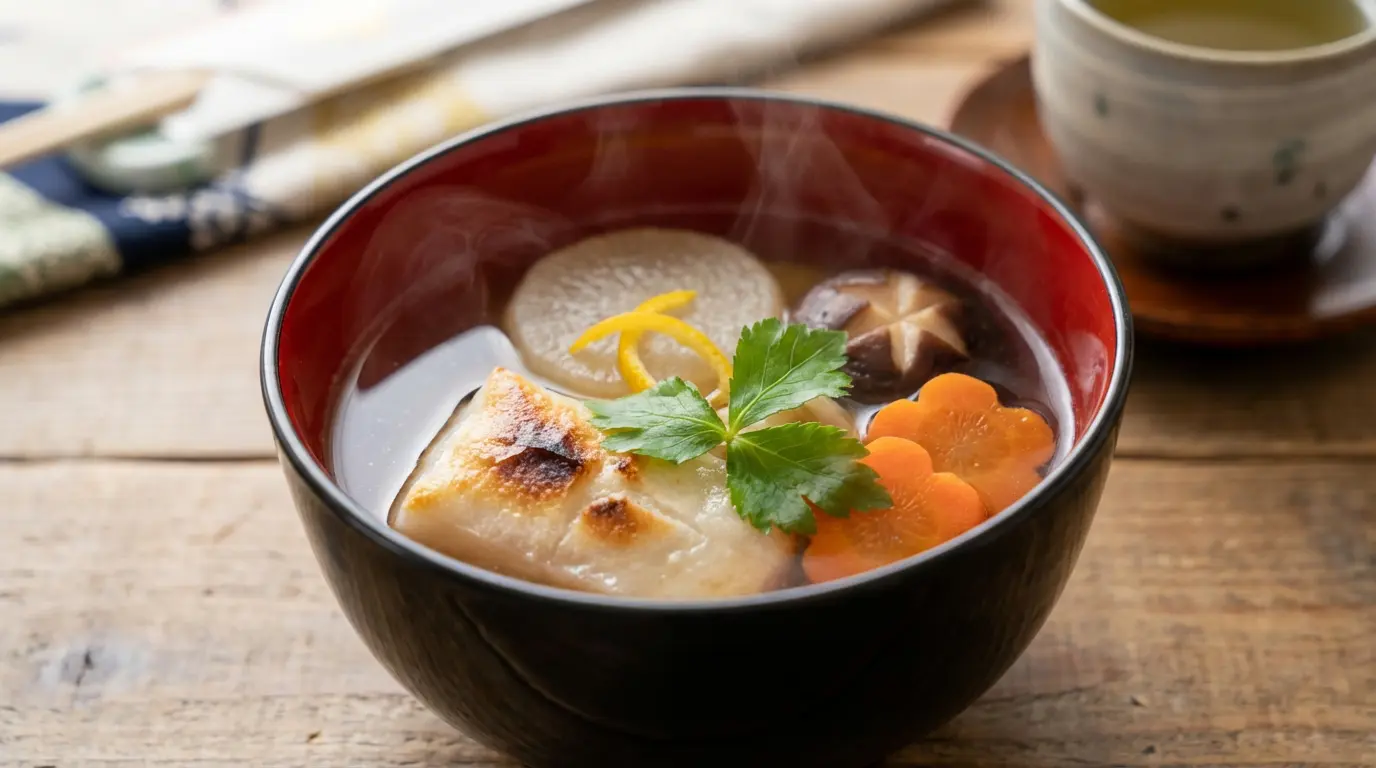
Image credit: Traditional bowl of Ozoni soup photographed with soft natural light to highlight mochi, vegetables, and yuzu peel.
Recreating Osechi Dishes at Home: Tips and Essential Ingredients
Preparing osechi ryori at home connects you to centuries of New Year tradition. These stacked jubako boxes hold small dishes. Each item carries meaning and joy.
Start with essentials and sourcing
- A good set of jubako or shallow containers
- Kuromame black soybeans
- Kazunoko herring roe
- Datemaki sweet rolled omelette
- Kohaku kamaboko red and white fish cake
- Tazukuri candied sardines and kurikinton sweet potato and chestnut
- Mirin, soy sauce, dashi stock, and rice vinegar
Buy Japanese pantry staples at local Asian grocers or online suppliers. For background on osechi components and symbolism, see Japan Guide. For stepwise recipes, try practical home cooks like RecipeTin Japan.
Simple recipes and batch prep
Cook items that store well first. For example, simmer kuromame in sweet soy until glossy. Then chill them overnight so flavors develop. Make datemaki by blending eggs and fish paste. Bake or steam until set. Prepare tazukuri by toasting sardines and glazing with soy and sugar. Because many osechi dishes keep for days, you can stagger cooking over two days.
Presentation and symbolic plating
Arrange contrasting colors to show celebration. Red and white items signal good luck. Use small compartments or silicone cups to separate flavors. Moreover, tie the jubako with a ribbon for a festive touch. Label components for guests, because some tastes are unfamiliar.
Safety and substitutions
If you cannot find kazunoko, use marinated salmon roe variations. Also, trim sugar in glazes for a lighter result. Remember to cut mochi into small pieces and warn guests about choking hazards.
Trusted sources
Shihoko Ura shares accessible, authentic recipes that help home cooks recreate osechi at home. For Kansai-style ideas and ingredient notes, see Ryukoch.
Quick comparison: Kansai vs Kanto Ozoni
| Feature | Kansai ozoni | Kanto ozoni |
|---|---|---|
| Broth | Awase dashi with white miso (creamy, slightly sweet) | Clear dashi seasoned with soy sauce (light, umami-forward) |
| Mochi shape and prep | Round mochi, often grilled or boiled | Rectangular mochi, often grilled |
| Typical ingredients | kombu, katsuobushi, white miso, satoimo, daikon, kintoki carrot, pink and white kamaboko, mitsuba, yuzu | kombu, katsuobushi, soy sauce, chicken or shiitake, komatsuna or spinach, carrot, shiitake, mitsuba, yuzu zest |
| Flavor characteristics | Mild, slightly sweet, creamy miso umami | Clear, savory, stronger soy seasoning and pronounced umami |
| Cultural note | Round mochi symbolizes harmony; Kansai palate favors gentle flavors | Rectangular mochi reflects local custom; Kanto favors bolder umami and coastal ingredients |
Use this table to pick the style that fits your taste and available ingredients.
CONCLUSION
Ozoni recipe and osechi ryori are more than dishes; they are living traditions that mark the New Year in Japan. Each bowl and box carries history, symbolism, and family memory. Through ozoni, people wish for health, longevity, and prosperity; through osechi, they celebrate fortune and renewal. Because ingredients hold meaning, simple items like mochi, kuromame, and kazunoko connect home cooks to ancestral hopes.
Trying these recipes at home lets you taste culture and practice mindful cooking. Start with regional choices, adapt ingredients, and keep safety in mind because mochi can be hazardous. Moreover, small swaps make osechi approachable without losing ritual. As a result, your table can reflect authenticity and personal creativity.
Nihoner.com helps learners bridge language and culture. Their structured courses teach vocabulary and phrases for food and daily life. They also offer pronunciation training and cultural content. Furthermore, lessons use real life examples and enjoyable methods. Therefore students gain confidence to order food, read recipes, and share traditions.
Embrace the season by cooking ozoni and assembling osechi. Celebrate with curiosity and respect, and enjoy the warmth of food, language, and shared tradition.
Frequently Asked Questions (FAQs)
What is ozoni and why is it important for New Year?
Ozoni is a traditional New Year soup served across Japan. It symbolizes health, longevity, and family unity. Because families pass recipes down, the soup links generations and hopes for a good year.
How do Kansai and Kanto ozoni differ?
Kansai ozoni uses awase dashi and white miso for a mild, slightly sweet broth. Kanto ozoni uses clear dashi with soy sauce for a light, savory flavor. Moreover, Kansai favors round mochi while Kanto uses rectangular mochi.
What do common ozoni ingredients represent?
Mochi stands for strength and longevity. Root vegetables like taro and gobo suggest stability and a good harvest. Fish cake colors signal celebration. As a result, the ingredients carry wishes for prosperity.
Is mochi safe to eat and how can I reduce risk?
Mochi can pose a choking hazard, so cut pieces small for children and older adults. Also, supervise eating and avoid large mouthfuls. Furthermore, cook mochi until soft and serve warm, not piping hot.
Where can I find authentic recipes and trusted sources?
Start with recipe authors like Shihoko Ura for home-cook friendly instructions. Also, use reputable food sites and Japanese grocers for authentic ingredients. Finally, practice the basics and adapt recipes to your pantry.