Why Japanese New Year traditions in Tokyo (oshōgatsu) matter?


Japanese New Year traditions in Tokyo (oshōgatsu): decorations, countdowns, and local customs to experience
Step into the lively world of Japanese New Year traditions in Tokyo (oshōgatsu), where streets glow and temples hum. This festive season blends ancient rites with modern parties, because Tokyoans honor family and fresh starts. You will find kadomatsu and shimekazari on doorways, osechi and toshikoshi soba on tables. Meanwhile, countdowns light up city squares while temples ring jōya no kane at midnight. As a result, hatsumōde crowds gather early, yet you can visit quieter local shrines.
In this guide, we will explore must see decorations, lively countdowns, and local customs to experience. Further, you will get practical tips for hatsuhinode sunrise spots, festival etiquette, and food traditions. Therefore plan ahead because many events require tickets or early arrival. Also discover where to avoid long lines and how to enjoy fukubukuro markets without stress. Read on to find simple ways to join Tokyo celebrations and start your new year with joy.
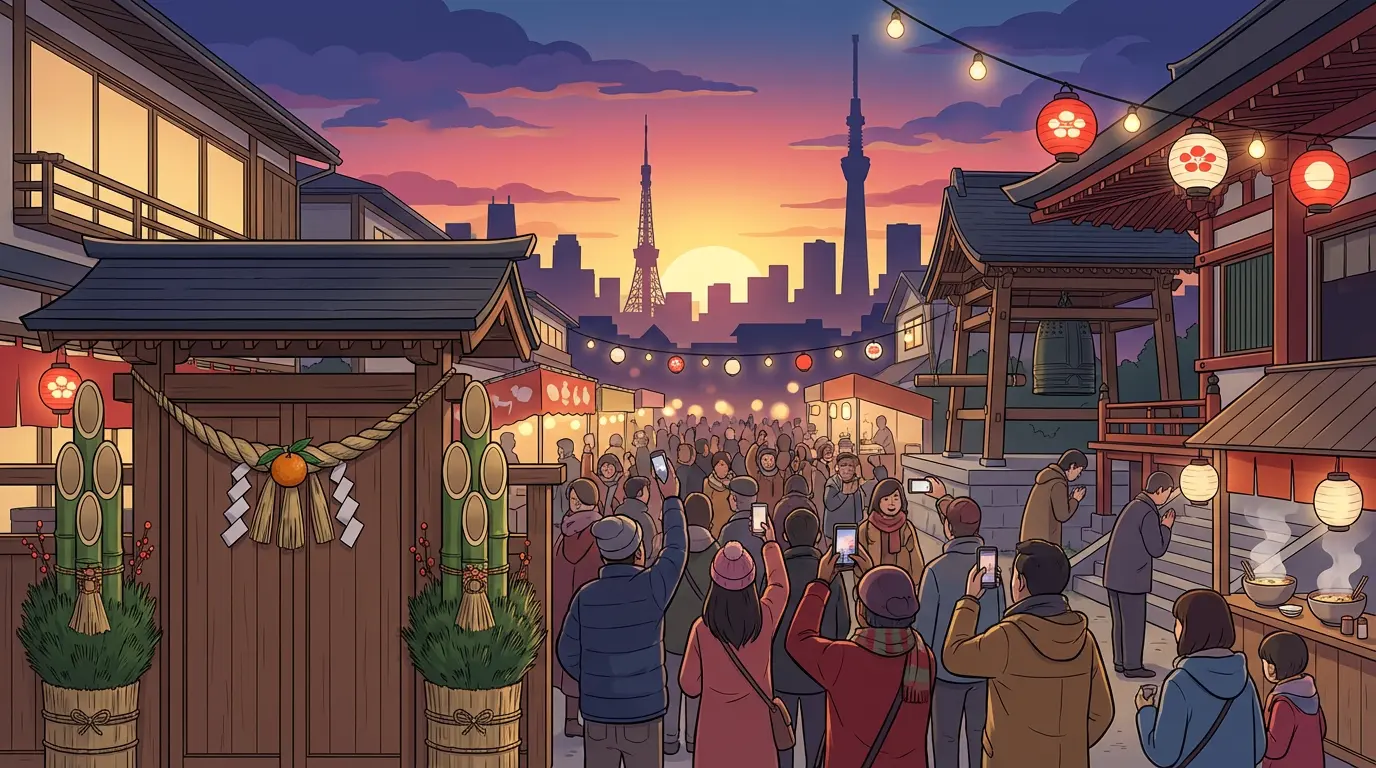
Image source: https://nihoner.com/wp-content/uploads/2025/12/img-tokyo-oshogatsu-festivities-2026.jpg
Japanese New Year traditions in Tokyo (oshōgatsu): traditional decorations and foods
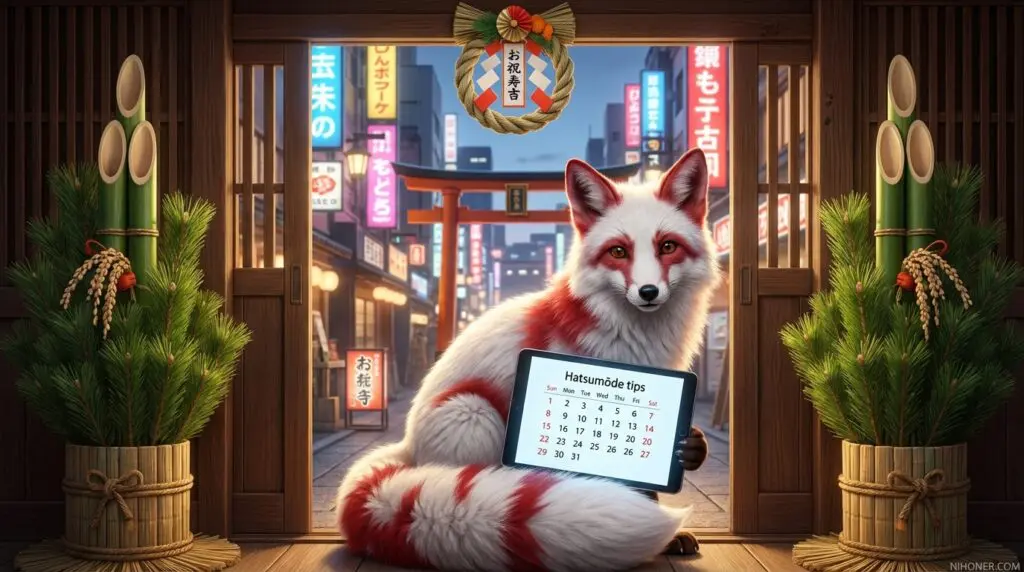
Tokyo’s New Year decorations send a clear message of renewal and luck. Kadomatsu (pronounced kah-doh-mah-tsu; meaning gate pine) stands outside homes and shops. These pine and bamboo arrangements welcome ancestral spirits and protect the house. Meanwhile shimekazari (pronounced shee-meh-kah-zah-ree; meaning sacred straw rope) hangs over doors to ward off evil and invite good fortune. Together, kadomatsu and shimekazari set a traditional, auspicious tone for the holiday.
Food marks the season with layered meaning and care. Osechi ryōri (pronounced oh-seh-chee ryoh-ree; meaning New Year dishes) arrives in stacked lacquer boxes. Each item represents a wish such as health, long life, or good harvest. Because osechi is labor intensive, many Tokyo families order sets from specialty shops or department stores. As a result, ordering early fills up fast, especially in December.
On New Year’s Eve, families eat toshikoshi soba (pronounced toh-shee-koh-shee soh-bah; meaning year crossing noodle) to symbolically cut off the past year. The long buckwheat noodles symbolize longevity and resilience. Meanwhile ozoni (pronounced oh-zoh-nee; meaning New Year soup) features regional variations in broth, vegetables, and mochi. In Tokyo, ozoni often uses a clear dashi broth with grilled mochi, while other regions use miso based soup.
Practical tips for visitors and locals in Tokyo
Many Tokyo residents order osechi and fukubukuro from department stores or online retailers to save time. For cultural context, browse Japan Guide, which explains these customs in detail. Also the Japan National Tourism Organization offers recipes and regional notes at Japanese New Year and Britannica.
Overall, decorations like kadomatsu and shimekazari combine with osechi ryōri, toshikoshi soba, and ozoni to create a rich, sensory oshōgatsu experience. Therefore plan ahead and sample both homemade and shop ordered dishes to taste Tokyo traditions fully.
| Event Name | Description | Location(s) | Typical Dates | Unique Features |
|---|---|---|---|---|
| Hatsumōde shrine visits | The first shrine or temple visit of the year. People pray for health and luck. | Meiji Shrine; Senso-ji; Zōjō-ji; many local shrines across Tokyo | January 1 to January 3 | Large crowds and long lines. Omikuji fortunes and ema wish plaques are common. Visit smaller shrines to avoid queues. |
| Jōya no kane (108 bell ringing) | Temples ring bells 108 times to cleanse worldly desires. The ritual is solemn and symbolic. | Zōjō-ji; Senso-ji; many Buddhist temples in Tokyo | Night of December 31 into January 1 | The 108 bell strikes mark purification. Expect midnight gatherings and bell tolling across temple grounds. |
| NHK Kohaku Uta Gassen (Red-and-White Song Battle) | A nationwide televised music competition between red and white teams. Families often watch together. | NHK Hall broadcast nationwide | Evening of December 31 | The program runs about four and a half hours. It is a cultural staple for many households. |
| Hatsuhinode (first sunrise observances) | Watching the first sunrise for good luck and new beginnings. People gather at viewpoints. | Tokyo Metropolitan Government Building; Tokyo Tower; waterfront and mountain spots | Morning of January 1 | Some observatories require lotteries for limited slots. Many events stream online as alternatives. |
| Local shrine ceremonies | Community rituals such as kanchu misogi, fox parades, and daruma markets. They highlight local culture. | Teppozu Inari Shrine; Oji Inari and other neighborhood shrines | Varies December 31 to January 3 and beyond | These ceremonies offer intimate, local experiences. Expect smaller crowds and unique traditions. |
| Countdown celebrations and alternatives | Public countdowns, club events, boat parties and regional celebrations. Options vary widely after Shibuya changes. | Yokohama waterfront; clubs; event venues; private countdown parties | Night of December 31 | Shibuya Crossing countdown was canceled in recent years. Many ticketed alternatives exist throughout Tokyo and neighboring cities. |
Japanese New Year traditions in Tokyo (oshōgatsu): customs and local experiences
Hatsumōde is the first shrine or temple visit of the year. Families, friends, and solo visitors attend. They pray for health, safety, and good fortune. Major sites like Meiji Shrine welcome huge crowds. For details visit Meiji Shrine.
The Jōya no kane ritual occurs on New Year’s Eve. Jōya no kane (pronounced jo-ya no ka-ne; meaning New Year’s Eve bell) is a Buddhist practice. Temple bells ring 108 times to cleanse human desires. People pause and reflect as the bells toll into midnight. Famous temples such as Zōjō-ji and Senso-ji hold large ceremonies. See Zōjō-ji and Senso-ji for event notes.
Local markets and parades add color and community spirit. Daruma markets sell Daruma dolls for wishes and goals. Sellers often fill in one eye when bought, and buyers fill the second eye when wishes come true. The Oji Fox Parade features fox costuming and shrine visits. These events show neighborhood customs and lively pageantry.
Practical tips and local advice
- Visit smaller shrines for a quieter experience. Smaller shrines offer faster lines and more personal moments. However, major shrines provide iconic rituals and larger events.
- Go early or late in the day to avoid peak crowds. Early morning on January first can still be busy. As a result, evenings on January second or third are often calmer.
- Respect queue etiquette and remove shoes when required. Follow local customs because small acts show great respect.
- Buy omikuji and ema for souvenirs and wishes. Omikuji are paper fortunes that offer a glimpse into the year ahead. Ema are wooden plaques on which visitors write hopes and hang them at shrines.
If you cannot attend in person, many temples and shrines offer livestreams of ceremonies. For background on visiting customs and schedules, check this Japan Guide overview. Overall, local customs during oshōgatsu blend solemn rituals with joyful community life. Therefore plan ahead, pick the right shrine for your pace, and enjoy authentic Tokyo traditions.
CONCLUSION
Japanese New Year traditions in Tokyo (oshōgatsu) offer a lively mix of ritual, food, and community. From kadomatsu at doorways to hatsumōde crowds, the season feels both ancient and modern. Therefore, engaging with these customs deepens your understanding of Japanese life and history.
For learners, Nihoner.com blends language tools with cultural guides. It features a large dictionary, a pronunciation trainer, structured courses, and clear cultural guides that tie words to real events. Also its lessons and reference tools help you recognize festival vocabulary and etiquette. As a result, studying with Nihoner.com makes participating in oshōgatsu more rewarding.
Plan visits, taste osechi, and join local rituals with respect. Moreover, livestreams and neighborhood markets let you experience traditions even from afar. Finally, explore Nihoner.com to connect new vocabulary with the sights, sounds, and tastes of Tokyo’s New Year. Start small, stay curious, and enjoy the warmth of oshōgatsu. Happy exploring and good luck.
Frequently Asked Questions (FAQs)
What is oshōgatsu?
Oshōgatsu means the New Year period in Japan. It literally means first month. People celebrate from December 31 to January 3. Families honor ancestors, eat special foods, and visit shrines. As a result, the season mixes private rituals with public events.
How do people celebrate hatsumōde?
Hatsumōde is the first shrine or temple visit of the year. Visitors pray, toss coins, and ring bells. They also draw omikuji fortunes and write wishes on ema plaques. Major sites such as Meiji Shrine and Senso-ji attract huge crowds. However, many shrines stream ceremonies online for remote viewers.
What foods are traditional for oshōgatsu?
Osechi ryōri are layered New Year dishes packed with meaning. Each ingredient symbolizes health, wealth, or long life. Because osechi is labor intensive, many families order sets from shops. Toshikoshi soba appears on New Year’s Eve to symbolize long life. Ozoni is a soup with mochi and seasonal vegetables, and it varies by region.
Are NHK Kohaku Uta Gassen programs worth watching?
Yes, many people watch NHK Kohaku Uta Gassen on New Year’s Eve. The show runs about four and a half hours. It brings a festive, nostalgic feeling to the evening. Families watch at home, and some bars screen it for groups. Therefore it offers cultural context and entertainment.
What tips help avoid crowding at popular shrines?
Try these practical tips
- Visit smaller local shrines for quicker entry and a calmer pace
- Go very early in the morning or late in the evening to avoid peak lines
- Use side entrances and follow staff directions to speed movement
- Take JR overnight trains on December 31 because many lines run late; check schedules
- Respect local etiquette when queuing and during prayers
These answers offer simple guidance to enjoy Japanese New Year traditions in Tokyo (oshōgatsu). Plan ahead, stay flexible, and embrace both food and ritual when you visit.