What are Japanese New Year Traditions in Tokyo (oshōgatsu)?


Japanese New Year Traditions in Tokyo (oshōgatsu)
Oshōgatsu is Japan’s traditional winter holiday, and in Tokyo the celebrations often extend until January 3. Japanese New Year Traditions in Tokyo (oshōgatsu) center on family, rituals, and quiet reflection rather than loud parties. In most neighborhoods people stay home, visit shrines, or share osechi ryōri with relatives.
Christmas in Japan feels different. Because it lacks deep religious ties, it resembles a light, commercial festival or a date night event. As a result, New Year remains the main family holiday.
Expect rituals such as kadomatsu at entrances, nengajō holiday cards, and joya no kane bell ringing at temples. Hatsumōde shrine visits peak between January 1 and 3, and many Tokyo shrines draw long lines. However, smaller local shrines offer a calmer experience and shorter waits.
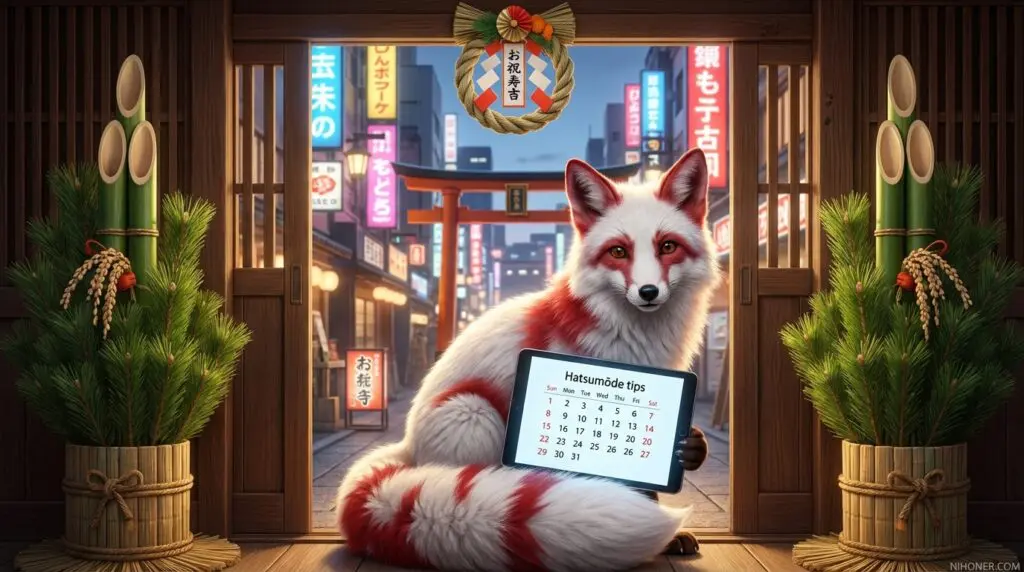
This article explains nenmatsu nenshi, traditional foods like toshikoshi soba and ozoni, and events such as the Ōji Fox Parade. I will also give practical tips on timing, etiquette, and crowd avoidance. Read on to discover how to enjoy oshōgatsu in Tokyo with respect and ease.
Key Decorations: Kadomatsu and Shimekazari in Japanese New Year Traditions in Tokyo (oshōgatsu)
Kadomatsu and shimekazari mark many entrances during oshōgatsu. These decorations welcome the New Year deities and protect homes and businesses. Visitors will see them outside shops, hotels, municipal buildings, and private homes across Tokyo.
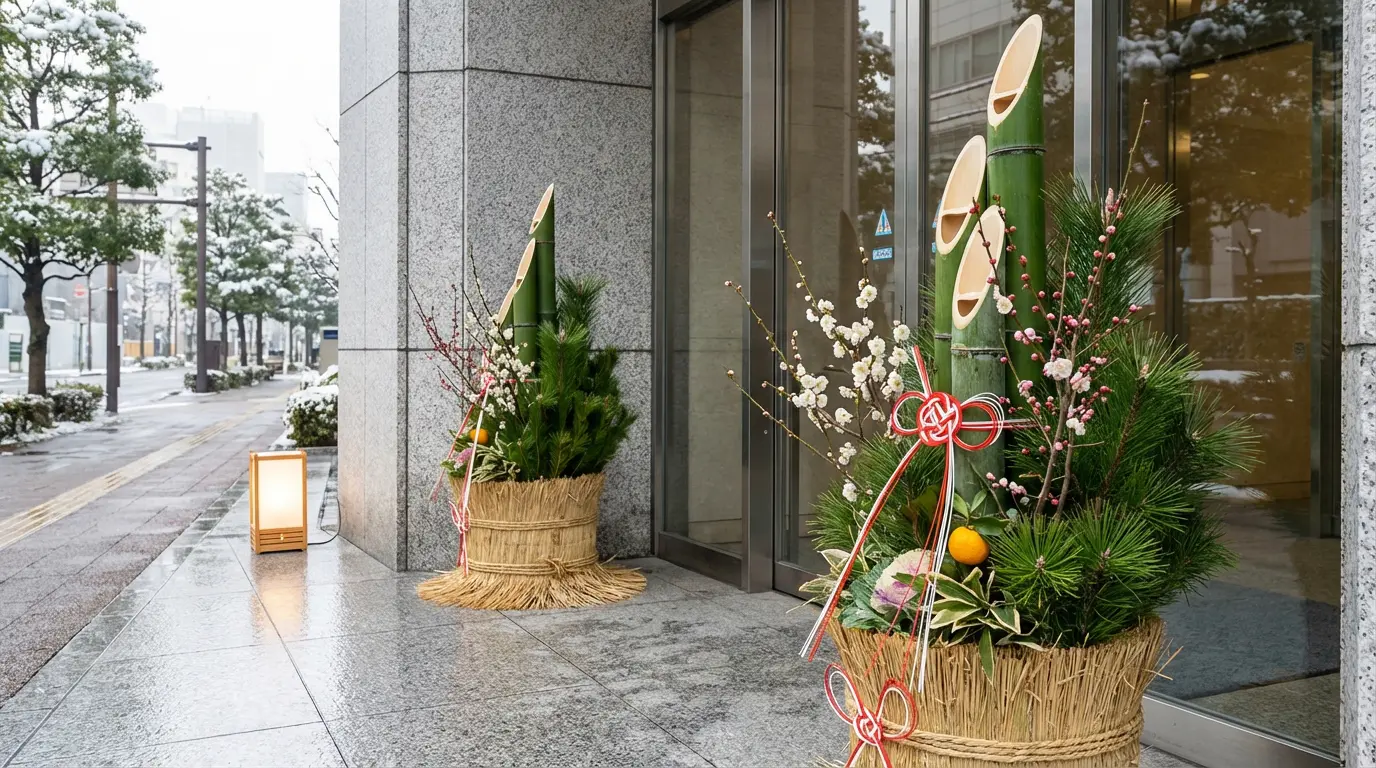
Kadomatsu (kadomatsu, 門松) literally means gate pine. In English it is often called a New Year gate pine. Typically it uses bamboo, pine, and plum branches. Together these plants invite good fortune and long life. In Tokyo you will find elaborate kadomatsu at hotel lobbies and simpler pairs at shop doors. For context and setup timing see Japan Guide and Nippon.
Shimekazari (shimekazari, しめ飾り or 注連飾り) are sacred rope ornaments hung above doors. In English they are called shimenawa decorations or sacred rope decorations. They mark a purified space and keep out evil spirits. Common elements include twisted straw rope, paper streamers, and a citrus fruit called daidai.
Common decorative elements include
- bamboo shoots for strength and growth
- pine for longevity and resilience
- plum branches for renewal and hope
- twisted straw rope and zigzag paper streamers for purification
- daidai citrus fruit for family continuity
- mizuhiki cord and folded paper for good luck
Hands lifestyle stores and other craft shops sometimes run kadomatsu workshops. Therefore visitors can try making a simple kadomatsu. For more on sacred ropes and their meaning see Nippon.
Traditional New Year Foods in Japanese New Year Traditions in Tokyo (oshōgatsu)
Food plays a central role during oshōgatsu. Families share special dishes that carry deep meaning. Below are three staples you will encounter in Tokyo over the New Year.
Osechi ryōri (osechi ryōri, お節料理) — New Year festival dishes
Osechi ryōri consists of many small, packed dishes served in layered boxes. Each item symbolizes a wish for the new year. Because it is labor intensive, many families order osechi from shops and department stores.
Common osechi elements and meanings
- kuromame black soybeans for diligence and health
- kazunoko herring roe for fertility and family continuity
- tazukuri candied sardines for an abundant harvest
- datemaki sweet rolled omelet for scholarship and culture
- kinton sweet chestnut paste for wealth and good fortune
For a fuller overview of osechi dishes and history, see Nippon.
Toshikoshi soba (toshikoshi soba, 年越し蕎麦) — year-crossing buckwheat noodles
Toshikoshi soba are long buckwheat noodles eaten on New Year’s Eve. The long shape symbolizes longevity and a clean break from the old year. People eat them at home or at small soba shops near train stations.
Typical customs and preparation
- served hot in a simple soy-based broth or tsuyu dipping sauce
- eaten late on December 31 to mark the transition
- often accompanied by tempura for a richer meal
Read more about the custom at Nippon.
Ozoni (ozoni, お雑煮) — New Year soup with mochi
Ozoni is a sacred New Year soup that contains mochi rice cakes. It varies by region and family recipe. In Tokyo, clear dashi broth with round mochi is common, while other regions use miso or different garnishes.
Key ingredients and cultural notes
- mochi rice cakes for strength and prosperity
- dashi or miso base depending on region
- vegetables, root crops, and sometimes chicken or fish
- eaten on New Year morning as part of the first-day meal
For regional variations and background, see Nippon.
Practical tip
Because osechi sells out early, order or reserve sets well in advance. Also try local soba shops on New Year’s Eve for authentic toshikoshi soba. Finally, sample ozoni at a ryokan or family table to taste regional differences.
Major New Year Activities in Japanese New Year Traditions in Tokyo (oshōgatsu)
| Activity | Description | Typical Dates | Location | Tips for Visitors |
|---|---|---|---|---|
| Hatsumōde (hatsumōde, 初詣) — First shrine or temple visit | The first visit of the year to pray for health and fortune. Common part of oshōgatsu and nenmatsu nenshi. | January 1–3 | Major shrines: Meiji Shrine, Sensō-ji, Zōjō-ji; plus local shrines | Expect long lines. Visit early morning or late afternoon to avoid crowds. Smaller shrines are calmer. |
| Joya no kane (joya no kane, 除夜の鐘) — 108 bell rings | Temples ring bells 108 times to purify desires and welcome the new year. Often at midnight. | Night of December 31 to early January 1 | Famous temples: Zōjō-ji, Sensō-ji; many neighborhood temples | Crowds peak 11 p.m.–2 a.m. Go earlier or later. Some temples stream ceremonies online. |
| Daruma markets (daruma ichi) — Daruma doll sales and burning | Markets sell Daruma dolls for wishes. Returned dolls are ceremonially burned. | Early January, varies by market | Ome, Kamimizo, Kitain Temple and other markets | Buy early in the day. Expect stalls and fire ceremony. Ask vendors about painting eyes practice. |
| Ōji Fox Parade (Ōji kitsune no gyōretsu) — Fox blessing parade | Unique local festival where participants wear fox costumes. It offers New Year blessings. | Early January, usually Jan 1–3 or specific date | Ōji area, north Tokyo | Pre-registration required to join. Watch the parade from sidewalks to avoid obstructing rituals. |
CONCLUSION
Japanese New Year Traditions in Tokyo (oshōgatsu) reveal a gentle, family-centered festival of rituals and reflection. These customs balance quiet shrine visits, ritual foods, and symbolic decorations. They offer cultural insight and a slower pace during nenmatsu nenshi.
From kadomatsu and shimekazari to hatsumōde and joya no kane, Tokyo’s New Year practices connect people to history and hope. Because many events are family-focused, visitors often find intimate and meaningful moments. However, crowds can be heavy at major sites, so plan visits wisely.
Nihoner.com is an all-in-one platform for learning Japanese with practical real-life usage. It provides structured courses, SRS flashcards, interactive quizzes, and detailed cultural guides. As a result, learners gain vocabulary, grammar, and etiquette that make festivals more accessible.
Use Nihoner.com to learn key phrases for hatsumōde, to read meanings behind osechi, or to follow temple rituals respectfully. Moreover, the platform builds confidence for conversations and travel. Finally, deepen your understanding with lessons that match real Tokyo experiences.
Whether you plan to travel or study from home, these traditions reward curiosity and respect. Explore oshōgatsu with care, and let Nihoner.com guide your language and cultural journey.
Frequently Asked Questions (FAQs) — Japanese New Year Traditions in Tokyo (oshōgatsu)
What is oshōgatsu (oshōgatsu, お正月) and how long does it last?
Oshōgatsu means New Year in English. It is the traditional winter holiday in Japan. Celebrations in Tokyo usually extend until January 3. During this period families gather, visit shrines, and observe quiet rituals. However, large countdown parties and fireworks are not typical.
What is a kadomatsu (kadomatsu, 門松) and what does it symbolize?
Kadomatsu literally means gate pine. It uses bamboo, pine, and plum branches. These elements invite longevity, strength, and renewal. People place pairs at entrances of homes, shops, and hotels. Therefore kadomatsu mark the arrival of New Year deities and protect the space.
What is joya no kane (joya no kane, 除夜の鐘) and why do temples ring bells 108 times?
Joya no kane means New Year’s Eve bell. Temples ring the bell 108 times to purify worldly desires. The number 108 represents earthly desires that cause suffering. As a result, listeners seek a fresh start. Note that crowds peak late night, so go earlier to avoid lines.
How does the nengajō (nengajō, 年賀状) lottery work?
Nengajō are New Year greeting cards. Japan Post prints lottery numbers on them. After New Year officials draw winning numbers in mid-January. Winners receive small cash amounts or local prizes. Therefore keep your card until the lottery results are announced.
What unique Tokyo celebrations should travelers see and what are the tips?
Visit the Ōji Fox Parade, daruma markets, and hatsumōde at Meiji Shrine. Also consider joya no kane at Zōjō-ji or Sensō-ji. Tips:
- arrive early to avoid major crowds
- choose smaller local shrines for a calmer visit
- pre-register if required for festivals like the Ōji Fox Parade
These FAQs focus on Japanese New Year Traditions in Tokyo (oshōgatsu). They prepare travelers for culture, etiquette, and timing. Enjoy the season respectfully and with curiosity.