How to experience Japanese New Year traditions in Tokyo?

Japanese New Year Traditions in Tokyo
Japanese New Year traditions in Tokyo burst into life with unique rituals, vibrant decorations, and warm family customs. Because Tokyo blends centuries-old rites with modern celebrations, visitors can experience both solemn shrine visits and lively sales. Therefore this introduction guides travelers through practical ways to join oshogatsu festivities and enjoy hatsumode, fukubukuro, and local foods. Friendly tips will help you navigate crowds, schedules, and seasonal etiquette.
Start with simple traditions like toshikoshi soba on New Year’s Eve, which symbolizes good luck and longevity. Then visit Meiji Shrine or Senso-ji for hatsumode, though smaller shrines often offer calmer experiences. Also look for kadomatsu and shimekazari on homes and storefronts, because they mark good fortune. Practical advice includes arriving early, carrying cash for offerings, and checking train schedules for holiday service.
Beyond temples, Tokyo offers family-friendly countdown events and cultural shows, so you can celebrate in many ways. Moreover many shops sell fukubukuro, which let you score surprises and bargains after New Year’s Day. Lastly, sample osechi ryori and ozoni to taste seasonal dishes and understand their meanings. As a result you will leave with a deeper appreciation of Tokyo’s oshogatsu traditions and a memorable travel experience.
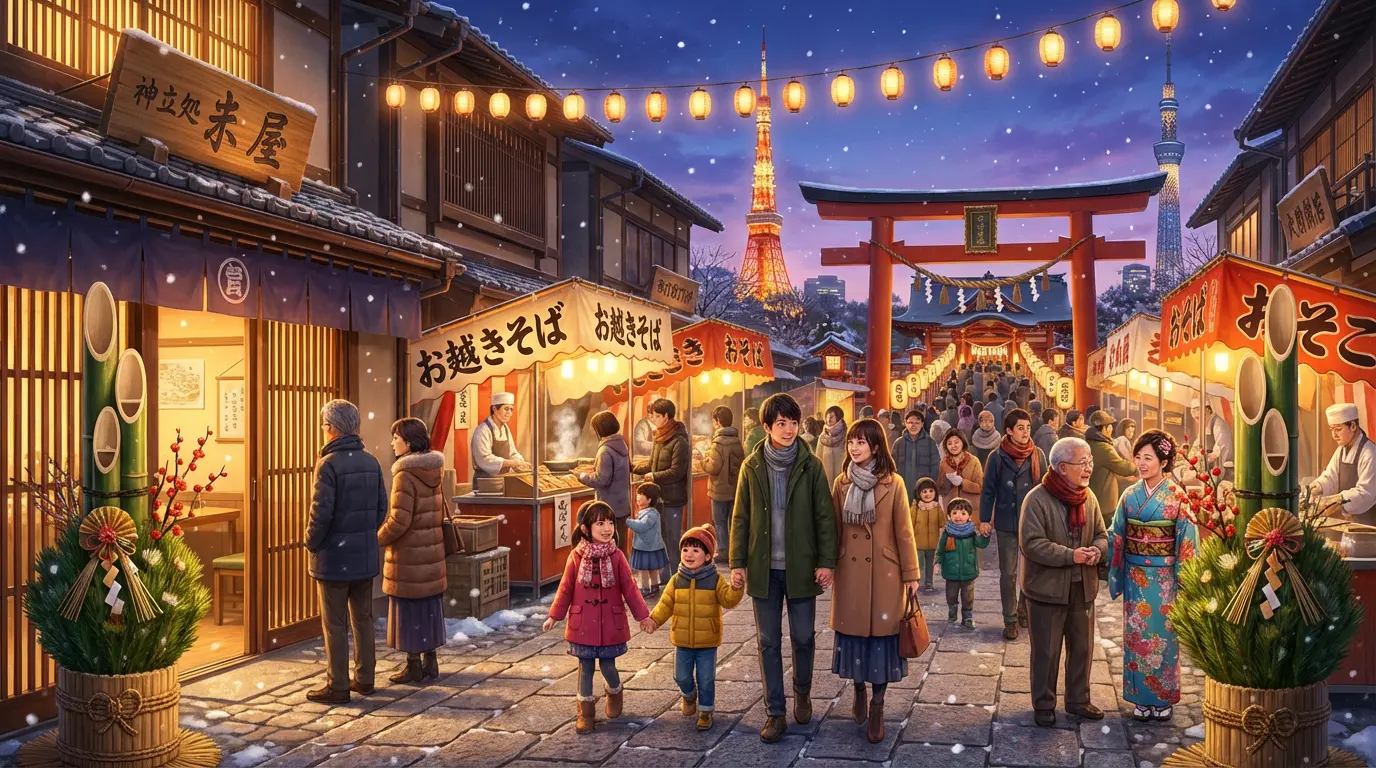
A vibrant dusk scene in Tokyo showing kadomatsu at shop entrances, busy food stalls with paper lanterns, visitors heading toward a shrine torii for hatsumode, and the Tokyo skyline including Tokyo Tower and Tokyo Skytree in the background. Soft snowfall and warm lights create a festive atmosphere.
Japanese New Year traditions in Tokyo: Key decorations and their meanings
Kadomatsu are the most familiar New Year decoration you will see at entrances. They combine three bamboo stalks, pine branches, and sometimes plum blossoms. Because bamboo points skyward, it symbolizes strength and rapid growth. Pine represents longevity and resilience. Shops, hotels, and homes place kadomatsu at doorways from around December 28 to January 7 to welcome the Toshigami deity. After the holiday, people return kadomatsu for ritual burning to send the deity back respectfully.
Shimekazari are rope decorations hung above doors and on shop entrances to keep out evil spirits. They use braided straw called shimenawa and often include bitter orange or paper streamers. As a result they signal a purified, sacred space where the household invites good fortune. Small businesses and apartment buildings commonly display shimekazari through the first week of January.
Kagami mochi are stacked rice cakes placed on home altars and shop counters for good luck. They represent continuity and the mirror of the gods. Families often eat kagami mochi in a ritual called kagami biraki after the holiday.
In addition many storefronts dress windows with shōchikubai motifs, kadomatsu replicas, and red and white streamers. These decorations connect to osechi ryori, fukubukuro sales, and other oshogatsu customs. For quieter shrine visits during hatsumode, look for temporary torii decorations and votive areas that glow with lanterns.
For practical tips, arrive early at crowded Meiji Shrine or Sensoji to appreciate the decor up close. Also explore side streets where smaller shrines keep calmer traditions.
Further reading on New Year customs and decorations is available at Japan Guide and Japan National Tourism Organization.
Comparison: Traditional New Year foods and symbolism
| Food | Description | Symbolic meaning | Typical occasions |
|---|---|---|---|
| Toshikoshi soba | Thin buckwheat noodles eaten hot on New Year’s Eve to mark the year’s crossing. | Longevity and cutting off misfortune; a clean start for the new year. | Eaten on New Year’s Eve (Dec 31) usually at home or in restaurants. |
| Ozoni | A savory soup with mochi and regional ingredients, served in the morning of New Year’s Day. | Prosperity, family continuity, and regional identity through local ingredients. | Eaten on New Year’s Day (Jan 1) as part of family breakfast. |
| Osechi ryori | A layered set of preserved dishes served in lacquer boxes called jubako. | Each dish symbolizes wishes like health, fertility, and a good harvest. | Served on New Year’s Day and across the first three days of the year. |
How to join Japanese New Year traditions in Tokyo
Hatsumōde shrine visits are the simplest way to join oshogatsu festivities. Visit a popular shrine like Meiji Shrine or Senso-ji for the full experience, however expect long lines. For calmer visits, choose a smaller neighborhood shrine and you will avoid the biggest crowds. See general tips on shrine etiquette at Japan Guide.
Attend joya no kane bell ringing for a moving start to the year. Many temples ring their bell 108 times late on New Year’s Eve, because the sound clears worldly desires. Zōjō-ji and Senso-ji draw large crowds, so arrive early or watch an online stream if you prefer less pressure. Also remember to observe silence and respect during rituals.
Join lively local events if you want more action. Consider the Ōji Fox Parade in north Tokyo, though pre-registration may be required. Many shops sell fukubukuro lucky bags and run New Year sales from January first, so arrive early to catch bargains. For seasonal customs and local tips from residents, read Japan Travel.
Practical transport notes and crowd tips
- JR lines often operate overnight between December thirty-first and January first, however schedules vary by year.
- Tokyo Metro typically runs on a Saturday or holiday timetable during New Year; check details here Tokyo Metro.
- Carry cash for shrine offerings and street food, and wear warm layers because nights get cold.
Finally plan your visit, arrive early, and respect local customs. As a result you will enjoy a memorable and worry-free oshogatsu in Tokyo.
Conclusion
Tokyo offers a deep and welcoming window into oshogatsu. Visitors can experience Japanese New Year traditions in Tokyo through hatsumode shrine visits, joya no kane bell ringing, and seasonal foods like toshikoshi soba and osechi ryori. These customs blend solemn ritual with lively shopping and family time. As a result travelers gain cultural insight and memorable experiences.
Nihoner.com is an all-in-one platform to learn Japanese language and culture. It offers structured lessons, cultural guides, practical travel tips, and community support for learners. Because the site covers festivals, etiquette, and vocabulary, you can prepare for oshogatsu, decode kadomatsu and shimekazari, and join fukubukuro sales confidently. The platform also includes audio practice, local phrase lists, and curated articles that explain traditions like hatsumode and ozoni in clear terms. Therefore Nihoner.com helps you deepen your understanding beyond surface sightseeing.
Explore more and plan your visit with confidence at Nihoner.com. We hope this guide inspires you to enjoy Japanese New Year traditions in Tokyo and to learn more about Japan with friendly, practical support. Happy travels and a joyful New Year.
Frequently Asked Questions
When is the best time to visit shrines during Japanese New Year traditions in Tokyo?
The busiest days are January first through third. Early morning on January first is quieter, however crowds still form quickly. Therefore arrive before sunrise if you want space and calm. Alternatively visit a smaller neighborhood shrine on the first or second day. Also consider going later in the first week for a low key hatsumōde experience, because many locals finish their visits early.
Can visitors join joya no kane bell ringing, and what should they expect?
Yes, visitors may watch and listen respectfully. Temples ring the bell 108 times on New Year’s Eve to purify the mind. Zōjō-ji and Senso-ji draw large crowds, so expect tight spaces and limited movement. For safety arrive early and stand quietly, because ceremonies value silence and reflection. If you prefer less hustle, watch streams or local broadcasts instead.
What New Year foods should visitors try, and when are they eaten?
Try toshikoshi soba on New Year’s Eve to symbolically leave the old year behind. Then enjoy ozoni on New Year’s Day as a family breakfast soup with mochi. Sample osechi ryori boxed dishes across the first three days. Many restaurants and food stalls serve these items, so plan meals in advance if you want specific regional versions.
How can I join events like the Ōji Fox Parade or countdowns?
Pre registration may be required for the Ōji Fox Parade, so check event pages early. Family friendly countdown venues like Joypolis or Sky Circus sometimes charge admission, however they offer organized celebrations. Note that Shibuya Crossing’s official countdown is canceled, so seek smaller local events or nearby Yokohama for lion dances and fireworks.
What transport and practical tips help visitors during New Year in Tokyo?
JR lines sometimes run overnight between December thirty first and January first, but Tokyo Metro usually follows a holiday or Saturday schedule. Carry cash for shrine offerings and street food, and pack warm layers. Also respect local etiquette, move patiently in queues, and plan alternate routes to avoid crowded stations.