Ozoni recipe (Japanese New Year’s mochi soup): easy guide?


Ozoni Recipe (Japanese New Year’s Mochi Soup)
Ozoni is a beloved dish served across Japan to welcome the new year. It carries deep symbolism because families eat it for health, longevity, and prosperity. In many homes, the simmering dashi fills kitchens with umami and warm comfort. The broth may be clear or white miso, and it cradles chewy grilled mochi pieces. Vivid garnishes like bright yuzu zest, mitsuba leaves, and colorful root vegetables add contrast.
Regional styles vary; however, Kansai prefers round mochi and white miso, while Kanto favors clear soy broth. Because recipes reflect family history, you will find many household variations and treasured additions. This introduction guides you through traditional steps and easy regional swaps, so you can cook with confidence. However, remember that mochi can pose a choking hazard, so serve carefully and cut for children.
Read on to learn easy, authentic Ozoni recipe steps and adaptable ingredient swaps.
Kansai Ozoni recipe (Japanese New Year’s mochi soup)
Kansai ozoni highlights a creamy white miso broth for a mild, slightly sweet taste. The stock usually starts with awase dashi made from kombu and bonito flakes. Because the broth uses white miso, the soup looks pale and comforting. Kansai households favor round mochi that are grilled or toasted before adding. Typical vegetables reflect Kyoto flavors and earthy textures.
- Soup base: awase dashi plus white miso for a rich, mellow profile
- Mochi and garnishes: round mochi, kintoki carrot, daikon, satoimo taro, mitsuba, and yuzu zest
For practical guides and photos of Kansai-style ozoni, see TokyoTreats Ozoni overview. That page shows common ingredients and regional touches.
Kanto Ozoni recipe (Japanese New Year’s mochi soup)
Kanto ozoni uses a clear dashi that tastes light and clean. Usually the dashi comes from kombu and katsuobushi and it gains color from a splash of soy sauce. As a result the soup feels brighter and slightly savory compared to Kansai. Kanto mochi are rectangular or square and are often grilled before they go into the bowl. Vegetables tend toward leafy greens and shiitake mushrooms for umami.
- Soup base: clear kombu and katsuobushi dashi plus soy sauce for a lighter, savory broth
- Mochi and garnishes: rectangular mochi, carrot, shiitake, spinach or komatsuna, mitsuba, and yuzu zest
For more background on Kanto-style ingredients and family variations, check this ozoni primer.
Comparison notes
Although both styles share mochi and dashi, they differ in taste and appearance. Kansai feels richer because of white miso. Kanto feels cleaner and more savory because of the clear soy broth. Texture varies too because round mochi often feels chewier than rectangular pieces. Therefore choose the style that suits your palate, or blend elements from both regions to make your own family version.
| Region | Broth base | Type of mochi | Common vegetables | Garnishes | Cooking tips |
|---|---|---|---|---|---|
| Kansai | Awase dashi (kombu and bonito) plus white miso — rich, slightly sweet | Round mochi, grilled or toasted before serving | Kintoki carrot; daikon; satoimo taro; sometimes shiitake | Mitsuba; yuzu zest; kamaboko (pink and white fish cake) | Toast mochi until puffed and lightly browned. Add miso to warm dashi off heat to preserve flavor. Cut mochi for children to reduce choking risk. |
| Kanto | Clear dashi (kombu and katsuobushi) plus a splash of soy sauce — light, savory | Rectangular or square mochi, grilled or toasted | Carrot; shiitake mushrooms; spinach or komatsuna; sometimes daikon | Mitsuba; yuzu zest; sliced kamaboko | Grill mochi until chewy. Season broth with soy sauce to taste. Serve hot but cut mochi small for kids and elderly. |
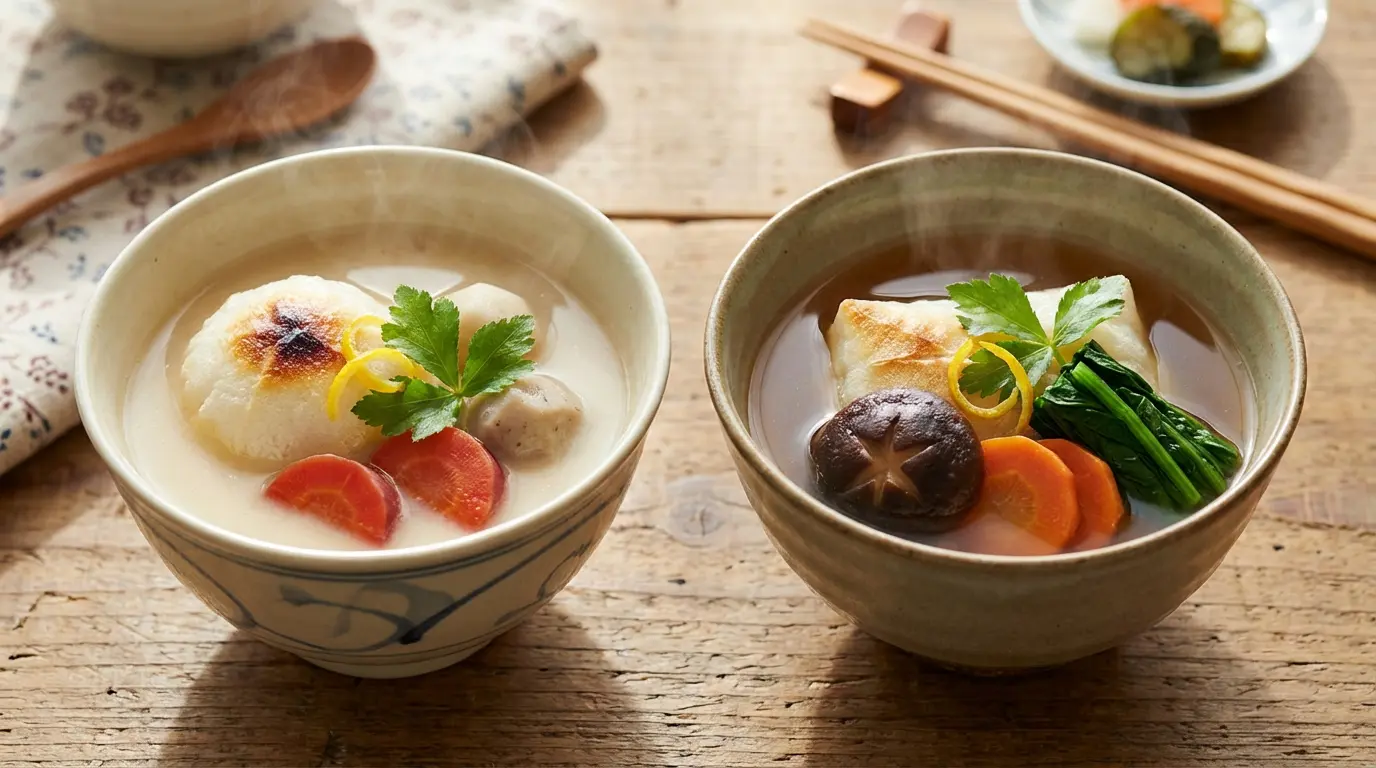
Image showing two traditional ceramic bowls of Ozoni soup side by side. The left bowl displays a pale white miso broth with a round toasted mochi, carrot slices, satoimo taro, mitsuba, and yuzu zest. The right bowl shows a clear amber dashi broth with a rectangular toasted mochi, shiitake, spinach or komatsuna, carrot, mitsuba, and a small yuzu curl. Bright natural lighting and vivid colors highlight the regional differences and make the soup look inviting.
Practical tips and substitutions for Ozoni recipe (Japanese New Year’s mochi soup)
Ozoni adapts well when ingredients are scarce outside Japan. Therefore you can keep the spirit of the dish while using local items. Use these practical swaps and simple safety steps to cook with confidence.
Ingredient substitutions
- Dashi substitute: If kombu or katsuobushi are unavailable, use a mild vegetable stock or a light anchovy broth for umami. For a closer match, steep dried shiitake with a strip of kombu or use instant dashi powder sparingly. For a beginner guide to dashi methods, see the CDC and other food safety resources below.
- White miso and soy sauce: Use white miso for Kansai style. However, you can blend less salty miso with a splash of low-sodium soy sauce if needed. For Kanto clear broth, start with light soy sauce and adjust to taste.
- Vegetables and garnishes: Swap taro with small boiled potatoes. Use frozen spinach if fresh komatsuna is unavailable. Replace yuzu zest with a little lemon zest when yuzu is hard to find.
Mochi safety and preparation
- Heat and texture: Grill or toast mochi until puffed and slightly browned. Then add to hot broth so pieces soften without collapsing.
- Cutting and serving: Cut mochi into small pieces for children and elderly. Remember the warning: “Mochi is very yummy but beware to not eat a lot of it at once, because there is a significant choking hazard and can even cause death.” This quote highlights seasonal risk.
- Extra caution: Supervise young children while they eat. If necessary, simmer mochi longer until very soft.
Flexible cooking tips
- Taste as you go: Season broth slowly because miso and soy sauce vary in saltiness.
- Mix styles: For variety, combine white miso with a touch of clear dashi for balanced flavor.
References
Related keywords: dashi, awase dashi, kombu, katsuobushi, white miso, kamaboko, yuzu, mitsuba, mochi safety, substitute vegetables
Conclusion
Ozoni recipe (Japanese New Year’s mochi soup) captures Japan’s seasonal spirit and family history. Across regions the dish varies in broth, mochi shape, and garnishes. Because those differences reflect local tastes, making Ozoni connects you to place and people.
Mochi brings warm texture and celebratory meaning to every bowl. However, mochi can be dangerous if eaten carelessly. As the seasonal warning reminds us, “Mochi is very yummy but beware to not eat a lot of it at once, because there is a significant choking hazard and can even cause death.” Therefore always cut mochi for children, supervise meals, and soften pieces when needed.
Nihoner.com is an all-in-one platform for learning Japanese language and culture. It offers clear explanations and cultural insights to deepen your cooking context. Moreover it helps you understand the words, customs, and meaning behind recipes like Ozoni.
Enjoy making Ozoni with care and curiosity. With simple swaps and respect for tradition you can share this warming New Year dish with confidence.
Frequently Asked Questions (FAQs)
What is Ozoni recipe (Japanese New Year’s mochi soup) and why is it special?
Ozoni is a traditional New Year soup in Japan. It combines mochi with vegetables in a dashi broth. Families serve it for health, longevity, and prosperity. Regional recipes vary, so each household keeps its own history and flavor.
How do Kansai and Kanto styles differ?
They differ mainly by broth and mochi shape. Kansai uses awase dashi and white miso. It features round grilled mochi and root vegetables like satoimo and daikon. Kanto uses clear kombu and katsuobushi dashi with soy sauce. It has rectangular mochi and leafy greens such as komatsuna or spinach.
- Kansai: white miso, round mochi, kintoki carrot, mitsuba.
- Kanto: clear soy broth, rectangular mochi, shiitake, spinach.
How do I prepare mochi safely to avoid choking?
Grill or toast mochi until puffed. Then add pieces to hot broth so they soften. Cut mochi into small pieces for kids and elders. Remember the warning: “Mochi is very yummy but beware to not eat a lot of it at once, because there is a significant choking hazard and can even cause death.” For choking guidance see CDC and this PubMed summary.
What substitutions work outside Japan?
Use instant dashi or steep dried shiitake with kombu. Swap satoimo for small boiled potatoes. Replace yuzu with lemon zest. Use frozen spinach if fresh komatsuna is unavailable. Adjust miso and soy sauce slowly to control salt.
Any quick tips for beginners?
Taste the broth as you go. Add miso off heat to keep its aroma. Mix styles if you like. Above all, serve mochi with care and supervise young diners.