How Does New Year’s Day in Japan Unfold?


New Year’s Day in Japan: A Cultural Fresh Start
New Year’s Day in Japan is called Ganjitsu and it marks the most important holiday of the year. Families honor the passing year and welcome new hopes. Across the country, people observe customs that blend Shinto, Buddhism, and everyday life. For example, households prepare osechi ryori, a layered set of symbolic dishes. Meanwhile, many visit shrines for hatsumōde, the first temple or shrine visit. Also, children receive otoshidama, money in small envelopes. These rituals shape a warm, reflective season called Shōgatsu. Because many offices close from December 29 to January 3, communities pause. As a result, streets, markets, and shrines take on a ceremonial air. This article will map the key traditions and language you need. You will learn why each custom matters and how locals observe them. Therefore, expect clear explanations, vivid examples, and practical phrases. Read on to explore food, faith, and family at Japan’s New Year.
New Year’s Day in Japan: Osechi Ryori
New Year’s Day in Japan: Hatsumōde and Hatsuhinode
New Year’s Day in Japan: Otoshidama and Nengajō
New Year’s Day in Japan: Osechi Ryori — Celebratory New Year Dishes
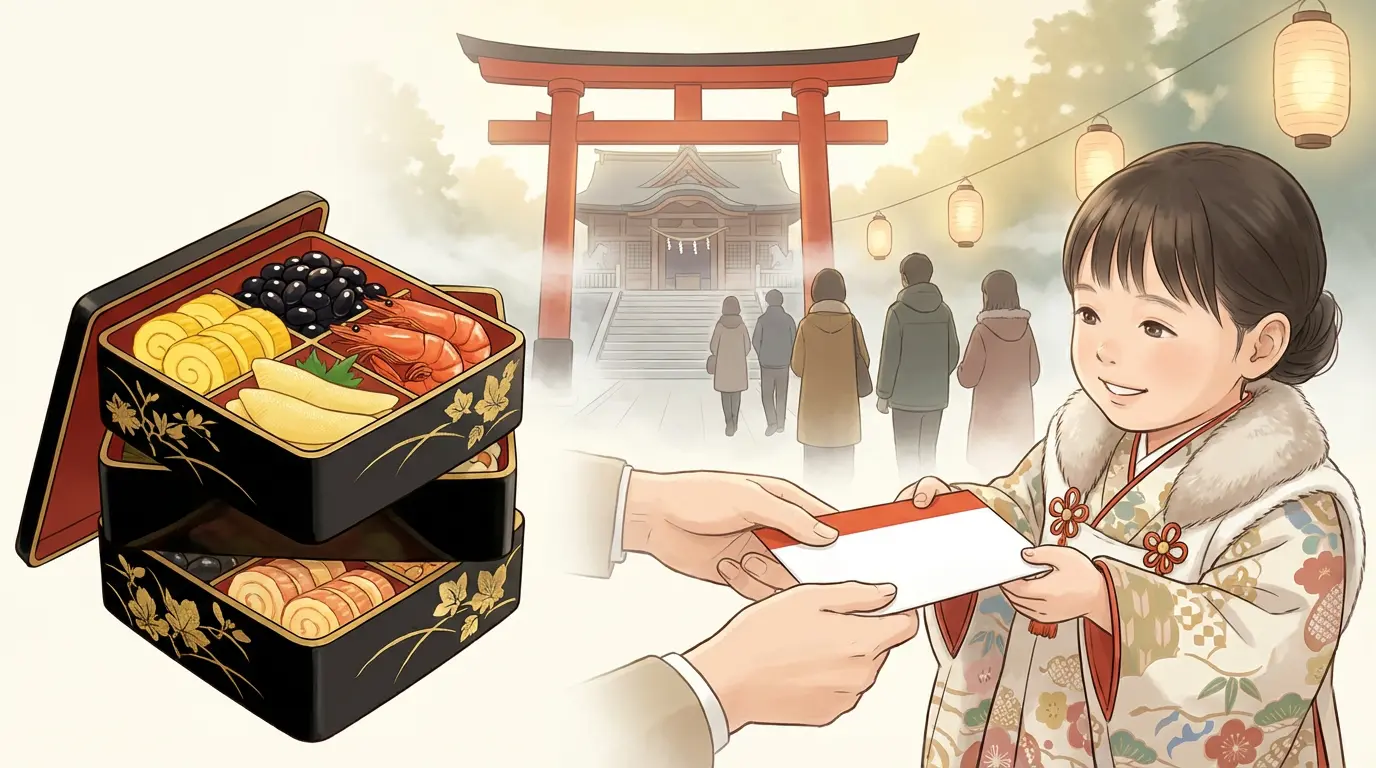
Osechi ryori (osechi ryōri, oh-seh-chee ree-oh-ree) are traditional New Year dishes. They arrive in stacked lacquer boxes called jūbako (jūbako, joo-bah-koh). Each item symbolizes a wish for the coming year. For example, kuromame (black soybeans) represent health. Kazunoko (herring roe) stands for fertility and prosperity. Ebi (shrimp) suggests longevity because the curved shape resembles an elder’s bent back. Because families want to avoid cooking on the first days, they prepare osechi ahead. As a result, stores and specialty makers sell elaborate sets in December. For a deeper cultural overview, see this guide on Osechi Ryori from Nippon Magazine.
New Year’s Day in Japan: Hatsumōde — First Shrine or Temple Visit
Hatsumōde (hatsumōde, haht-soo-mo-deh) is the first shrine or temple visit of the year. People go to pray for health, safety, and good fortune. Major shrines like Meiji Jingu and Sensō-ji draw big crowds. Meanwhile, smaller neighborhood shrines host quieter ceremonies. Visitors often buy omamori amulets and draw omikuji fortunes. If you want practical advice and crowd expectations, Japan Guide explains hatsumōde logistics and timing. During Shōgatsu (Shōgatsu, show-gaht-soo), many families schedule their shrine visit within the first three days. Therefore, transportation and lines swell during that period.
New Year’s Day in Japan: Otoshidama — Cash Gifts for Children
Otoshidama (otoshidama, oh-toh-shee-dah-mah) refers to money given to children at New Year. Adults place bills in small envelopes called pochibukuro (pochibukuro, poh-chee-boo-koo-roh). The amount varies by age and family custom. Children look forward to otoshidama and often spend it later. Historically, the practice ties to offerings that brought blessings from the gods. Meanwhile, nengajō (nengajō, nen-gah-joh) are New Year postcards exchanged to keep social ties strong. Together these customs shape Ganjitsu (Ganjitsu, gan-jitsu), the January 1 holiday. For context about Shōgatsu customs and decorations, Nippon provides a useful summary.
Cultural context and brief phrases
- Kagami mochi (kagami mochi, kah-gah-mee moh-chee) often appears in homes as an offering. It symbolizes continuity and the New Year deity.
- Jubako boxes and symbolic foods connect households to historical practice.
- During Ganjitsu, communities pause work, and family rituals take priority.
These customs blend food, faith, and family meaningfully. They show why New Year’s Day in Japan remains a central cultural moment.
| Custom | Description | Cultural Significance | Popular Locations or Practices |
|---|---|---|---|
| Osechi ryori (osechi ryōri, oh-seh-chee ree-oh-ree) | Traditional layered New Year dishes served in lacquered jubako boxes (jūbako). Families prepare symbolic foods ahead of Jan 1. | Foods symbolize wishes: health, fertility, longevity, prosperity. They allow rest during Shōgatsu and mark Ganjitsu. | Homemade or purchased sets from department stores and specialty makers. Eaten at home on Jan 1. |
| Hatsumōde (hatsumōde, haht-soo-mo-deh) | The first shrine or temple visit of the new year to pray and make offerings. | Prayers, amulets (omamori), and fortunes (omikuji) renew community and personal luck. Central to Shōgatsu. | Major shrines Meiji Jingu and Sensō-ji attract crowds. Visits usually occur within the first three days. |
| Otoshidama (otoshidama, oh-toh-shee-dah-mah) | Cash gifts given to children in small envelopes called pochibukuro. | A modern blessing and practical gift that continues older offering traditions during Ganjitsu. | Given at family gatherings. Amounts vary by age and family custom. |
| Nengajō (nengajō, nen-gah-joh) | New Year postcards sent to friends, family, and colleagues. | They sustain social ties, convey thanks, and often include lottery numbers and greetings. | Sent through the post to arrive on Jan 1. Local post offices handle high volumes. |
| Hatsuhinode (hatsuhinode, haht-soo-hee-noh-deh) | First sunrise viewing of the new year to welcome beginnings. | Watching the first sunrise symbolizes hope and renewal for the year ahead. | Popular spots: Tokyo Skytree, Mount Takao, Cape Inubōsaki. Airlines sometimes offer sunrise flights via lottery. |
New Year’s Day in Japan: Popular Places and Activities
During New Year’s Day in Japan, many people visit famous shrines for hatsumōde (hatsumōde, haht-soo-mo-deh), the first shrine visit of the year. In Tokyo, Meiji Jingu draws huge crowds for its peaceful forest setting and grand torii. Meanwhile, Sensō-ji in Asakusa offers lively streets and historic charm during hatsumōde. These sites blend ceremony and local festival atmosphere in January.
Outside central Tokyo, Naritasan Shinshōji attracts pilgrims and families. Also, Tsurugaoka Hachimangū in Kamakura offers a more regional hatsumōde experience. Because many people travel during Shōgatsu (Shōgatsu, show-gaht-soo), expect crowded trains and busy approach roads.
For hatsuhinode (hatsuhinode, haht-soo-hee-noh-deh), Tokyo Skytree provides panoramic sunrise views. Meanwhile, Mount Takao offers a nature-focused sunrise experience with short hikes to the summit. For a coastal view, locals head to Cape Inubōsaki to watch the first sunlight over the Pacific.
Airlines sometimes sell special first sunrise flights. All Nippon Airways and Japan Airlines run limited New Year flights that show the first sunrise from the air. These flights sell by lottery due to extreme demand. Often, flights include an osechi-style bento and commemorative gifts.
For travelers and locals, plan ahead and travel early. Also, allow extra time for lines at popular shrines. Finally, show respect at sacred sites by following shrine etiquette and queue rules, because New Year observances remain deeply meaningful across communities.
Conclusion
New Year’s Day in Japan brings together food, faith, and family in a powerful way. Over Ganjitsu and during Shōgatsu, households prepare osechi ryori, parents give children otoshidama, and communities gather for hatsumōde. These customs combine history and everyday life. As a result, the holiday feels both sacred and warmly domestic.
Understanding these traditions deepens cultural appreciation. Therefore, learning the meanings behind foods, shrine visits, and New Year cards helps visitors and learners show respect. For example, knowing why people visit Meiji Jingu or draw omikuji clarifies local behavior. Also, simple phrases and correct pronunciation make interactions smoother and more meaningful.
If you want to connect language study with real cultural practice, visit Nihoner.com. Nihoner goes beyond vocabulary memorization. It offers structured courses, pronunciation training, cultural guides, and practical lessons tied to daily life in Japan. Whether you want phrases for hatsumōde or explanations of osechi symbolism, Nihoner helps you use language in context. Explore Nihoner for a richer understanding of Japanese language and culture, and to bring New Year traditions to life through learning.
Frequently Asked Questions (FAQs)
What is Ganjitsu and how does it relate to Shōgatsu?
Ganjitsu (gan-jitsu, New Year’s Day) falls on January 1. It marks the start of Shōgatsu (shoh-gaht-soo), the broader New Year holiday. Families rest and observe customs during the first days. Because many offices close from December 29 to January 3, travel and shopping rhythms change across Japan.
What is osechi ryori and why is it important?
Osechi ryori (oh-seh-chee ree-oh-ree) are layered celebratory dishes served in jūbako (joo-bah-koh) boxes. Each food has meaning. For example, kuromame means health. Kazunoko signals fertility. Ebi suggests long life. People prepare osechi ahead to avoid cooking on New Year days. As a result, the food preserves traditional wishes for fortune.
What happens during hatsumōde and where do people go?
Hatsumōde (haht-soo-mo-deh) is the first shrine or temple visit of the year. People pray, buy omamori amulets, and draw omikuji fortunes. Major Tokyo sites include Meiji Jingu and Sensō-ji. Meanwhile, Naritasan Shinshōji and Tsurugaoka Hachimangū host many visitors. Expect long lines, so arrive early. Also, follow shrine etiquette when you pray.
How does otoshidama work and what should parents expect?
Otoshidama (oh-toh-shee-dah-mah) is cash given to children in pochibukuro envelopes. Amounts vary by age and family custom. Older children usually receive larger sums. If you host guests, have small envelopes ready. Also, explain that the practice links to older offerings and modern celebration.
Any practical tips for visitors during New Year’s Day in Japan?
Plan ahead and expect crowds. Trains can be busy and some offices close for Shōgatsu. Bring cash for shrine offerings and small purchases. For hatsuhinode (haht-soo-hee-noh-deh), try Tokyo Skytree, Mount Takao, or Cape Inubōsaki. Finally, note that ANA and JAL run limited first sunrise flights by lottery, because demand far exceeds seats.