How do Japanese New Year traditions in Tokyo unfold?


Japanese New Year Traditions in Tokyo
Japanese New Year traditions in Tokyo offer a vivid mix of solemn ritual and lively local customs. This introduction explains kadomatsu, nengajō, joya no kane, and other oshōgatsu highlights. Because New Year marks an important seasonal reset here, rituals matter to families and neighborhoods. However, urban Tokyo adds unique twists to classic practices, from temple bell ringing to modern shopping events.
Expect tranquil temple visits, colorful kadomatsu at entrances, and stacks of nengajō ready for delivery. Also look for joya no kane at major temples, where bells ring 108 times to cleanse the mind. You will find hatsumōde pilgrimages, sunrise hatsuhinode viewings, and osechi boxes at specialty shops. For travelers, this season blends family focus with public ceremonies that welcome the new year. Read on for practical tips, local rhythms, and must-see spots for a respectful visit. Therefore this guide includes etiquette tips, transit notes, and where to enjoy New Year events safely.
Japanese New Year traditions in Tokyo: kadomatsu, nengajō, joya no kane
Tokyo’s New Year season blends ancient ritual with modern city life. Kadomatsu, nengajō, and joya no kane stand at the center of oshōgatsu customs. Each practice marks a different way Tokyoites welcome renewal, offer thanks, and seek good fortune.
Kadomatsu: pine, bamboo, and welcoming the gods
Kadomatsu are decorative arrangements placed outside homes and businesses from late December. They typically use pine, bamboo, and plum branches. Pine symbolizes longevity, bamboo shows strength and growth, and plum promises resilience. Traditionally, kadomatsu act as temporary seats for the toshigami, the year god. In Tokyo, you will see elegant kadomatsu at shrine gates, hotel entrances, and outside shops during the first week of January. Many neighborhoods display handmade or shop-bought versions. Because they are ritual objects, kadomatsu are respectfully burned after January 7.
Nengajō: postcards that carry wishes and lottery numbers
Sending nengajō remains a widespread custom in Tokyo and across Japan. People send these New Year greeting cards to family, friends, and business contacts to thank and to wish for health and success. Japan Post issues special nengajō designs and lottery-number cards each year, making them collectible and fun to send; details are available at Japan Post. Many convenience stores and stationery shops sell printed designs in December.
Joya no kane: 108 bell rings to purify the year
Joya no kane is a solemn Buddhist ceremony held on New Year’s Eve. Temples ring a large bell 108 times to symbolize the cleansing of earthly desires. The number 108 comes from Buddhist teachings about defilements, and readers can learn more about this symbolism here: Britannica. Famous Tokyo temples such as Zōjō-ji and Sensō-ji host large joya no kane events that draw locals and visitors alike; plan to arrive early at Zōjō-ji and at Sensō-ji because crowds swell near midnight.
These three traditions capture the season’s twin moods: quiet reflection and communal celebration. Therefore, when you visit Tokyo around New Year, look for kadomatsu at doorways, stacks of nengajō in post offices, and the deep, resonant toll of temple bells.
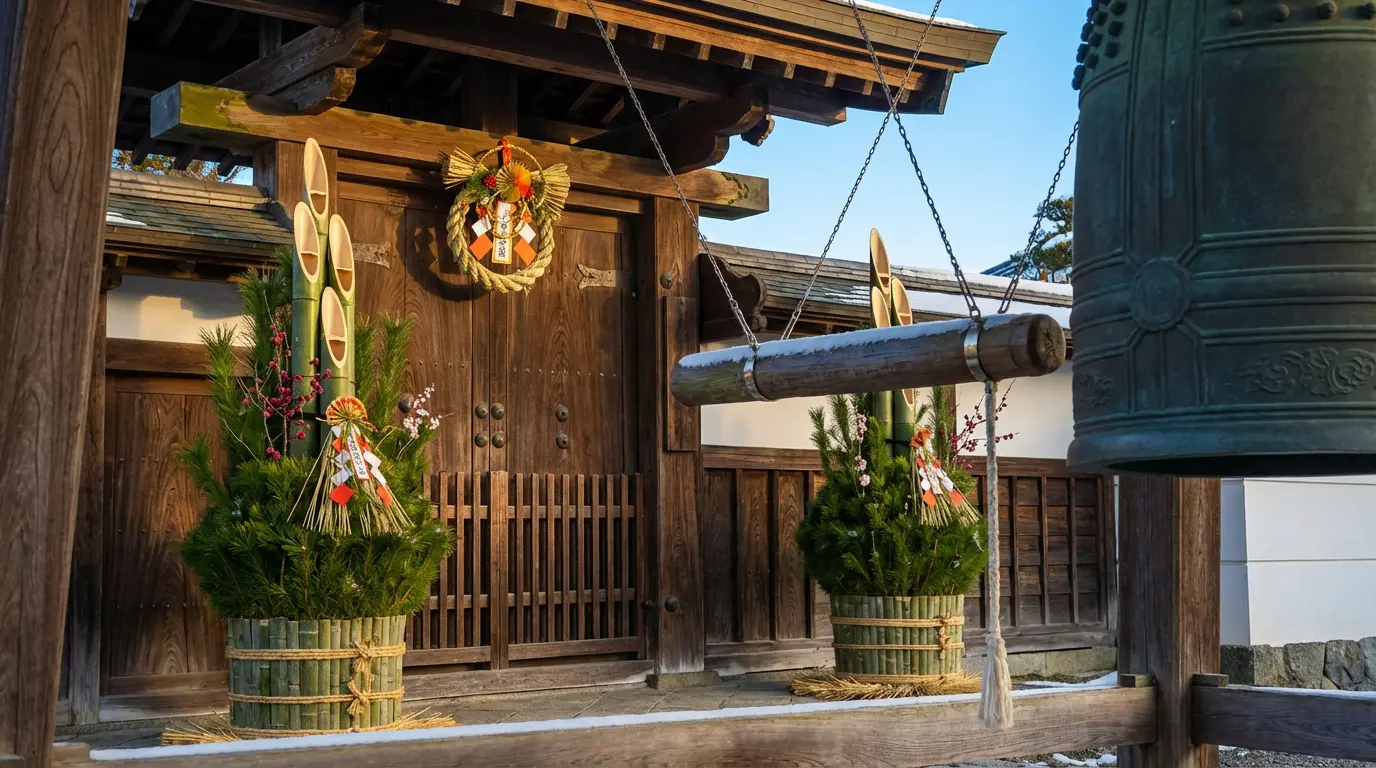
Image source: https://nihoner.com/wp-content/uploads/2025/12/img-kadomatsu-temple-bell-joya-no-kane.jpg
Public celebrations and Japanese New Year traditions in Tokyo
Tokyo offers a mix of quiet family ritual and lively public events during New Year. Because many people travel or visit shrines, the city feels both festive and reflective. Visitors should expect ceremonies, broadcasts, shopping traditions, and transport changes.
JR overnight trains and metro schedules
JR East runs special overnight services on key lines from December 31 into January 1. Therefore travelers can rely on select JR lines to move around late at night. However, Tokyo Metro will not run overnight and operates on a holiday schedule instead. Check JR overnight details here: JR overnight details and Tokyo Metro holiday notices here: Tokyo Metro holiday notices.
Kōhaku Uta Gassen on NHK and countdown culture
NHK’s Kōhaku Uta Gassen remains a national staple on New Year’s Eve. The show airs from the evening into late night and unites families in front of the television. For program details see NHK coverage: NHK coverage.
Fukubukuro and New Year sales
Many stores open on January 1 with fukubukuro lucky bags and sales. Shoppers queue early for limited-edition bags and big discounts. For a useful background about fukubukuro and how they work, visit Japan Guide: Japan Guide.
Hatsumōde and where to go
Popular hatsumōde spots include Meiji Shrine, Sensō-ji, Zōjō-ji, and Kanda Myōjin. These places attract large crowds during January 1–3, so plan accordingly. As a tip, visit a smaller local shrine to avoid long lines and to enjoy a calmer experience. Also arrive early, carry cash for offerings and charms, and dress warmly for outdoor queues. For guidance on Meiji Shrine and alternatives, see: Meiji Shrine Guidance.
These public activities shape Tokyo’s New Year rhythm. As a result, you can combine cultural events with practical planning for a smooth visit.
New Year events at a glance
| Event Name | Location | Date(s) | Special Notes or Tips |
|---|---|---|---|
| Joya no kane (bell ringing) | Zōjō-ji; Sensō-ji | Dec 31 at midnight | Arrive early; large crowds; 108 bell rings purify the year. |
| Hatsumōde (first shrine visit) | Meiji Shrine; Kanda Myōjin; Sensō-ji | Jan 1–3 | Very busy Jan 1; visit a smaller shrine to avoid long queues. |
| Fukubukuro (lucky bags) | Matsuya Ginza and major department stores | Jan 1 | Queue early; limited editions sell out fast. |
| Kōhaku Uta Gassen (TV special) | NHK broadcast | Dec 31 evening | Family viewing; airs into late night. |
| JR overnight services | Major JR lines | Dec 31–Jan 1 overnight | Useful for travel; Tokyo Metro does not run overnight. |
| Hatsuhinode (first sunrise) | Tokyo Tower; observatories | Jan 1 morning | Book observatory tickets early; dress for cold. |
| Ōji Fox Parade | Ōji Inari Shrine | Jan 1 (parade date varies) | Registration required to join; family-friendly. |
| Kanchu misogi (winter bath ritual) | Teppozu Inari Shrine | Early January | Traditional cold-water purification; public viewing possible. |
Japanese New Year Traditions in Tokyo
Japanese New Year traditions in Tokyo tie communities to centuries of shared meaning. These rituals blend reflection, gratitude, and hopes for renewal each year. Because families and neighbors observe oshōgatsu together, social bonds strengthen. Also, visitors witness solemn bell ringing and colorful kadomatsu at shrine gates. These customs preserve language, food, and seasonal crafts for future generations.
The season feels both intimate and citywide in Tokyo’s streets. Moreover, public events and shop traditions create festive, modern touches. As a result, experiencing hatsumōde or fukubukuro reveals local rhythms. For respectful visits, arrive early and follow simple shrine etiquette.
To learn more and deepen cultural understanding, use Nihoner.com. Nihoner offers a large dictionary, pronunciation trainer, courses, and cultural guides. Therefore it helps language learners connect words to customs and practice correctly. Visit Nihoner to explore tools that enrich study and travel planning. Its tools suit beginners through advanced learners, support cultural curiosity.
Frequently Asked Questions (FAQs)
What are kadomatsu and when are they displayed?
Kadomatsu are pine, bamboo, and plum decorations placed outside homes and shops from late December. They welcome the toshigami because they symbolize longevity and resilience. After January 7 locals burn them respectfully.
What is nengajō and when should I send or expect one?
Nengajō are New Year greeting cards sent to arrive on January 1. In addition, many include lottery numbers and special designs. Buy them at Japan Post, convenience stores, or stationery shops.
What is joya no kane and where can I hear it?
Joya no kane is the temple bell ceremony on New Year’s Eve. Because it purifies, many attend. Temples ring a large bell 108 times to purify earthly desires. Famous spots include Zōjō-ji and Sensō-ji. Therefore arrive early for space.
How can I experience hatsumōde without long queues?
Visit smaller neighborhood shrines or go later on January 2 or 3. Also arrive early in the morning and carry cash for offerings and charms.
Any practical travel tips for New Year in Tokyo?
JR runs overnight trains on December 31, but Tokyo Metro usually does not. Shops offer fukubukuro on January 1, so expect long lines. Dress warmly. Therefore check transport schedules in advance.