How do Japanese New Year traditions in Tokyo unfold?


Japanese New Year traditions in Tokyo unfold with a vivid mix of ancient ritual and modern spectacle. From shrine visits and joya no kane bell ringing to neon countdowns and Fukubukuro lucky bag sales, the city transforms. Because Tokyo blends old and new, every moment feels both reflective and exhilarating.
Locals practice hatsumōde at Meiji Shrine and Sensō-ji, while visitors join crowded celebrations across neighborhoods. However, ceremonies range from quiet temple prayers to lively countdowns at Shibuya Crossing and ticketed parties. Osechi ryōri, toshikoshi soba and nengajō carry deep meaning, and kadomatsu decorate doorways. Therefore, food, fortune and community shape how Tokyo welcomes the year.
You can hear joya no kane rung 108 times at famous temples like Zōjō-ji and Sensō-ji. As a result, the bells offer reflection and a symbolic cleansing of earthly desires. Meanwhile, modern events include observatory hatsuhinode sunrise viewings and nightlife countdowns at places like Sky Circus and Joypolis. For example, some observatories host the first sunrise between 6:30 and 7:10 a.m.
This guide will help you pick experiences, from peaceful hatsuhinode to bustling Fukubukuro sales. It also explains crowds, timing, and practical tips for visiting between 3 a.m. and 8 a.m. By the end, you will know when to join a shrine, which foods to try, and where to watch Tokyo welcome the new year.
Key Japanese New Year Traditions in Tokyo
Tokyo’s New Year combines ritual, food, and festive shopping. Because the city mixes old and new, you will see quiet temple rites beside neon countdowns. Therefore, these traditions offer a clear window into Japanese culture and community.
Joya no kane (joya no kane, New Year’s Eve bell ringing) marks the transition with 108 rings. The number 108 represents earthly desires that cause suffering. At temples such as Zōjō-ji and Sensō-ji, priests strike the bell while crowds listen in reflective silence. However, large crowds gather from late night until just after midnight, so plan your visit carefully. For practical guidance, see a trusted overview at Japan Guide.
Hatsumōde (hatsumode, first shrine visit of the year) remains the most popular ritual. Locals queue at Meiji Shrine, Kanda Myōjin, and smaller neighborhood shrines to pray. Because hatsumōde blends prayer and social life, people buy omamori charms and draw omikuji fortunes. Meanwhile, hatsuhinode (hatsuhinode, first sunrise) draws early risers to observatories and seaside spots to greet the new sun.
Nengajō (nengajō, New Year greeting cards) still land in many mailboxes. These cards often include lottery numbers and local prizes. Toshikoshi soba (toshikoshi soba, year-crossing buckwheat noodles) symbolizes a wish for longevity. Osechi ryōri (osechi ryori, New Year boxed food) brings layered dishes, each item carrying a wish for health or prosperity. Therefore, many families order osechi in advance because it requires significant time and skill to prepare.
Fukubukuro (fukubukuro, lucky bags) bring a lively modern twist. Retailers fill sealed bags with discounted goods and sell them on January 1. As a result, shopping districts buzz with crowds and holiday sales. For broader cultural context on New Year customs and media events like NHK’s Red-and-White Song Battle, visit NHK. For history and deeper explanations of traditions, check Nippon.
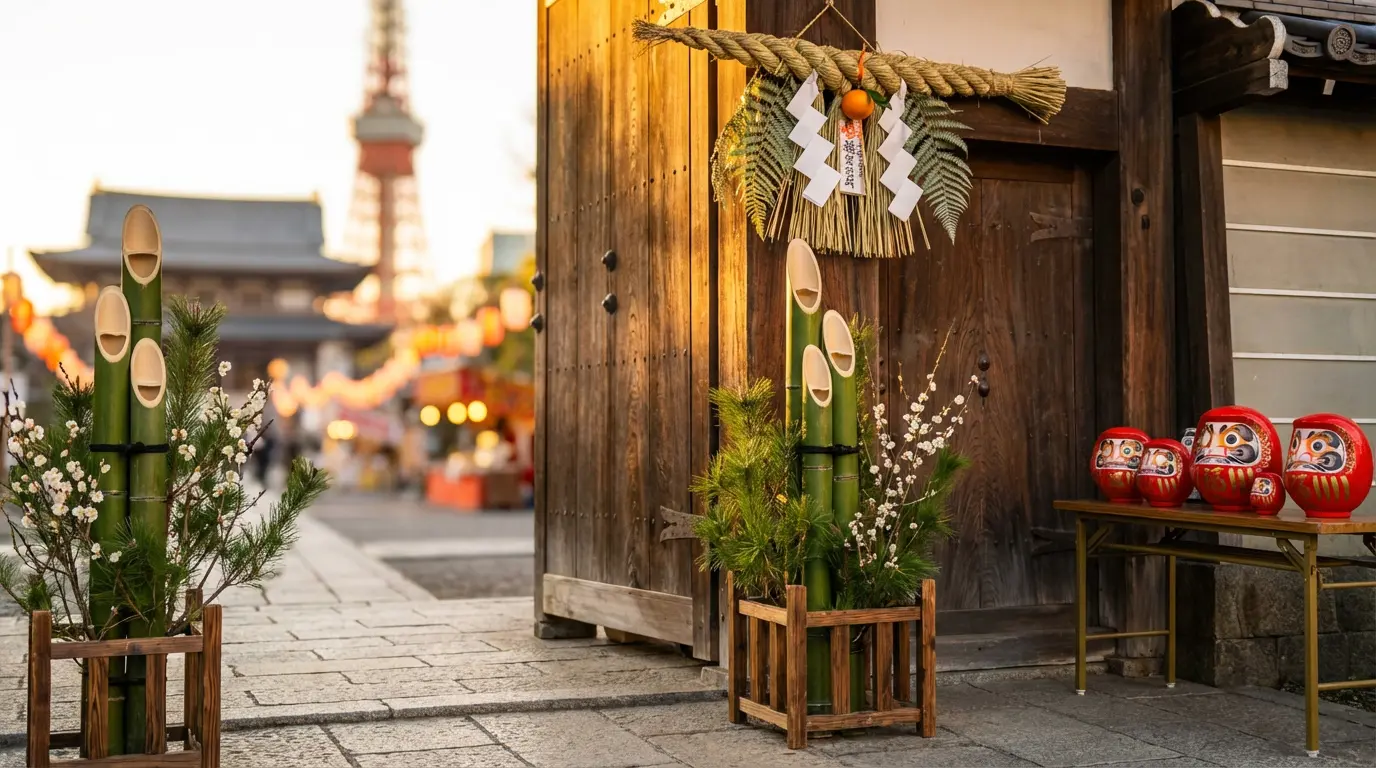
These customs include kadomatsu and shimekazari decorations, Daruma dolls, and simple rites of thanks. Together, they create a layered and welcoming oshōgatsu (oshogatsu, New Year) experience in Tokyo.
Compare popular New Year countdown events and local celebrations to choose the best fit.
| Event | Location | Admission fees | Highlights and activities | Crowd expectations |
|---|---|---|---|---|
| Joypolis | Odaiba indoor amusement complex | Admission and ride fees apply; ticketed NYE programs | Indoor rides, live countdown shows, themed attractions | Moderate to high; tickets often sell out |
| SKY CIRCUS Sunshine 60 Observatory | Ikebukuro observatory | Observatory ticket required; special countdown sessions possible | Panoramic night views, countdown events, themed exhibits | Moderate; book tickets in advance |
| Kasai-Rinkai Park countdown | Edogawa waterfront park | Free entry; some attractions charge (Ferris wheel) | Waterfront viewing, family-friendly spaces, occasional fireworks | High near sunset and midnight; family crowds |
| Shibuya Crossing countdown | Shibuya scramble crossing | Free public event | Street-side countdown, DJ sets, neon spectacle, street parties | Very high; intense crowds and limited space |
| Yokohama Sparkling Twilight | Minato Mirai waterfront, Yokohama | Mostly free; some paid zones for prime viewing | Fireworks, light shows, live music, harbor views | High; popular with couples and families |
Unique Local Events to Experience Japanese New Year Traditions in Tokyo
Tokyo hides several local New Year events that feel intimate and traditional. For example, these ceremonies connect Tokyoers to old myths and seasonal rituals. Therefore, visitors who seek less crowded experiences should consider them.
The Ōji Fox Parade (kitsune no gyoretsu, fox procession) recreates an Edo period legend. Participants wear fox masks and carry lanterns on New Year’s Eve. The procession honors Inari shrines and the fox spirits that serve the deity. Because the parade follows a fixed route through Ōji, you can watch without entering temple grounds. For details and schedules, check the official GO TOKYO guide.
Teppozu Inari Shrine hosts a kanchu misogi (kanchu misogi, winter purification) ritual. Devotees take an icy water plunge to purify body and spirit. This rite dates back decades and celebrates resilience and health for the coming year. If you plan to attend, arrive early and wear layered clothing to stay warm after the cold bath. See recent event notes at GINZA OFFICIAL.
Hatsuhinode (hatsuhinode, first sunrise) viewing remains a meaningful way to start the year. Both the Tokyo Metropolitan Government Building and Tokyo Tower host sunrise observances. Typically, the first sun appears between 6:30 and 7:10 a.m. in early January. However, observatory opening times vary, so verify schedules in advance. For background on Tokyo Tower’s traditions, read Nippon.
Plan your timing to avoid major crowds. Large gatherings form from 11 p.m. until about 2 a.m., especially at popular temples. Instead, visit between 3 a.m. and 8 a.m. to find quieter moments. As a result, you can enjoy both ritual depth and local color during oshōgatsu.
Tokyo’s New Year
Tokyo’s New Year offers a remarkable mix of ritual, food, and modern spectacle.
Ancient bells, shrine prayers, seasonal foods, and neon countdowns sit side by side.
Together they reveal a deep cultural logic and everyday warmth.
Visitors gain more than photo opportunities; they gain insight into values and rhythm.
For example, joya no kane and hatsumōde show reflection and renewal.
Meanwhile, local parades and Fukubukuro sales show playful community energy.
Therefore, Tokyo gives both quiet meaning and lively celebration.
If you want to learn the language and context, Nihoner.com can help.
Nihoner.com offers courses that focus on real progress.
It teaches practical phrases, cultural notes, and travel tips for real situations.
As a result, learners speak with more confidence when visiting shrines or shops.
Sign up to connect language learning with culture and city life.
Whether you plan a quiet hatsumōde or a neon countdown, these traditions invite participation.
Therefore, plan ahead, respect local customs, and enjoy the moment.
Frequently Asked Questions (FAQs)
When is the best time to visit shrines during New Year?
Visit shrines between 3 a.m. and 8 a.m. to avoid the largest crowds. However, early morning still offers ritual atmosphere and hatsuhinode sunrise events. If you prefer peak energy, arrive before midnight instead.
What is the significance of joya no kane?
Joya no kane are temple bell rings on New Year’s Eve. The bell sounds 108 times because that number represents earthly desires. Therefore, the ritual symbolizes cleansing and a fresh start.
Any tips for attending countdown events in Tokyo?
Buy tickets early for ticketed venues like Joypolis or observatories. Meanwhile, for free public spots, arrive very early and plan an exit route. Also, dress warmly and keep belongings secure.
What does Fukubukuro mean and how does it work?
Fukubukuro literally means lucky bag. Shops pack mystery goods and sell them at a discount on January 1. As a result, stores draw long lines and early shoppers.
How can I learn more about Japanese culture and language before visiting?
Use Nihoner.com to learn practical phrases and cultural context. Nihoner.com focuses on real progress and travel-ready language. Therefore, learners gain confidence to speak and interact in Tokyo.