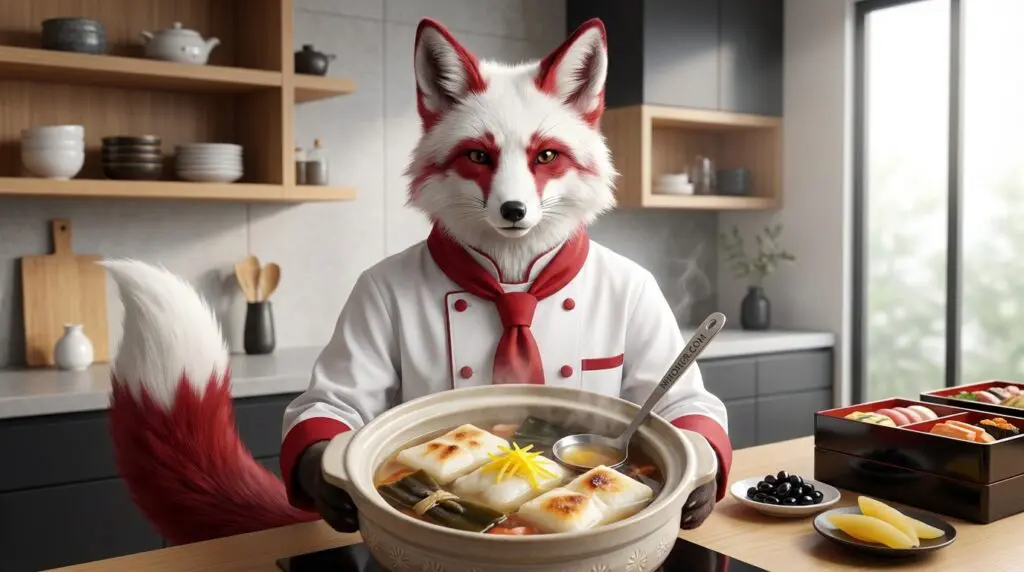
Why does 外国人と日本人が一緒に雑煮を作るイベント matter in Kagawa?


Foreigners and Japanese Making Zōni Together (外国人と日本人が一緒に雑煮を作るイベント, gaikokujin to nihonjin ga issho ni zōni o tsukuru ibento)
In Kagawa Prefecture the sweet zōni shines in small community kitchens. This event, 外国人と日本人が一緒に雑煮を作るイベント (gaikokujin to nihonjin ga issho ni zōni o tsukuru ibento), invites residents and visitors to cook together. For visitors the sweet mochi filled with anko reveals regional identity and a warm welcome.
Moreover, participants share stories, learn techniques, and taste contrasts of sweet and savory flavors. Therefore the event becomes a living classroom where local cooks explain how Kagawa zōni uses sweet anko inside mochi, discuss seasonal vegetables, and guide newcomers through broth variations, while foreign guests compare tastes with their own home soups, ask questions, and leave with recipes, new friendships, and a deeper respect for regional food culture, and often take home small jars of seasonal pickles and printed guides and photographs from the local volunteers too.
Kagawa’s sweet zōni tradition
Kagawa Prefecture serves a distinctive New Year soup known locally as anmochi zōni. In Japanese this dish is called あんもち雑煮 (anmochi zōni) which literally means anmochi zōni. The main feature is 餅 (mochi, pronounced mochi, rice cake) stuffed with あんこ (anko, pronounced anko, sweet red bean paste). Moreover the soup often uses a white miso base and seasonal vegetables from 香川県 (Kagawa-ken, pronounced Kagawa Prefecture). As a result the flavor reads as sweet with a light savory balance.
This version differs from the salty zōni found elsewhere. 雑煮 (zōni, pronounced zōni, New Year soup) typically varies by region and household. In Kagawa the 小豆 (azuki, pronounced azuki, red bean) filling gives the dish a dessert like note. Therefore families serve it during 正月料理 (shōgatsu ryōri, New Year dishes) to celebrate prosperity and local taste.
Food historians link anmochi zōni to sugar production in the Sanuki domain. For further reading see a regional write up at Yousakana and a broader note from the Ministry of Agriculture at Ministry of Agriculture. Additionally a detailed description appears at Eats.jp. These sources explain the dish’s history and its place in 香川県 culture.
Regional zōni comparison
Below is a quick comparison of common zōni styles across Japan, showing taste, ingredients, and cultural notes. Therefore readers can see contrasts quickly.
| Region | Taste profile | Typical ingredients | Mochi type | Broth base and cultural significance |
|---|---|---|---|---|
| Kagawa (香川県 Kagawa-ken, Kagawa Prefecture) | Sweet and mildly savory | 餅 (mochi, rice cake) stuffed with あんこ (anko, sweet red bean paste), 小豆 (azuki, red bean), seasonal vegetables | Stuffed mochi or round mochi | White miso or lightly sweet broth. Served as 正月料理 (shōgatsu ryōri, New Year dishes). Reflects local sugar and Sanuki traditions |
| Kansai (関西 Kansai) | Mildly sweet to savory | 丸餅 (maru-mochi, round mochi), white miso, vegetables like daikon and carrot | Round mochi | White miso base. Linked to Kyoto court and regional tastes, therefore gentle flavors dominate |
| Kanto (関東 Kanto) | Savory and clear | 角餅 (kaku-mochi, square mochi), dashi, soy sauce, root vegetables | Square or grilled mochi | Clear dashi and soy sauce. Edo style influence makes it savory and robust |
| Tohoku (東北 Tōhoku) | Hearty and savory | Grilled or boiled mochi, miso or soy broths, local root vegetables, sometimes seafood | Grilled or boiled mochi | Rich, warming broths for cold winters. Served as a nourishing New Year meal |
| Kyushu (九州 Kyūshū) | Savory with local twists | Mochi, local vegetables, sometimes chicken or pork additions | Varies by island | Uses dashi or regional stocks. Ingredients reflect island produce and festivals |
This table highlights how 雑煮 (zōni, New Year soup) changes across regions, and why 香川県’s sweet style stands out.
Sakaide City community event
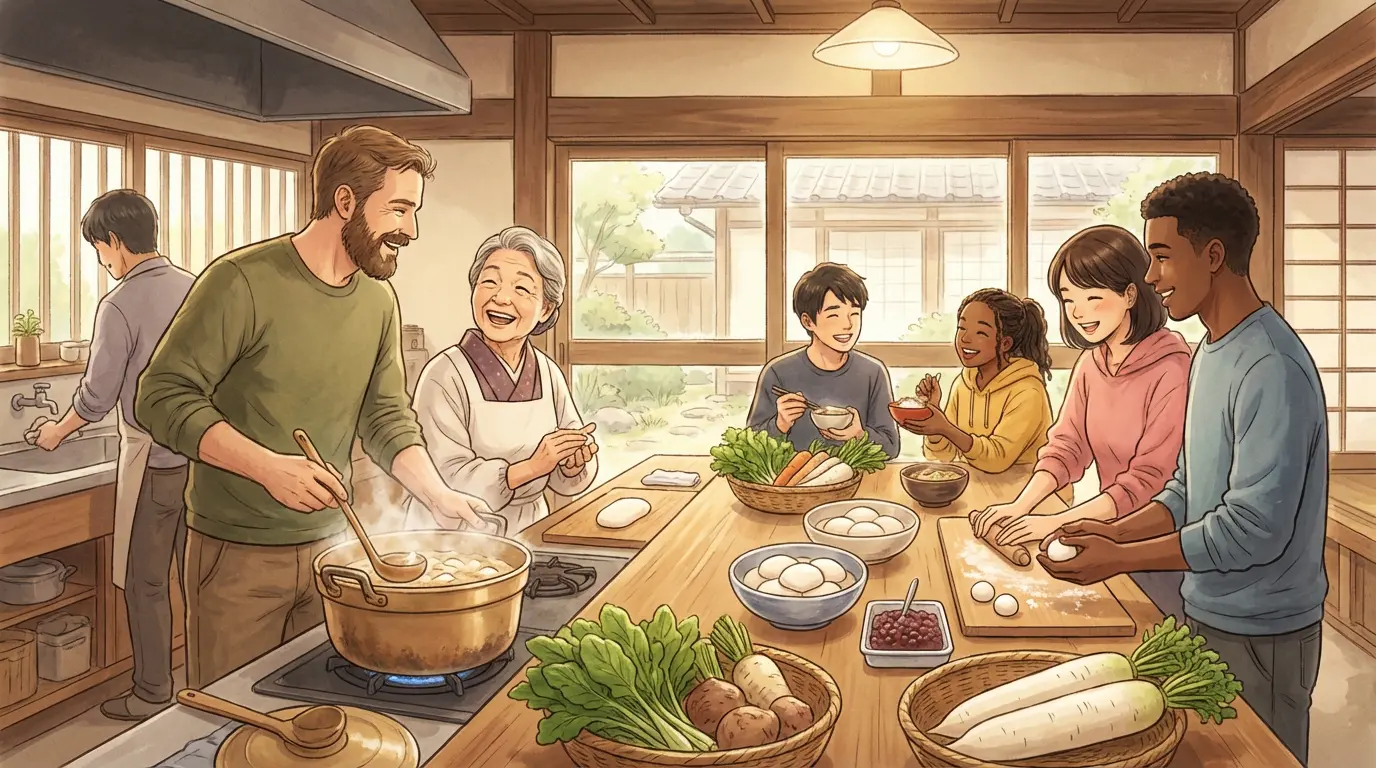
On the 14th in 坂出市 (Sakaide-shi, Sakaide City) a warm community event brought locals and visitors together. Fourteen participants, noted as 14人, joined the 外国人と日本人が一緒に雑煮を作るイベント. The group included Japanese cooks and foreign newcomers. Volunteers explained how to prepare anko filled mochi and the broth. Therefore everyone helped shape the stuffed 餅 and stir large steaming pots. The atmosphere felt lively and gentle. Participants laughed while tasting both sweet and salty versions for the first time. Many foreign guests said they enjoyed the unexpected balance of flavors. Moreover local cooks listened to guests explain similar New Year dishes from their countries. As a result the event became an open 体験 in culture and cooking.
Conversations flowed over bowls and shared recipes. People exchanged tips about 小豆 and seasonal produce. Some swapped phone contacts and promised future visits. The event added practical knowledge about 香川県 cuisine. It also created lasting memories of communal cooking and cross cultural friendship. Many participants left with printed recipes and smiles. Because people cooked together, language barriers eased and friendships began. Photographs captured hands shaping mochi and warm bowls shared. In short the イベント showed how food bridges differences and inspires curiosity.
Conclusion
Community cooking events show how food connects people across cultures and generations. They create shared tasks, laughter, and hands-on learning, therefore building trust and curiosity. In Sakaide and other towns local recipes reveal regional history and identity. As a result dishes like Kagawa’s sweet zōni gain wider appreciation and respect.
The shared cooking experience encouraged curious questions and generous explanations among participants. Participants tasted Kagawa’s sweet zōni and compared it to more common salty soups. Because people cooked together they freely exchanged memories, techniques, and recipes. Moreover the workshop offered a respectful cultural experience that bridged language gaps.
Nihoner.com supports learners who explore Japanese food, language, and daily life. Its mission helps learners understand and use Japanese in real life contexts. The site offers a robust dictionary, pronunciation trainers, practical phrase lists, and cultural guides. Therefore learners gain language skills and a richer appreciation of local traditions and food. Join local events to taste, learn, and connect.
Frequently Asked Questions (FAQs)
What Is Zōni?
Zōni is a traditional Japanese New Year soup featuring mochi in a regional broth. Ingredients, mochi shape, and seasonings vary by region, so flavors reflect local history and seasonality.
How Do Zōni Styles Vary Across Japan?
Styles differ in broth base, mochi type, and toppings. For example Kanto uses clear dashi and square mochi; Kansai favors white miso and round mochi; Kagawa features anko-filled mochi and a sweeter profile.
Why Is Kagawa’s Sweet Zōni Significant?
Kagawa’s anmochi zōni uses mochi filled with anko sweet red bean paste giving a dessert-like note. It highlights local sugar traditions and Sanuki regional identity.
What Did Participants Experience At The Sakaide Event?
Fourteen Japanese and foreign participants cooked together, shaped anko-filled mochi, tasted sweet and savory versions, exchanged recipes and contacts, and built friendships through hands-on practice.
How Do Events Like This Promote Cultural Understanding?
Community cooking lowers barriers, encourages questions, and supports informal language exchange. Working side by side creates trust, shared memories, and ongoing curiosity about local culture.
How Can I Participate In A Local Zōni Event In Kagawa?
To join a zōni event in Kagawa, search municipal event calendars, community centers, local volunteer groups, and social media for community cooking or cultural exchange listings. Contact tourist information centers or international resident support groups for English assistance. Often events have small fees or request reservations; arrive ready to help with prep and to share food and stories.