How to make Kakitamajiru (Japanese egg drop soup)?


Kakitamajiru (Japanese egg drop soup): A Simple Homestyle Soup to Warm Your Kitchen
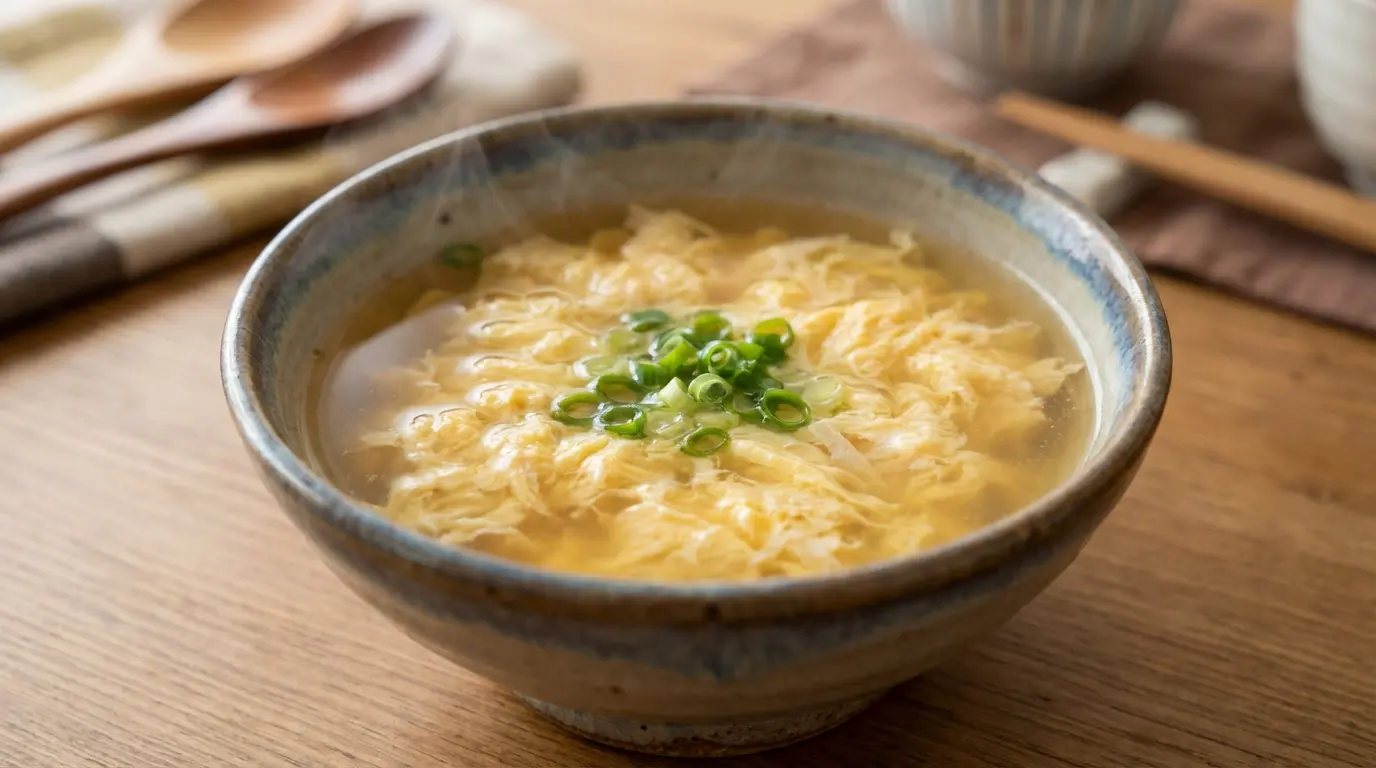
Kakitamajiru (Japanese egg drop soup) is a cozy and simple dish to make at home. In this brief guide I show how homestyle Japanese cooking can be approachable and comforting for busy cooks. Using a clear dashi base and fresh eggs you can make soft silky ribbons in about ten minutes. For example, a light bonito dashi keeps the broth savory without weighing it down. In addition, small techniques like pouring eggs slowly and keeping the broth around eighty five degrees Celsius help the texture. This friendly introduction aims to give you clear steps so you feel confident and the recipe reduces the anxiety of trying new dishes.
Checkpoint: This quick soup combines umami broth and silky egg ribbons for an easy homestyle meal.
Introduction
Kakitamajiru (kakitamajiru) meaning “Japanese egg drop soup” is a quick and comforting dish from Japanese homestyle cooking. It comes together in about ten minutes and warms both body and mood. The broth is the heart of the soup, so dashi matters. Dashi made from bonito flakes gives a clean umami base that supports the eggs without overpowering them. Using usukuchi soy sauce keeps the broth bright and light.
Key reasons home cooks love this soup
- Ready in about ten minutes
- Uses simple pantry items like bonito flakes and eggs
- Produces silky egg ribbons with small technique gains
Insight
Fresh eggs and a gentle pour create the signature soft ribbons. Pour beaten eggs slowly into broth held just below a simmer and stir gently to form soft, silky strands. A small cornstarch slurry helps ribbons stay suspended. Because the method is clear your results are more certain and each successful batch is a tiny progress milestone. Try adding chopped green onions for fresh flavor and color.
Micro win invitation
Join for a quick win and guided practice tips at nihoner to build confidence with simple recipes.
Checkpoint: This simple soup pairs clear dashi with soft egg ribbons for an easy homestyle comfort dish.
Recipe Steps for Kakitamajiru (Japanese egg drop soup)
Total time about ten minutes. This method creates a clear dashi base and soft egg ribbons.
Ingredients
- 500 ml water
- 20 g bonito flakes (Katsuo) for dashi
- 1 piece kombu optional for vegetarian umami
- 2 teaspoons usukuchi soy sauce
- 1 teaspoon salt or to taste
- 2 large fresh eggs
- 1 teaspoon katakuriko mixed with 2 tablespoons water for slurry
- Chopped green onions to serve
Make the dashi
- Combine 500 ml water and a 10 cm piece of kombu if using. Heat slowly until just before simmer.
- Remove the kombu then add 20 g bonito flakes. Let simmer lightly for 30 seconds then turn off heat.
- Strain the liquid through a fine sieve or cheesecloth. You now have a clear bonito dashi. The ratio of 20 g bonito to 500 ml water is about 4 percent by weight which brings balanced umami.
Prepare the soup base
- Return the dashi to a pot and warm gently. Add usukuchi soy sauce and salt. Use usukuchi soy sauce to keep the broth bright and avoid darkening the color.
- Stir in the katakuriko slurry and heat until the broth slightly thickens. The slurry creates a silky body so egg ribbons stay suspended.
Form the egg ribbons
- Beat the eggs lightly in a bowl.
- Hold the warmed broth at roughly 85 degrees Celsius. This temperature helps eggs set softly and remain clear.
- Slowly pour the eggs in a thin stream while stirring gently in one direction. Pause and let ribbons form for thirty to forty seconds as needed.
- Turn off the heat and adjust seasoning.
Serve
- Ladle into bowls and top with chopped green onions.
Storage and reheating
- Store leftovers in an airtight container in the fridge for up to two days.
- Reheat slowly while stirring, warming to about 70 degrees Celsius. Do not let the soup boil when reheating or the eggs will become tough.
Practical tips
- Fresh eggs give the best silky texture. Use room temperature eggs for even ribbons.
- If the broth cools too much the eggs will not form ribbons cleanly. Reheat gently to the target temperature before pouring.
- For a brighter flavor keep the usukuchi soy sauce measurement small and adjust at the end.
- A light strain through cheesecloth removes excess bonito bits for a clear bowl.
Premium tool for vocabulary practice
If you want to learn Japanese cooking terms with correct pronunciation try Nihoner’s pronunciation training with native audio. It helps you say words like dashi and katakuriko clearly so you feel more confident following recipes. Learn more at Nihoner and upgrade tips are available at Nihoner pricing.
Registration for a quick practice boost
Progress tracking promise: Join a short guided practice to master this recipe and gain confidence. Register for free at Nihoner free membership to try it now.
Checkpoint
Follow the dashi ratio and pour eggs at eighty five degrees Celsius to get soft, silky egg ribbons reliably.
Quick guide to choosing dashi for Kakitamajiru (Japanese egg drop soup)
| Dashi Type | Flavor profile | Preparation time | Key characteristics | Ideal uses |
|---|---|---|---|---|
| Kombu | Gentle sea umami, vegetal | 20 to 30 minutes | Clean, mineral taste; slow soak or short simmer | Vegetarian dashi, light soups, clear broths |
| Bonito flakes (Katsuo) | Clear savory umami, slightly smoky | 5 to 10 minutes | Bright flavor, light color, blends with eggs | Preferred for Kakitamajiru, clear soups, dipping sauces |
| Dried baby sardines (Niboshi) | Rich deep fishiness | 10 to 20 minutes | Strong umami, bolder aroma; may require descaling | Hearty soups, robust noodle broths |
| Dried shiitake mushrooms | Earthy, rich umami | 30 minutes to 2 hours | Deep mushroom aroma; vegetarian friendly | Vegetarian or vegan soups, simmered dishes |
Why bonito is preferred for Kakitamajiru
Bonito flakes give a clear umami that supports eggs without overpowering them. The light color keeps the broth bright and lets silky egg ribbons show.
Clarity and certainty: this table helps you choose the best dashi for your cooking goal.
Micro wins: start with bonito dashi for a reliable, tasty first attempt.
Micro win invitation: try the recipe with bonito dashi and gain confidence. Register for free practice at this link.
CONCLUSION
Kakitamajiru (Japanese egg drop soup) is a small recipe with big rewards. It is quick to make and soothing to eat. In addition, the clear dashi and soft egg ribbons connect cooks to Japanese home cooking traditions. Because the method uses simple ingredients and precise ratios, the soup feels reliable and achievable for beginners.
Nihoner company profile
- Large Japanese dictionary for cooking vocabulary and everyday words
- Pronunciation trainer with native audio to learn correct sounds
- Structured courses that guide learners step by step
- Smart SRS flashcards for efficient vocabulary review
- Quizzes that test recall and build confidence
- Game based practice to make study fun and engaging
- Cultural guides that explain food customs and etiquette
For clarity and certainty, Nihoner pairs clear definitions with native audio and examples. For micro wins, lessons are short so you can practice a single term like dashi and feel progress quickly.
Identity based encouragement: if you enjoy homestyle Japanese cooking join the community and practice speaking the vocabulary used in recipes. Register for free at Nihoner Free Membership to get started.
Checkpoint: Make this soup to enjoy a quick taste of Japanese home cooking and build language confidence with practical vocabulary tools.
Frequently Asked Questions (FAQs)
What is Kakitamajiru?
Kakitamajiru (kakitamajiru) meaning “Japanese egg drop soup” is a clear broth soup with soft egg ribbons. It is quick to make and common in homestyle Japanese cooking. For clarity and certainty this answer explains the core elements you need to succeed.
How do I make a clear dashi for this soup?
Make dashi (dashi) meaning “Japanese stock” by steeping 20 g bonito flakes in 500 ml water. For example, bring water near simmer then add the flakes for about thirty seconds. Strain to remove solids and return the clear broth to the pot. Use a small amount of usukuchi soy sauce to keep the broth bright.
How should I prepare and pour the eggs for soft ribbons?
Beat eggs lightly and warm the broth to about eighty five degrees Celsius. Slowly pour eggs in a thin stream while stirring gently in one direction. Then pause so ribbons can form. Small technique changes give micro wins quickly, such as using room temperature eggs.
How long can I store Kakitamajiru and how do I reheat it?
Store in an airtight container in the fridge for up to two days. Reheat slowly while stirring, warming to about seventy degrees Celsius. Do not let the soup boil when reheating to avoid tough eggs.
Can I use other dashi bases instead of bonito?
Yes. Kelp or dried shiitake can make good alternatives. However bonito dashi is preferred for its clear umami that complements eggs without overpowering them.