How to perfect Kakitamajiru (Japanese Egg Drop Soup)?


Kakitamajiru (Japanese Egg Drop Soup)
Introduction
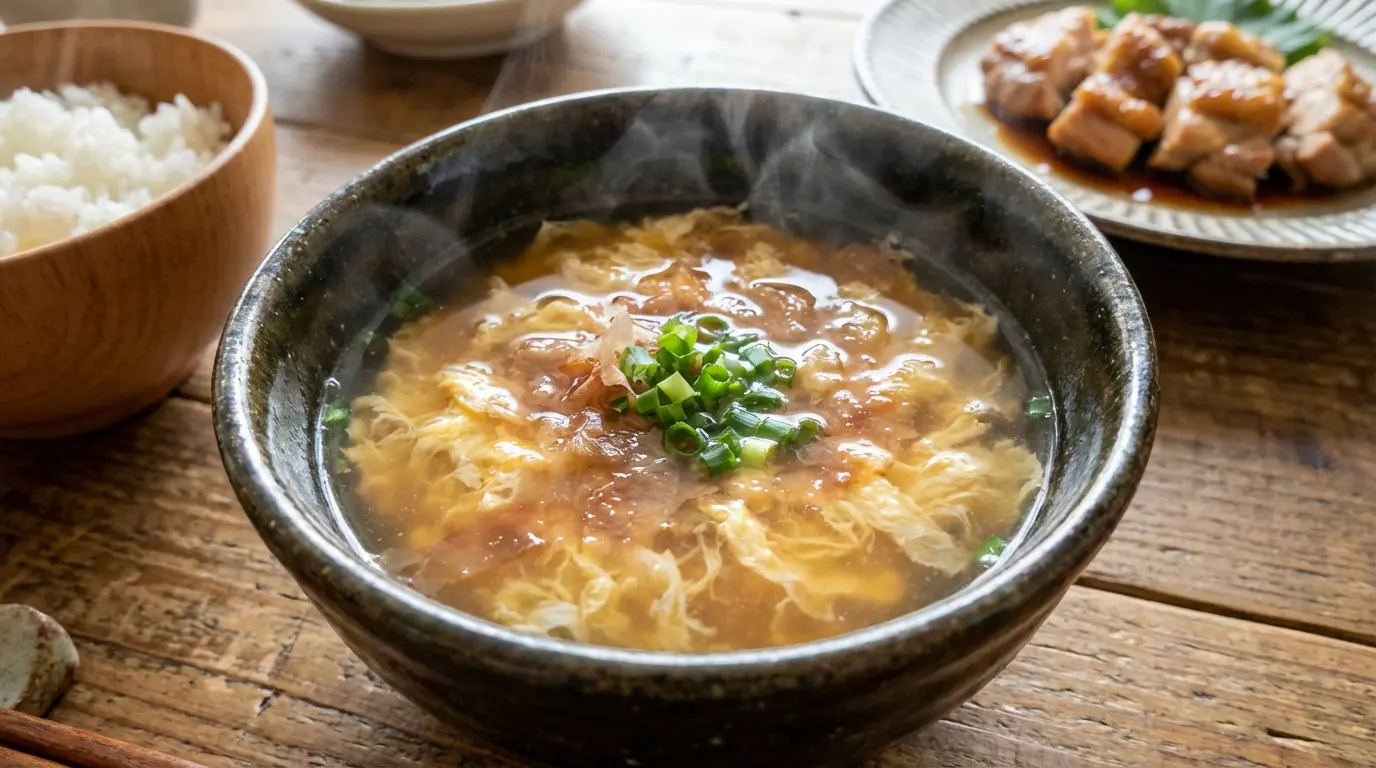
Kakitamajiru (Japanese Egg Drop Soup) is a simple, comforting broth made by streaming beaten eggs into hot dashi for soft, silky ribbons. It belongs to everyday Japanese home cooking and shows how a few quality ingredients create deep flavor. The recipe takes about 10 minutes to prepare, making it perfect for busy weeknights or quick lunches.
Dashi provides the traditional umami foundation, so the soup tastes clean and savory without heavy seasoning. Fresh eggs and gentle heat keep the ribbons tender, while a touch of usukuchi soy sauce brightens the broth. This soup pairs well with rice or grilled fish, and it works as a light meal or a protein rich side.
Read on for an easy step by step guide that keeps technique simple and results reliable. For clarity and reduced anxiety, each step is short and practical. Checkpoint: You can make a restaurant style bowl in ten minutes.
Kakitamajiru (Japanese Egg Drop Soup) recipe and cooking process
Ingredients for Kakitamajiru and dashi options
- Serves two
- Dashi base: 500 ml water
- Bonito flakes option: 20 g bonito flakes for 500 ml water (4 percent by weight)
- Other dashi options: kombu, dried baby sardines, or dried shiitake mushrooms
- Eggs: 2 large fresh eggs
- Usukuchi soy sauce: 1 teaspoon for brightness
- Katakuriko slurry: 1 teaspoon katakuriko mixed with 1 tablespoon cold water
- Salt: pinch to taste
- Optional garnish: thinly sliced green onion or mitsuba
Method
- Prepare dashi with your preferred ingredient. For bonito use the 4 percent ratio above. Strain the clear broth.
- Bring the dashi to a gentle heat. Maintain about 85°C for egg cooking. Use a thermometer if you can.
- Season the broth with usukuchi soy sauce and a pinch of salt. Taste and adjust for brightness.
- If you want a slightly thicker soup, stir the katakuriko slurry again and add it slowly. Stir until the broth slightly thickens.
- Beat the eggs lightly. Fresh eggs give the softest ribbons.
- Reduce heat so the broth stays around 85°C. Then slowly drizzle the beaten eggs in a thin stream.
- Stir gently in one direction while you add the eggs. As a result the eggs form soft ribbons.
- Keep the broth at this temperature for about 30 to 40 seconds so the eggs set tenderly. Avoid boiling.
- Serve immediately. The soup pairs well with steamed rice or grilled fish.
Try this now: keep the broth at about 85°C and time a single 30 second set. You should see silky egg ribbons.
Micro win invitation
For small wins and less worry, register at Nihoner to learn ingredient names and pronunciation. Register now at Nihoner Registration.
Use the AI pronunciation trainer to practice katakuriko and usukuchi. AI Pronunciation Trainer.
Premium help
If you want deeper pronunciation practice, consider pronunciation training with native audio for clearer intonation. See pricing at Nihoner Pricing.
Storage and reheating
- Store in an airtight container in the fridge for up to two days.
- Reheat gently until about 70°C and do not boil.
Micro FAQ
What is the best dashi for kakitamajiru
Bonito based dashi gives a classic clean umami. However kombu or dried shiitake work well.
How do I keep the eggs soft
Keep the broth near 85°C and limit cooking to 30 to 40 seconds so ribbons stay tender.
Storage and Reheating for Kakitamajiru (Japanese Egg Drop Soup)
- Store cooled soup in an airtight container in the refrigerator for up to two days. This keeps flavors stable and reduces food safety risks.
- Do not freeze the soup. Freezing changes egg texture and clarity.
- Reheat gently on low heat or in a microwave with short intervals. Warm to about 70°C and stop. Do not boil the soup because high heat makes the egg ribbons tough.
- When reheating, stir slowly and serve as soon as the soup reaches temperature. These clear steps reduce uncertainty and keep results predictable.
Best pairings with Kakitamajiru (Japanese Egg Drop Soup)
- Steamed rice for a simple, balanced meal.
- Gyoza for a savory contrast.
- Cucumber sunomono for a light, acidic side.
- Onigiri for a portable, satisfying pairing.
- Miso glazed salmon for a richer fish option.
Micro win invitation
- Want quick confidence with food terms and pronunciation? Register to get short lessons that make key vocabulary easy to remember. Register here.
Premium pronunciation upsell
- If you want deeper practice, try pronunciation training with native audio to master terms like usukuchi and katakuriko. It helps you speak with clearer intonation. See pricing.
Checkpoint: Store kakitamajiru chilled for two days and reheat gently to 70°C for tender egg ribbons.
Dashi Comparison for Kakitamajiru (Japanese Egg Drop Soup)
This table compares four common dashi base options for Kakitamajiru. It offers clarity and certainty so you can choose quickly. As a result you will reduce anxiety and cook with more confidence.
| Dashi base | Flavor profile | Preparation notes | Ideal uses |
|---|---|---|---|
| Bonito flakes | Clean smoky umami, light savory depth | Use 20 g for 500 ml water, steep then strain | Classic Kakitamajiru, clear broths, everyday soups |
| Kombu | Gentle ocean umami, rounded mineral notes | Soak kombu in cold water then warm slowly; remove before boiling | Vegetarian dashi, subtle broths, pairing with delicate fish |
| Dried baby sardines | Rich savory and oceanic umami | Simmer briefly and strain; strong flavor so use less | Hearty soups, stronger sidedishes, winter comfort food |
| Dried shiitake mushrooms | Deep earthy umami with sweet notes | Rehydrate in warm water and use soaking liquid as dashi | Vegetarian dishes, savory broths, dishes with mushrooms |
Checkpoint: Try bonito for the classic taste, and try kombu or shiitake when you want a vegetarian option.
CONCLUSION
Kakitamajiru (Japanese Egg Drop Soup) shines because it is fast, forgiving, and deeply flavorful. For example, it takes about ten minutes to make and relies on simple technique rather than rare ingredients. The result is a clear, umami rich broth with soft egg ribbons that feel home style and satisfying.
This recipe is practical for everyday meals, yet it also teaches useful skills. In addition, learning to keep the broth near 85°C and timing the eggs helps you cook other delicate dishes. Therefore, the soup builds cooking confidence and helps you better understand Japanese home cooking.
Nihoner.com supports that learning path with clear tools and structured content. In addition, the site offers a large dictionary, a pronunciation trainer, full courses, and cultural articles to explain context and usage. Use these resources to track your progress and keep steady improvement.
Progress tracking promise
- Join Nihoner to log lessons and see real progress while you learn food vocabulary and pronunciation. Register now: Register for Free Membership
Checkpoint: Kakitamajiru is a quick, traditional soup that teaches technique and rewards practice.
Frequently Asked Questions (FAQs)
What temperature should I use to cook the eggs for Kakitamajiru (Japanese Egg Drop Soup)?
In practice, keep the broth near 85°C and pour beaten eggs slowly. Cook for 30 to 40 seconds so the ribbons stay tender.
Which dashi works best?
For example, bonito dashi gives the classic clean umami. However kombu, dried baby sardines, or shiitake are fine alternatives.
How long can I store the soup?
Cool the soup and refrigerate in an airtight container for up to two days.
How should I reheat the soup?
For best results, reheat gently to about 70°C and avoid boiling to keep eggs soft and clear.
What should I serve with Kakitamajiru?
Try steamed rice, gyoza, cucumber sunomono, onigiri, or miso glazed salmon.
Checkpoint: Keep the broth at 85°C for soft ribbons.