How can Japanese handwriting improvement be faster yet legible?


Japanese handwriting improvement: Balance speed and legibility for kanji and kana
Japanese handwriting improvement starts with small, practical changes to your strokes. Because many learners rush, characters often become unreadable. However, you can learn to write faster without losing clarity. This introduction focuses on kanji and kana, and on moving from kaisho to gyōsho practice.
The core problem is finding a middle ground between speed and legibility. Kanji with many parts lose their structure when written too fast. Kana also look messy when hurried. Therefore, we will address stroke order, rhythm, and simplifying forms without losing recognition.
I want practical, testable tips because I need progress now. As a result, the article will show drills, common pitfalls, and pacing strategies. If you struggle with remembering stroke order or making gyōsho readable, keep reading. Together we will work toward faster, legible handwriting. We will include practice templates and realistic timing goals.
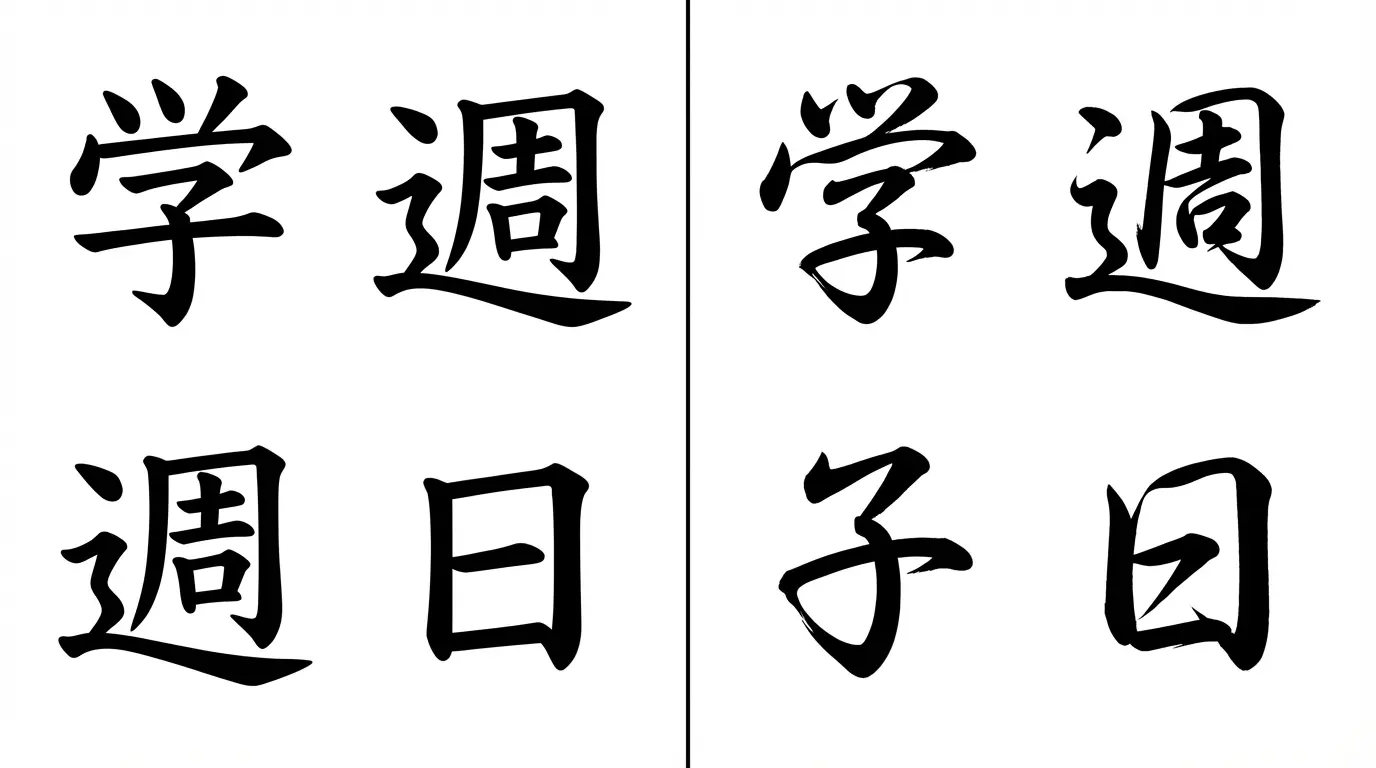
Kaisho and Gyōsho explained: definitions and roles in handwriting improvement
楷書 kaisho (romaji: kaisho; meaning: block style) is the standard, clear script taught to beginners. It uses separate, well formed strokes. Because it emphasizes structure, kaisho helps you learn stroke order and proportions. Therefore, it remains the foundation for good kanji and kana handwriting.
行書 gyōsho (romaji: gyōsho; meaning: semi cursive style) sits between block and cursive scripts. It connects some strokes and reduces formality, so writing becomes faster. However, gyōsho still preserves recognisable character shapes. As a result, it is ideal when you need speed without losing legibility.
Key differences and practical roles
- Stroke connection and flow: kaisho keeps strokes separate. In contrast, gyōsho links strokes to save time.
- Rhythm and economy: kaisho requires deliberate motion. Gyōsho uses fewer pen lifts, so it increases speed.
- Legibility tradeoffs: kaisho maximises clarity. Gyōsho demands controlled simplification to stay readable.
How shifting helps Japanese handwriting improvement
Start in kaisho to master stroke order and balance. Then gradually introduce gyōsho elements, because this builds rhythm and pace. Practice linking simple strokes first, and then combine them into more complex kanji. For further reading on stroke order and practical drills, see Tofugu and NHK World’s Learn Japanese. These resources provide clear examples for both kanji and kana practice.
| Style | Legibility | Speed | Ease of learning | Typical usage | Common mistakes |
|---|---|---|---|---|---|
| Kaisho | Highest clarity. Strokes remain separate and well proportioned. | Slower pace because of full strokes and frequent pen lifts. | Easier for beginners; teaches stroke order and balance. | Textbooks, formal writing, exams, calligraphy basics. | Stiffness, inconsistent proportions, poor rhythm from overthinking. |
| Gyōsho | Good when controlled; moderate tradeoff for speed. Connected strokes can reduce clarity if rushed. | Faster due to fewer pen lifts and linked strokes. | Harder; requires a kaisho foundation and rhythm practice. | Notes, personal writing, quick annotations, journal entries. | Over-simplification, blurred radicals, dropped stroke order, illegible ligatures. |
Practice suggestion: Start with kaisho drills, then link simple strokes slowly. Because rhythm matters, practice timed lines and review for legibility.
Related keywords: kanji stroke order, kana readability, hiragana, katakana, speed writing.
Practical tips and exercises to improve speed and legibility
Improving Japanese handwriting requires focused drills and steady pacing. Because many learners rush, characters lose important structure. Therefore, practice should balance accuracy and tempo. Below are concrete techniques you can apply every day.
- Stroke order drills: Practice the correct stroke order slowly until it becomes automatic. Start with individual radicals, because complex kanji often break down into familiar parts. For example, write the radical sets for 週 separately, then assemble them. Use stroke order references to check your work, such as Kanji Alive and Tofugu for reliable visual guides.
- Kaisho to gyōsho ladder: Begin with five lines of kaisho at accuracy speed, then five lines of measured gyōsho where you link simple strokes. After that, write five lines faster but aim to keep key proportions. Repeat this ladder three times. As a result, you build rhythm without losing form.
- Timed microdrills: Set a short timer for one minute and write the same character repeatedly. However, stop if forms break down. Then rest and repeat at a slightly faster pace. Because this forces repetition, memory for stroke order improves quickly.
- Use a practice book and template: Choose genkouyoushi style practice paper or a kanji workbook. These templates guide size and spacing, which helps kana uniformity. Also, keep a dedicated list of troublesome kanji and revisit them weekly.
- Avoid oversimplification: Simplify where strokes naturally connect. However, do not drop distinguishing elements or merge radicals that create ambiguity. Instead, identify core strokes that preserve recognition and keep them intact.
- Kana flow drills: Practice hiragana and katakana in connected sequences. For example, write the five vowel line and then link adjacent syllables. This builds smooth motion for everyday notes.
- Physical and pacing tips: Use a pen you control easily, keep wrist movement relaxed, and sit upright. Also, aim for fifteen minutes of focused practice most days. Over time, your speed will rise while legibility remains clear.
Conclusion: from kaisho to gyōsho for Japanese handwriting improvement
Start with kaisho to learn correct stroke order and solid proportions. Because kaisho builds a reliable foundation, it prevents bad habits. Then gradually adopt gyōsho elements to link strokes and increase pace. However, move slowly so legibility stays intact.
Focus on daily, focused practice. Use stroke order drills, timed microdrills, and a dedicated practice book. As a result, you develop muscle memory and rhythm that supports faster writing. Also, avoid over-simplifying kanji. Instead, preserve core strokes that ensure recognition.
For broader study, consider an all in one platform such as Nihoner.com. It offers structured courses, native pronunciation support, practical usage examples, and cultural insights. Therefore, learners can improve handwriting alongside speaking and reading skills with confidence.
In short, balance accuracy and tempo. With deliberate practice, you will write faster while keeping characters readable. Keep practicing, track progress, and adjust pace as you gain control.
Frequently Asked Questions (FAQs)
How do I balance speed and legibility when practicing Japanese handwriting?
Start with accurate kaisho drills to lock in stroke order and proportions. Then add short gyōsho practice sessions to link strokes and build rhythm. Practice in timed bursts, because this trains tempo without sacrificing form. Also, review your writing after each burst. If characters blur, slow down and repeat the drill.
How can I remember stroke order for complex kanji like 週?
Break complex kanji into radicals and practice them separately. Then assemble the radicals in order, because this reduces cognitive load. Use consistent repetition, timed microdrills, and spaced review. Also, write the same kanji at different speeds to reinforce order under pressure. Finally, check stroke order from a trusted reference until it becomes automatic.
Won’t gyōsho make my writing illegible if I speed up too much?
Gyōsho can become illegible if you rush. However, controlled simplification keeps recognition intact. Focus on preserving distinctive strokes and radical shapes. Also, practice linking only where strokes naturally connect. As a result, you gain speed while keeping characters readable.
What are good daily practice routines for quick progress?
Try short, focused sessions every day. For example, spend five minutes on stroke order drills, ten minutes on kaisho accuracy, and ten minutes on a kaisho to gyōsho ladder. Also, keep a weekly review of troublesome kanji. Because consistency matters, small daily habits beat occasional marathon sessions.
How do I avoid over simplifying kanji into unreadable forms?
Identify core strokes that define each kanji, and preserve them. Avoid dropping radicals that distinguish meanings. Also, compare your fast forms to correct examples frequently. If a character becomes ambiguous, slow down and redraw it accurately. Over time you will learn safe simplifications that remain recognisable.