How to improve Japanese handwriting fast without losing legibility?


How to Improve Japanese Handwriting: Stroke Order, Speed, and Practical Practice Methods
Why this guide helps
To improve Japanese handwriting, focus on stroke order, pacing, and realistic practice. This article aims to make your kana and kanji both readable and faster. Because practical use matters, we prioritize legibility over purely academic forms. Therefore you will get step by step methods that work in exams and notes.
Common challenges learners face
Many learners write slowly because they fear mistakes. However when they speed up, characters often lose shape and become unreadable. For example a rushed ら (ra; syllable ra) can resemble こ (ko; syllable ko). Memory for complex stroke orders also fails under pressure. As a result you need drills that build muscle memory and shape retention.
What you will learn
In this guide you will learn correct stroke order and tempo. You will practice kana and kanji with drills that prioritize legibility. Also you will get tips to simplify forms without losing recognition. By the end you should write faster and clearer.
Why stroke order matters for Japanese handwriting
Correct stroke order speeds writing and improves legibility. Because strokes follow a predictable flow, your hand moves with less hesitation. As a result characters look balanced and consistent. This matters for both kana and complex kanji.
How stroke order helps with speed and clarity
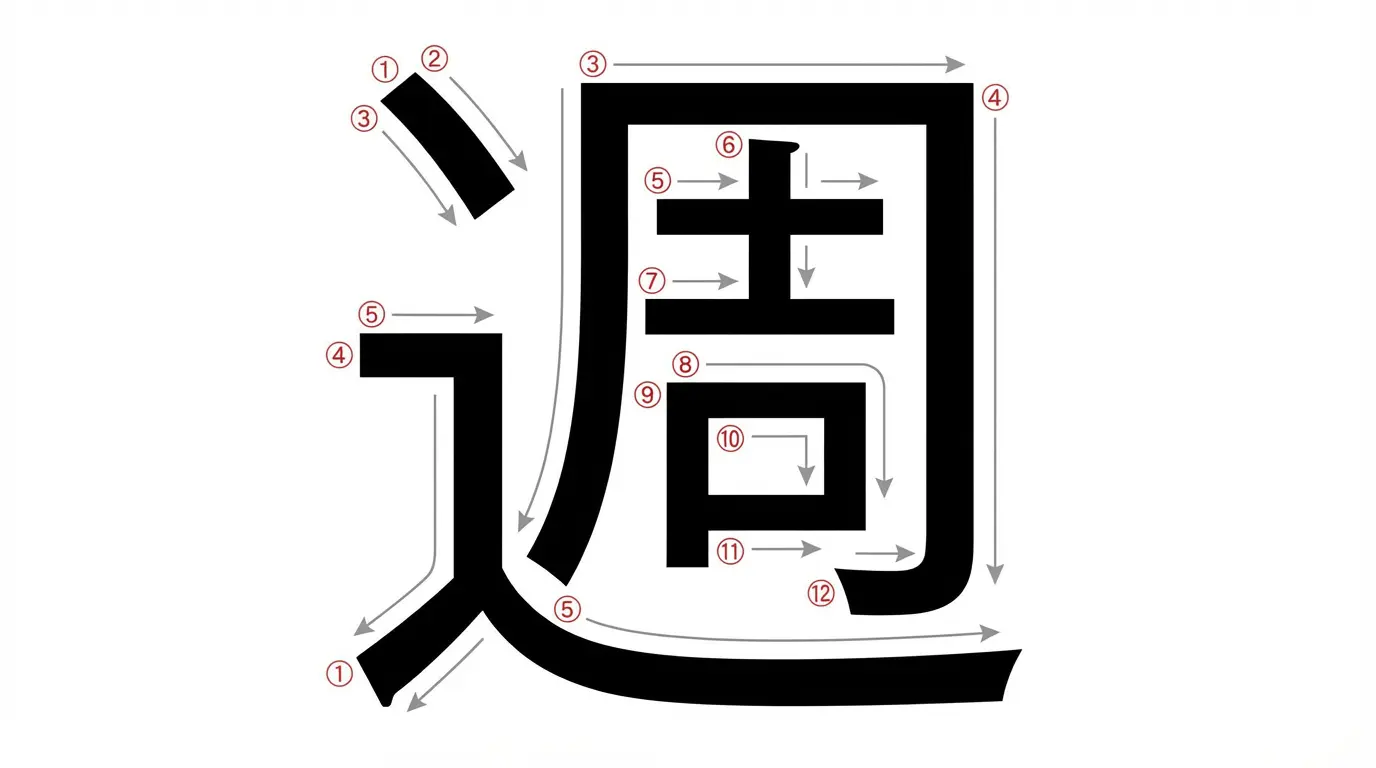
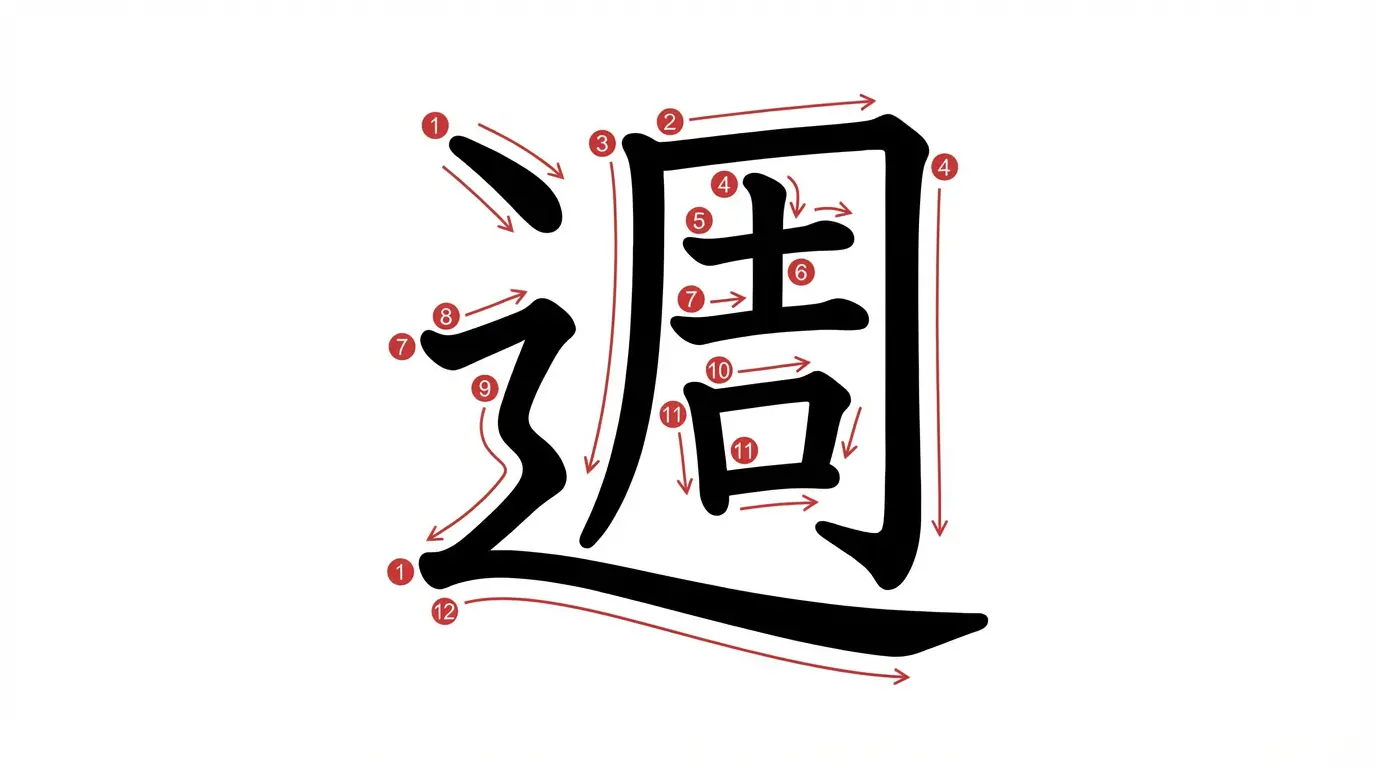
Stroke order builds efficient motor memory. For example the kanji 週 has many parts and about twelve strokes. When you write 週 in the right order, each component connects smoothly. Therefore the character stays recognizable even when you write fast. You can see common principles like top to bottom and left to right in standard guides. For details, consult this practical guide on stroke order: this practical guide on stroke order.
Practical tips to use stroke order for better handwriting
First, learn radical order rather than full characters. Next, practice short timed drills that focus on flow. Then slowly increase speed while keeping shapes intact. Also trace numbered diagrams and mimic stroke directions. Below is an illustrative diagram for the kanji 週 showing stroke numbers and arrows.
Practical practice methods to improve Japanese handwriting speed and legibility
Use focused drills that build motor memory. First, practice with a good practice book and grid paper. For example, write a single kanji ten times, then move to short words. Because repetition matters, you build consistent shapes and stroke order habits.
Try timed writing sessions. Start with slow, careful writing for two minutes. Then, increase speed in thirty second increments. As a result you train both tempo and shape retention. Also, practice full sentences to simulate exam conditions and note taking.
Train kana separately and then mix them with kanji. The user noted “The characters become unreadable when I write them too fast.” Therefore practice hiragana pairs that often confuse readers. For instance one teacher confused ら (ra) with こ (ko). Focus on distinctive stroke hooks and spacing to keep kana legible.
Learn a semi cursive style called gyōsho (行書; gyōsho, semi cursive script) to gain flow. However avoid over simplifying kanji. One quote warned against making kanji unrecognizable. Instead, simplify strokes that do not affect recognition and keep core radicals intact.
Use stroke order diagrams and animated tools. For resource help see Kanji Alive and Tofugu’s guide. Meanwhile, explore cursive recognition tools at Jishop’s Cursive Recognition to see real handwriting variants.
Finally, set measurable goals and review progress weekly. Next, adjust drills to focus on trouble kanji. Over time your writing will become faster and clearer.
| Style | Description | Speed | Readability | Typical uses |
|---|---|---|---|---|
| 楷書 (kaisho — standard block) | Clear, separate strokes. Teaches stroke order and balance. | Slow | Very high | Textbooks, formal writing, learning kanji |
| 行書 (gyōsho — semi cursive) | Connects strokes for smoother flow. Balances speed and clarity. | Medium-fast | High | Notes, everyday handwriting, faster essays |
| 草書 (sōsho — cursive) | Highly simplified and flowing. Many strokes merge. | Very fast | Low | Calligraphy, artistic shorthand, signatures |
| Block print (printed forms) | Separate printed characters like in signs and typing. Highly standardized. | Medium | Very high | Signs, typing, optically clear notes |
Conclusion
Improving Japanese handwriting depends on three habits: correct stroke order, steady tempo, and focused practice. These create muscle memory and keep characters readable. Therefore, practice with stroke diagrams, timed drills, and mixed kana-kanji exercises.
Choose a writing style that matches speed and clarity. For daily notes, gyōsho gives flow and legibility. However do not over-simplify kanji so that meaning is lost.
Set small weekly goals and track mistakes. Then adjust drills to weak kanji and troublesome kana like ら and こ. Over weeks, your writing will gain speed and look neater.
For a single platform that supports steady progress, check Nihoner.com. It combines lessons, pronunciation tools, handwriting examples, and cultural notes. Use it to practice with purpose and stay motivated.
Remember the goal is practical improvement, not perfect calligraphy. Celebrate small wins and review miswritten characters weekly. Over time you will write with more confidence and clarity. Keep practicing every day.
Frequently Asked Questions
What targeted drills fix recurring errors and messy strokes?
Use short focused drills that isolate the problem. Try these steps:
- Identify one error and write the character slowly five times following stroke order.
- Do ten timed repetitions emphasizing the correct stroke hooks and spacing.
- Log mistakes and repeat the drill daily until the error rate drops.
For reference, review the stroke order section and step by step practice methods: Stroke Order Importance and Practice Methods.
How should I pace practice to gain speed without losing legibility?
Follow a paced progression that balances accuracy and tempo:
- Start with slow accuracy sessions for two minutes to lock in shapes.
- Increase speed in thirty second increments while monitoring shape retention.
- Alternate accuracy blocks with timed quick blocks and review errors each week.
Begin with stroke order drills, then apply the timed drills described in the practice methods section: Stroke Order Importance and Practice Methods.