How to Improve Japanese handwriting quickly and legibly?


Improve Japanese handwriting: tips to write kana and kanji faster and more legibly
Improve Japanese handwriting starts with clear goals and steady practice. However, many learners struggle with writing speed, legibility, and stroke order. Because Kana and Kanji demand different motions, each brings unique challenges. Therefore, this introduction lists common problems and frames the solution path.
Kana often falls apart when written quickly, especially Hiragana and Katakana. As a result, loops merge and proportions suffer, which makes text hard to read. Moreover, many students write Kana too small or too large for consistent flow.
Kanji add another layer because of complex components and strict stroke order. For example, multi-part characters like 週 confuse learners who rush. However, you can keep Kanji readable without over-simplifying them.
This guide uses polite explanations and clear drills to help you write faster and neater. Additionally, it covers script choices like 行書 and 楷書, stroke order tips, rhythm practice, and visual spacing. Ultimately, you will gain speed and legibility with steady, focused work.
Improve Japanese handwriting: stroke order and common pitfalls
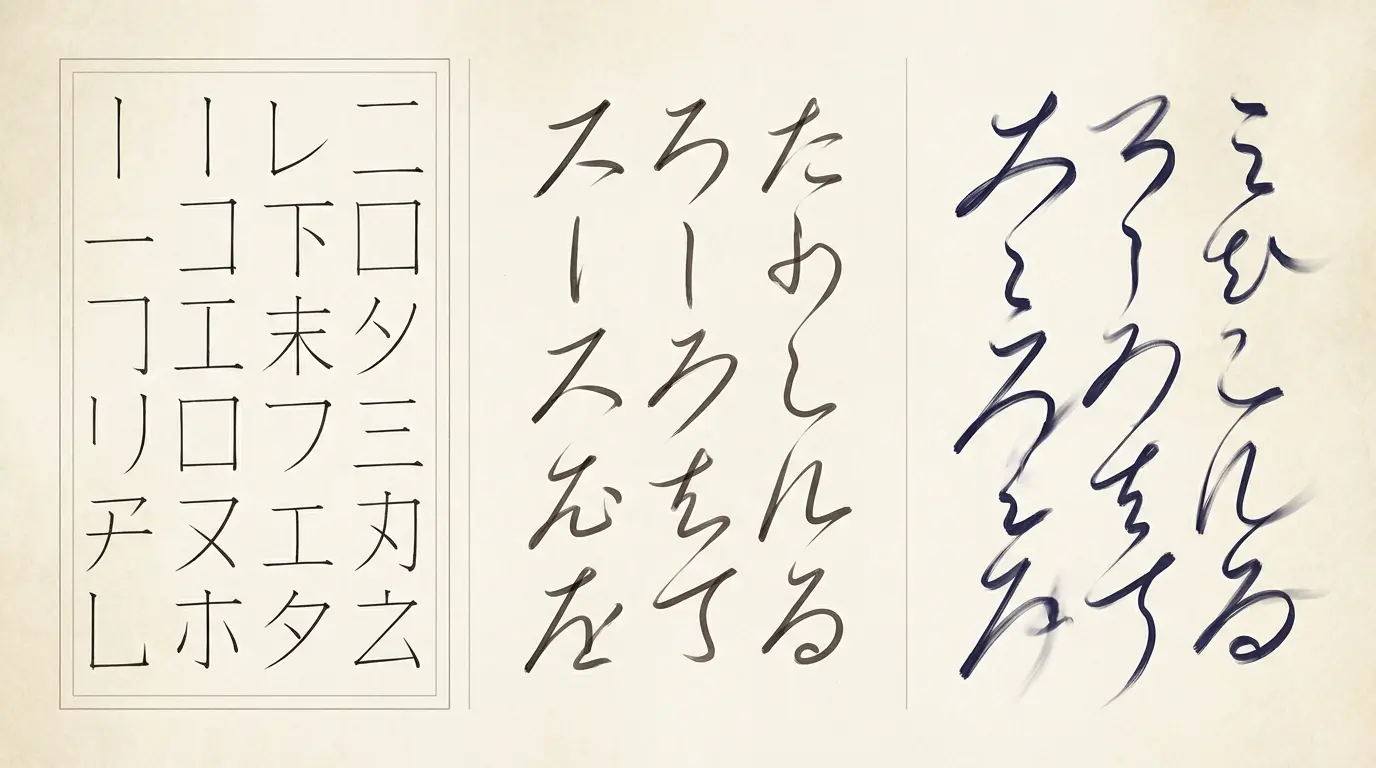
Correct stroke order matters for legibility and speed. Kanji like 週 (shū, week) show why. The character has multiple parts. Therefore writing strokes in a wrong sequence makes the parts collide. As a result the balance and proportions break. Consequently readers struggle to recognize the character, and you slow down because you must correct shapes.
Basic rules help. Write top to bottom and left to right. Also write horizontal strokes before vertical ones. Moreover, write centers before sides in symmetrical characters. Many learners forget these rules because they focus on individual shapes instead of components. For Kana, similar issues appear. Hiragana and Katakana require smooth curves and correct start points. Incorrect stroke order makes kana look messy when written quickly. For reliable charts and animations, see Tofugu’s kanji and kana stroke guides: Tofugu’s kanji stroke guides and Tofugu’s kana stroke guides.
Practical tips for memorization follow. First, learn components and radicals as chunks. Second, trace characters from stroke-order diagrams until motion feels natural. Third, use squared practice paper to keep spacing even. Fourth, practice with timed drills that alternate slow accurate writing and faster flowing writing. Fifth, consult reference diagrams and printable guides such as the KanjiAlive introduction. These steps build muscle memory and support legibility.
Finally, be patient. Because stroke order creates a foundation for speed, consistent practice will make your kana and kanji neater and quicker over time.
楷書 vs 行書: quick comparison
| Feature | 楷書 kaisho (block) | 行書 gyosho (semi-cursive) |
|---|---|---|
| Readability | Very high; each stroke is distinct and balanced. | High when practiced; strokes connect but characters remain identifiable. |
| Writing speed | Slower; emphasis on precise strokes. | Faster; flowing connections reduce pen lifts. |
| Common use cases | Formal documents, learning stage, printed style. | Everyday handwriting, notes, faster writing in exams. |
| Impact on aesthetics | Neat, structured, formal beauty. | Fluid, dynamic, elegant when controlled. |
| Learning curve | Easier to learn basic stroke order and proportions. | Requires control of joins, rhythm, and spacing. |
| Best use to Improve Japanese handwriting | Use kaisho to build a solid foundation and muscle memory. | Shift toward gyosho to gain speed without losing readability. |
Improve Japanese handwriting: practical tips to boost speed and legibility
Start with a practice book and predictable routines. First, copy model characters slowly until stroke order feels natural. Then repeat the same characters at a steady pace. Because muscle memory forms through repetition, this builds automatic strokes. Use squared practice paper to keep proportions and spacing even. Also vary pen pressure to learn how lines thin and thicken naturally.
Focus on fluid motions rather than rigid stops. Practice linked strokes that combine components, because this reduces pen lifts and increases speed. However do not rush joins that remove essential structure. Instead aim for joined strokes that keep key anchor points intact. For Kanji with many parts, like 週, practice each radical as a unit. Then connect units smoothly to preserve balance.
Balance speed with neatness using interval drills. For example, write one line very slowly and carefully. Next, write the same line at 70 percent speed. Finally, sprint a third line and then compare. As a result, you will find how much simplification still preserves recognition. Additionally, alternate between kaisho and gyosho forms to learn graceful joins without losing character identity.
Keep Kana attractive when writing quickly. Because Hiragana and Katakana rely on curves and proportions, practice flowing circles and consistent stroke starts. Moreover, simplify only standardized strokes. Avoid collapsing multiple strokes into a single ambiguous mark. Instead, keep the distinctive shape visible by retaining key turns and proportions.
For exams and quick notes, prepare shortcuts that stay legible. Choose a semi cursive style that you can write comfortably at speed. Also, practice common vocabulary and compound words, because repetition speeds recognition and production. Finally, review samples under time pressure and adjust spacing to avoid cramped lines. With steady, focused practice you will gain readable speed without sacrificing character recognition.
Conclusion
Improving handwriting in Japanese takes patience and steady practice. Start with correct stroke order and a solid kaisho foundation. Then gradually introduce gyosho style to add fluidity and speed while keeping characters readable. Because legibility matters in Japanese culture, aim for clarity first and pace second.
Focus on muscle memory and rhythm. For example, practice radicals as units and use interval drills that alternate slow and fast writing. As a result your speed will improve without sacrificing shape. Also preserve key turning points to avoid oversimplifying kanji into unreadable marks.
Use tools that reinforce both accuracy and fluency. Nihoner.com offers an all in one platform to make real progress. It provides a searchable dictionary, a pronunciation trainer, structured courses, and cultural content. Therefore you can practice vocabulary, check stroke order, and build confidence in context.
Keep goals small and measurable. Practice consistently, review under time pressure, and refine joins and spacing. With steady effort you will gain neatness, speed, and the confidence to write Japanese clearly in exams and daily life.
Frequently Asked Questions (FAQs)
What are the quickest methods to improve Japanese handwriting?
Start small and practice daily. First copy model characters slowly, then increase speed. Use squared practice paper to keep proportions even. Also alternate slow accurate lines with faster lines to train muscle memory. Finally review samples and correct repeated mistakes.
How can I handle complex Kanji stroke order like 週?
Break the Kanji into radicals and learn each unit. Then trace stroke order diagrams until motion feels natural. For animations and clear guidance, consult Tofugu’s kanji stroke resources at Tofugu’s kanji stroke resources. In exams, write radicals clearly and connect them smoothly.
How do I use 行書 gyosho effectively without losing clarity?
Practice controlled joins and rhythm. First master kaisho shapes. Then practice semi cursive joins slowly. Gradually increase tempo while keeping key anchor points. As a result you gain speed and keep characters legible.
How can I preserve legibility when I must write fast?
Simplify only standard parts, not the whole character. Keep distinctive turns and proportions visible. Also space characters evenly to avoid crowding. For Kana, practice flowing curves so Hiragana and Katakana stay attractive at speed. Finally time yourself and adjust spacing.
What resources work best to practice handwriting?
Use stroke diagrams, printable practice sheets, and reference PDFs. For example KanjiAlive’s introduction PDF helps with structure: KanjiAlive’s introduction PDF. Additionally try structured platforms like Nihoner.com and Tofugu’s hiragana chart.