What are the best ways to improve Japanese handwriting?


How to improve Japanese handwriting: Speed, neatness, and readability
If you want to improve Japanese handwriting, you are not alone. Many learners struggle with speed, neatness, and readability when writing kana and kanji. However, those problems are fixable with focused practice and the right strategies.
This guide promises clear insights and practical tips. First, you will learn which habits slow you down. Then, you will see simple drills that boost speed without wrecking legibility. As a result, your hiragana, katakana, and kanji will look cleaner.
We will cover stroke order, sensible simplifications, and how to move toward a more fluid script like 行書. Because exams and long writing sessions expose messy handwriting, these techniques emphasize consistency. Finally, you will get exercises you can use daily to improve.
You will also find examples, common pitfalls, and memory tips for stroke order. Moreover, the guide shows how to tidy hiragana loops and simplify kanji safely. By practicing five to ten minutes every day, you should notice steady improvement.
Improve Japanese Handwriting: Kana and Kanji Basics
Understanding hiragana, katakana, and kanji gives a solid base for faster, neater writing. Because kana represent sounds, mastering them speeds writing and reduces hesitation. However, kanji carry meaning and complex shapes, so they demand different tactics.
Stroke order is a critical foundation for legible and rapid writing. Follow consistent stroke order to keep proportions and flow. For animated stroke order examples, use resources such as Kanji Alive which show motion and timing.
Kana: core tips for neat, fast kana
- Practice basic hiragana and katakana shapes slowly, then speed up. This builds muscle memory.
- Avoid over-looping hiragana; keep loops small for clarity.
- Keep katakana strokes distinct and angular to prevent sloppiness.
- Use a rhythm: write groups of syllables in short chains to increase pace.
Kanji: foundations and common errors
- Break complex kanji into radicals to simplify recall and speed.
- Write the frame first, then inner parts, if that helps maintain balance.
- Do not omit strokes that change meaning; simplify only safe parts.
- For stubborn characters like 週, drill the component parts slowly, then join them.
For general study strategies and deeper explanations of kana and kanji learning, see guides like Tofugu. As a result, you will build reliable patterns that improve kana readability, kanji stroke order recall, and overall handwriting speed. Practice short daily drills and focus on consistent strokes rather than raw speed at first.
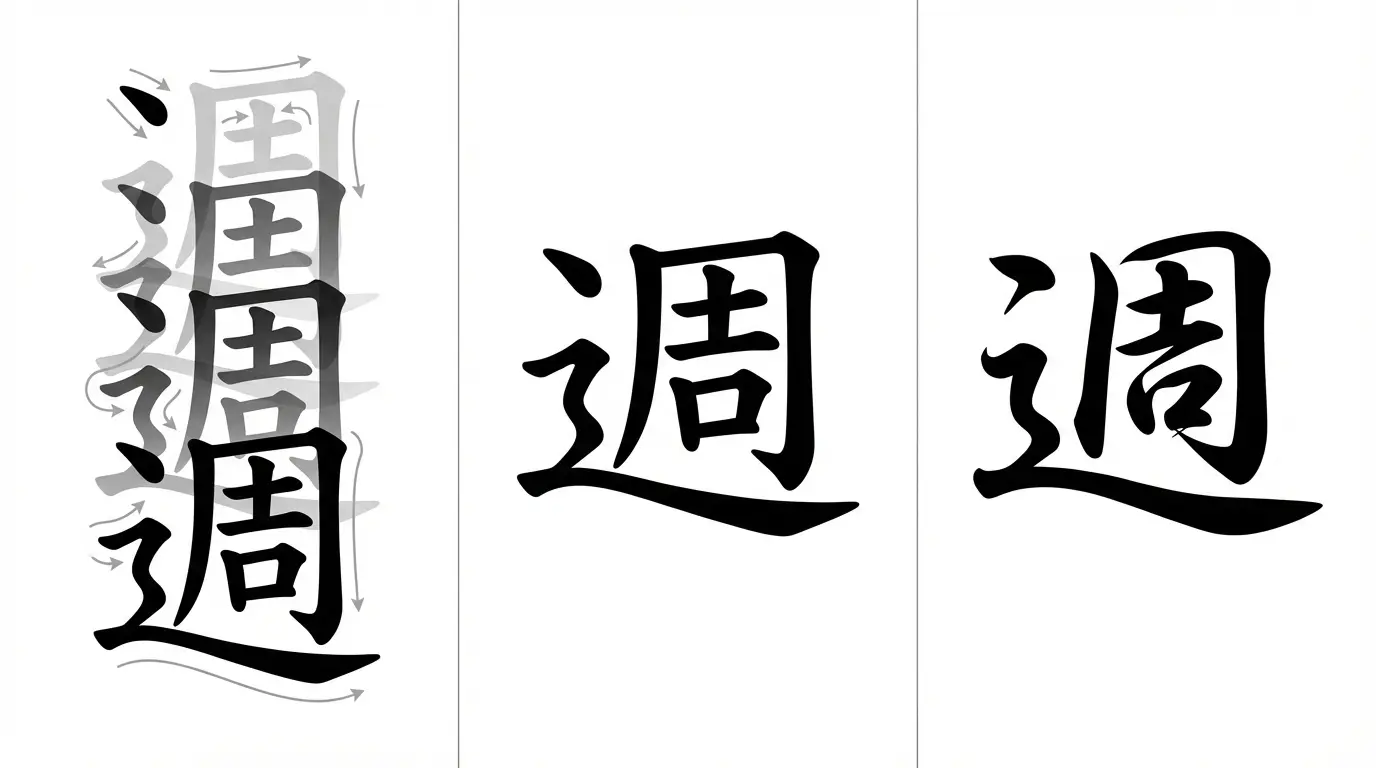
Kaisho versus Gyosho: a practical comparison
楷書 kaisho and 行書 gyosho serve different goals. Kaisho gives clear, separate strokes. Gyosho links strokes and saves time. Therefore, understanding both styles helps you choose the right balance for speed and legibility.
Why 行書 helps improve Japanese handwriting
Gyosho reduces repeated pen lifts. As a result, you write faster without losing the character shape. However, you must first master correct stroke order. Stroke order alone preserves the structure of a kanji when you speed up.
Key differences at a glance
- Stroke connection
- Kaisho keeps strokes distinct.
- Gyosho connects strokes with smooth transitions.
- Speed
- Kaisho is slower but precise.
- Gyosho is faster but controllable.
- Legibility
- Kaisho shines in clarity.
- Gyosho balances readability with flow.
Teacher advice and practical tips for transitioning
- Start with kaisho to learn stroke order and proportions.
- Then, practice writing the same character in gyosho slowly.
- Trace gyosho samples to learn stroke joins and rhythm.
- Reduce pen lifts gradually to keep legibility.
- Keep critical strokes intact to avoid meaning changes.
For animated stroke order and examples, try Kanji Alive. For broader practice methods, see Tofugu.
In short, move from kaisho to gyosho step by step. That way you gain speed without sacrificing readability.
Improve Japanese Handwriting: Kaisho versus Gyosho quick comparison
A clear side by side comparison helps you choose practice focus. Therefore, use the table below to decide when to write in kaisho or gyosho.
| Style Name | Description | Typical Use | Speed | Readability | Tips for Practice |
|---|---|---|---|---|---|
| 楷書 Kaisho | Block style with separate, clear strokes. Emphasizes correct proportions. | Formal writing, beginners learning stroke order, documents. | Slow and deliberate. | Very high when written carefully. | Practice on grid paper. Drill stroke order slowly. Build steady muscle memory. |
| 行書 Gyosho | Semi cursive with linked strokes and smoother transitions. Balances shape and motion. | Notes, timed writing, everyday handwriting after basics are learned. | Faster than kaisho due to fewer pen lifts. | High if joins and proportions stay consistent. Can drop if rushed. | Trace gyosho samples to learn joins. Reduce pen lifts gradually. Keep critical strokes intact to avoid meaning loss. |
CONCLUSION
To improve Japanese handwriting, focus first on stroke order, kana clarity, and kanji structure. Because stroke order sets reliable motion, it supports both speed and legibility. Master kana shapes before forcing speed, and break complex kanji into radicals like 週 to avoid errors. Transition to 行書 slowly so you keep readable forms while gaining flow.
Key takeaways
- Prioritize correct stroke order to build muscle memory.
- Practice short daily drills five to ten minutes.
- Trace kaisho then gyosho examples to learn joins.
- Simplify kanji only when safe to keep meaning intact.
Final advice
Keep expectations realistic and measure small wins. Practice consistently, because steady repetition beats sporadic sprinting. Aim for neatness first, then build speed without sacrificing readability. Over time you will write more fluidly and more confidently.
About Nihoner.com
Nihoner.com is an all-in-one platform for practical Japanese learning. It offers pronunciation tools, structured courses, and cultural content designed for learners who want usable skills. Moreover, the platform emphasizes real practice, from stroke animations to guided writing drills. As a result, Nihoner supports steady progress toward readable, faster handwriting.
Frequently Asked Questions (FAQs)
How important is stroke order for improving Japanese handwriting?
Stroke order is essential. It builds consistent motion and muscle memory. Because correct order preserves proportions, characters stay readable at speed. As a result, you can write faster with less hesitation. Practice strokes slowly, then speed up.
Should I switch from kaisho to gyosho to gain speed?
Start with kaisho for accuracy and stroke order. Then, introduce gyosho (semi cursive) gradually. Trace samples and copy joins slowly. Reduce pen lifts step by step. This approach keeps legibility while increasing pace.
How do I keep readability when I write fast?
Keep key stroke shapes intact. Use grid paper to control proportions. Write in short rhythmic chains to build flow. Also, avoid cutting strokes that change meaning. Finally, check your notes for legibility and adjust.
What is the best way to handle complex kanji like shu (for example, 週)?
Break the character into radicals and practice each part. Drill stroke order for each component. Next, join components slowly and then increase speed. Do not oversimplify critical strokes that affect meaning.
How long will it take to see real improvement?
Improvement depends on consistency. Practice five to ten minutes daily for steady gains. Within a few weeks you will notice clearer kana and kanji. However, expect months for major speed increases. Track small wins and stay patient.