How does Japanese confectionery (Hakko Anko and Yōkan) ferment?


Discovering Japanese Confectionery: The World of Hakko Anko and Yōkan
Japanese confectionery (Hakko Anko and Yōkan) offers a delectable journey through the world of traditional sweets, steeped in history and craftsmanship. Imagine biting into a piece of Yōkan, where the firm jelly melts slowly, releasing its subtle sweetness that has been cherished for generations. Alongside it, Hakko Anko, a fermented sweet red bean paste, introduces a tangy twist to the classic anko, transforming humble azuki beans into a complex symphony of flavors without added sugar. These treats don’t just satisfy a sweet tooth; they invite you to savor the intricate dance of traditional and modern techniques.
Embrace the sweet tradition and enrich your language skills at the same time! Join Nihoner today to explore more delicious Japanese insights and learn this beautiful language.
What is Hakko Anko: A Fermented Sweet Red Bean Paste
Hakko Anko is a fermented sweet red bean paste made by blending cooked azuki beans with rice koji. Unlike typical anko made with added sugar, this fermented sweet red bean paste relies on the natural enzymes in rice koji to convert starches into gentle sugars. As a result, Hakko Anko can be made with no added sugar and still taste sweet and rounded. The process highlights the sweetness that already lives inside the azuki beans while producing a subtler, more complex flavor than standard koshian or tsubuan.
The fermentation process brings clear benefits. Because rice koji breaks down starch slowly, the paste develops layered umami and mild tang. Fermentation can also improve digestibility and alter texture, making the paste silkier when mashed into koshian or chunkier if left as tsubuan. For practical cooking, pressure cooking azuki beans before fermentation helps them soften evenly and reduces polyphenol loss, which preserves flavor.
Culinary uses for hakko anko are versatile. Use it as a filling for mochi or dorayaki, spread it on toast, stir it into yogurt, or shape it into small sweets alongside traditional neriyōkan or mizuyōkan. Because it needs no added sugar, Hakko Anko pairs well with fresh fruit and lightly sweet desserts where you want a refined balance of taste.
Nihoner premium feature: If you want to speak about these confections with confidence, try Nihoner’s Pronunciation training with native audio. It helps you learn correct intonation and sound natural when saying words like hakko anko, anko, and yōkan. Learn more here: Nihoner’s Pronunciation Training.
Checkpoint: Hakko Anko turns azuki beans and rice koji into a gently sweet, fermented anko with no added sugar, perfect for modern and traditional recipes.
- Ready to practice labels and vocabulary while you cook? Join our free membership for guided lessons: Nihoner Free Membership.
Yōkan Varieties in Japanese confectionery (Hakko Anko and Yōkan)
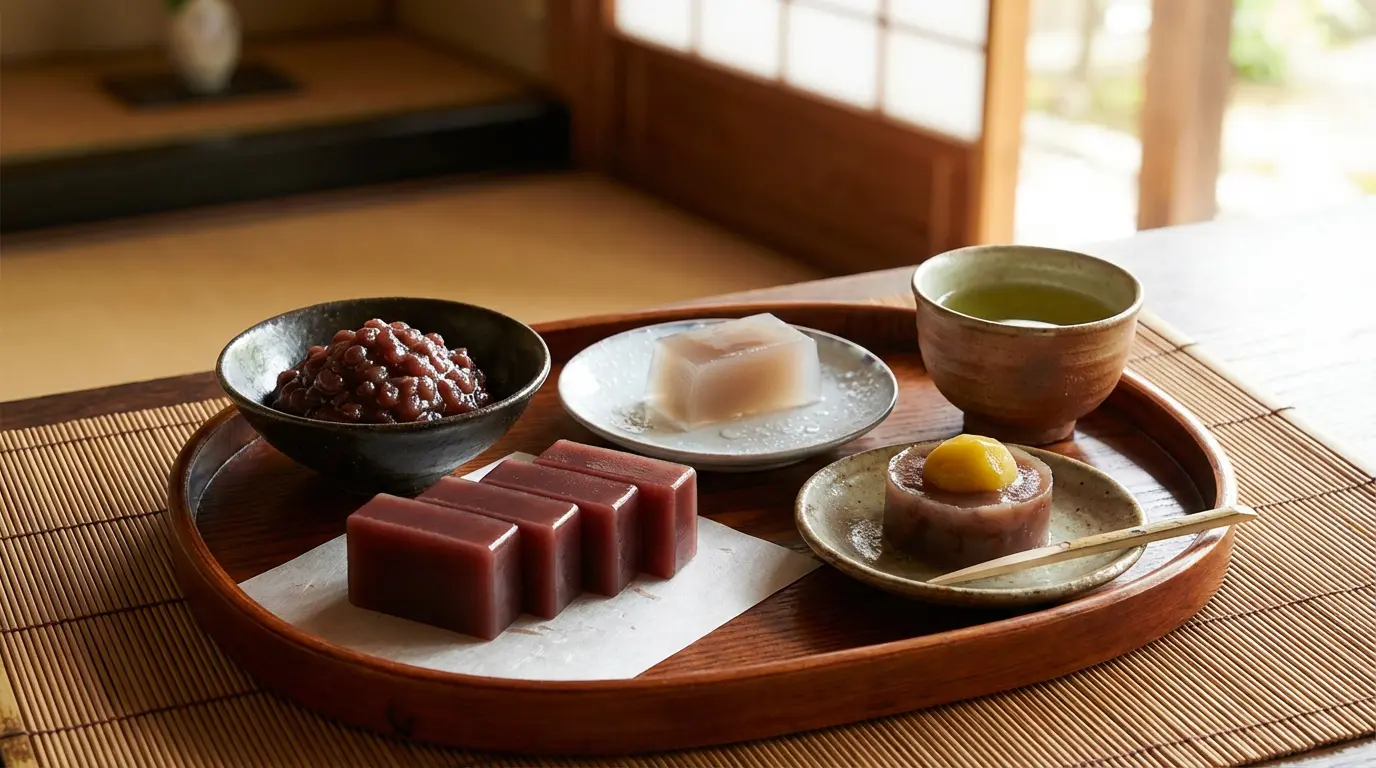
Yōkan is a classic Japanese dessert with a long history. It began as temple food and evolved into a refined confectionery enjoyed across Japan. The three main varieties are neriyōkan, mizuyōkan, and mushiyōkan. Neriyōkan is dense and jelly like. It uses adzuki bean paste, sugar, water, and kanten to set a firm block that slices neatly.
Mizuyōkan is a lighter version. It contains more water and less kanten, so it becomes smoother and less sweet. For this reason, mizuyōkan is often served chilled in summer to refresh the palate. Mushiyōkan is steamed and thickened with wheat flour or arrowroot. It may include additional elements like candied chestnuts for texture and seasonal flavor.
Key Ingredients for Japanese confectionery (Hakko Anko and Yōkan)
Kanten is the common gelling agent in yōkan. It comes from agar seaweed or tengusa seaweed and creates a clear, firm jelly. Adzuki bean paste provides the base flavor. Makers may use smooth koshian or textured tsubuan. Sugar and water balance sweetness and mouthfeel. For seasonal variety, add candied chestnuts or sweet potato.
We explain steps with clarity so you can reproduce each texture and flavor with certainty. Track progress as you master cutting, chilling, and balancing sweetness for visible improvement.
Quick checklist for serving yōkan
- Chill mizuyōkan before serving in summer
- Slice neriyōkan thin for tea pairing
- Steam mushiyōkan fresh for warmth and softness
Premium note: If you want to say these names with native accuracy, Nihoner’s Pronunciation training with native audio helps you learn correct intonation. It supports confident conversation about yōkan and other confections. See pricing here: pricing.
Try this now: Chill a small slice of mizuyōkan for two hours and taste; you should notice a lighter texture and milder sweetness.
- Want help reading recipes with furigana added? Use the Furigana Converter for ingredient lists: Furigana Converter.
- Ready to keep practicing and track your growth? Join our free membership for guided lessons: free membership.
| Category | Hakko Anko | Yōkan |
|---|---|---|
| Main ingredients | Azuki beans, rice koji, sometimes salt | Adzuki bean paste, sugar, water, kanten |
| Fermentation process | Yes; uses rice koji to ferment cooked azuki beans | No; not fermented, set with kanten or steamed |
| Sweetness source | Natural sugars from fermented starches; often no added sugar | Sugar is primary sweetener |
| Typical textures | Smooth or slightly chunky depending on mash (koshian or tsubuan) | Firm jelly (neriyōkan), lighter jelly (mizuyōkan), or steamed soft (mushiyōkan) |
| Typical uses | Fillings for mochi and dorayaki, spreads, modern desserts | Sliced for tea, chilled summer dessert, seasonal additions like chestnuts |
| Storage tips | Refrigerate up to one week; freeze about one month | Keep refrigerated; store in cool place, wrapped to avoid drying |
| Cultural significance | Modern twist on traditional anko; highlights fermentation and umami | Longstanding confection with temple and tea ceremony roots |
Conclusion
Japanese confectionery (Hakko Anko and Yōkan) captures the balance between refinement and everyday comfort. Hakko Anko brings fermentation and subtle natural sweetness to the familiar world of anko, while yōkan preserves centuries of confectionery craft in its jelly and steamed forms. Together they show how simple ingredients like azuki beans, rice koji, and kanten create wide flavor and texture ranges. Whether you prefer the tang of fermented paste or the smooth slice of neriyōkan, these sweets connect food, ritual, and season.
Nihoner.com is an all in one platform for learners who want real progress. The site combines a large dictionary, structured courses, native pronunciation support, and cultural content about Japan so you can read recipes, speak about ingredients, and enjoy food culture with confidence. Use the pronunciation tools and course pathways to turn curiosity into practical skill.
If you enjoyed this deep dive into traditional sweets, keep exploring at Nihoner. Join for guided lessons and cultural notes that make learning feel achievable and rewarding.
Frequently Asked Questions (FAQs)
What is the difference between Hakko Anko and regular anko?
Hakko Anko is a fermented sweet red bean paste made with rice koji and azuki beans. Because of fermentation, it often needs no added sugar and tastes gentler and more complex than regular anko.
How can I use Hakko Anko and yōkan in cooking?
Use hakko anko as a filling for mochi and dorayaki, or as a spread for toast and yogurt. Meanwhile, slice neriyōkan for tea, chill mizuyōkan for summer, and serve mushiyōkan warm with seasonal toppings.
How should I store these sweets?
Store hakko anko in the refrigerator for up to one week, and freeze for about one month if needed. For yōkan, keep it wrapped and refrigerated to avoid drying and preserve texture.
Can I ferment other beans besides azuki?
Yes. Chickpeas, mung beans, and white beans work well with the same fermentation process.
Are yōkan and anko tied to Japanese culture?
Yes. Yōkan has roots in temple cuisine and tea ceremony service, and anko appears in many seasonal sweets across Japan.
Progress tracking promise: Join to track small wins and build clear, steady progress learning food vocabulary and recipes. Sign up here: Sign Up for Free Membership.