How is Coming of Age Day in Japan evolving?


Coming of Age Day in Japan: What It Means for Young Adults
Coming of Age Day in Japan is a national holiday that honors young people as they reach adulthood. It falls each year on the second Monday in January. For many, the day combines formal ceremonies, family gatherings, and traditional dress. Recently, legal adulthood changed from twenty to eighteen as of April 1, 2022, which affects some rights but not others.
However, drinking and smoking still remain restricted until age twenty. Therefore, some rituals and expectations continue in the same way. Meanwhile, municipalities vary ceremony dates because of winter weather or local custom.
This article will clearly explain the traditions, the legal changes, and regional timing so readers gain clarity and certainty. You will also see how ceremonies act as visible progress markers for individuals and communities, showing progress visibility.
Checkpoint: Coming of Age Day in Japan celebrates the transition to adulthood while traditions, rights, and timing differ across Japan.
Coming of Age Day in Japan traditions
Coming of Age Day ceremonies grew from older coming of age rites held around the New Year. Historically, communities marked adulthood during January festivals. For many years the Act on National Holidays officially set the holiday on January 15. Then a 2000 revision moved the public holiday to the second Monday in January to create a long weekend. As a result, most municipalities now hold ceremonies in January.
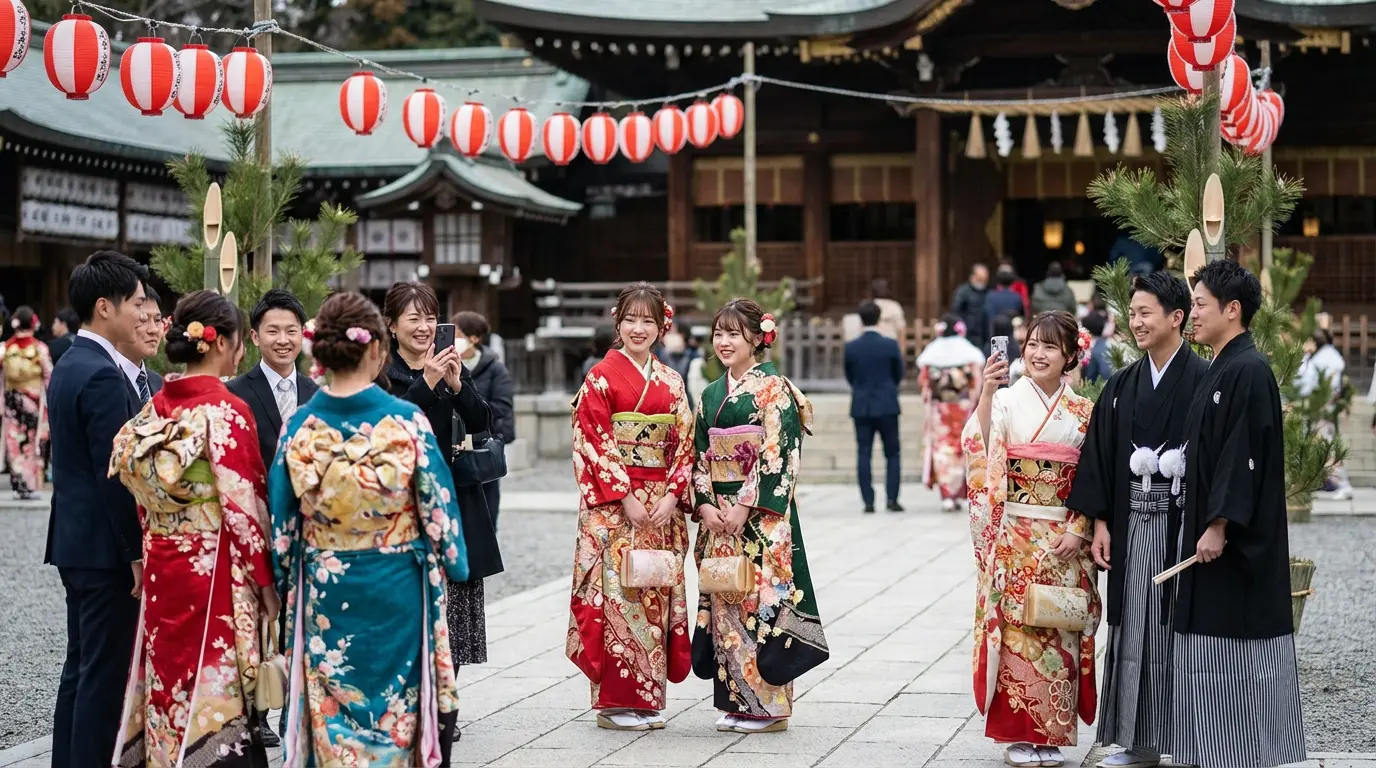
Typical municipal ceremonies are formal and concise. Young people often wear kimono or other formal attire. Women commonly choose furisode style kimono with long sleeves. Men may wear either western suits or traditional hakama. Ceremonies usually include speeches by local officials, congratulatory messages, and a symbolic welcome into adult community life. For some places the event also signals local expectations and responsibilities.
However, heavy winter weather sometimes forces change. In several snow prone prefectures municipalities shift ceremonies to May or schedule them around summer holidays. Therefore timing can vary by region while the core rituals remain similar.
This section aims to give clear background and a visible sense of how the event marks progress from youth into community roles. For more practical learning and tradition guides join a free membership and track what you learn with personalized notes. Progress tracking promise: register at Nihoner Free Membership to save vocabulary and ceremony notes as you study.
For additional local coordination tips see the Nihoner learning overview.
Checkpoint: Coming of Age Day evolved from New Year rites and now combines formal ceremonies, traditional dress, and regional timing differences.
| Age | Permissions Granted (marriage, contracts such as mobile phones and loans) | Restrictions (drinking age 20, smoking age 20, betting tickets 20+) |
|---|---|---|
| Before April 1, 2022 | 20; legal adulthood granted rights to marry without parental consent and to sign contracts for mobile phones and loans | Drinking allowed at 20, smoking allowed at 20, betting tickets restricted to 20 and over |
| After April 1, 2022 | 18; legal age 18 grants adult status at 18 with permissions to marry without parental consent and to enter contracts such as mobile phone and loan agreements | Drinking age 20 remains in effect, smoking age 20 remains in effect, betting tickets 20+ unchanged |
Key change: The Civil Code revision sets the legal age 18 and moves some adult responsibilities earlier while the drinking age 20, smoking age 20, and betting tickets 20+ remain unchanged.
Regional timing for Coming of Age Day in Japan
Regional timing for Coming of Age Day varies across Japan because of weather and local custom. Most municipalities schedule ceremonies in January on the second Monday in January to match the national holiday, but local authorities often adjust dates for safety and attendance when needed. For example, heavy snowfall can make travel difficult and reduce turnout.
Regional patterns
- January second Monday nationwide Most areas observe the official holiday on the second Monday in January
- May adjustments in snow prone areas Prefectures with heavy winter snowfall often move ceremonies to May to ensure safe travel and higher attendance
- Obon August or other alternative dates Some municipalities hold events around the Obon holidays in August or tie ceremonies to local festival dates
Areas with heavy snowfall such as Akita Prefecture, Yamagata Prefecture, and Niigata Prefecture often move ceremonies into May. In some places officials hold events around Obon holidays in August. Meanwhile the national official ceremony takes place in Urayasu Chiba at Tokyo Disney Resort. These choices help more people attend and avoid winter hazards, and they reflect local priorities for safety and convenience.
Municipalities keep core rituals but change timing to fit local life. Therefore speeches, formal attire, and community welcomes remain central. At the same time local flavor can appear in music, guest speakers, or venue choices which give each ceremony a distinct character.
If you want to follow regional differences and respect local schedules, join our free membership to keep notes and save local vocabulary. Register at Nihoner Free Membership.
Many learners struggle to hear regional accents and subtle cultural cues. To avoid missing meaning and feel confident in local settings try Nihoner’s dedicated pronunciation trainer with native audio. It helps you decode regional accents and speak with correct intonation. Learn more at Nihoner Pricing.
Missing regional dates can leave you unprepared or out of sync with local communities. Study local timing so you become a respectful participant in ceremonies.
In rural communities ceremonies may combine with local festivals and community tasks, for example shrine visits or neighborhood gatherings. In contrast coastal cities often keep January dates when travel is easier.
For local schedules and details see our prefectures guide at Nihoner Prefectures Guide.
Checkpoint: Regional timing adapts to weather and custom while ceremonies keep shared rituals.
CONCLUSION
Coming of Age Day in Japan remains a national holiday that blends centuries old customs with modern legal and social change. It marks a clear transition into adult roles while keeping ceremonial traditions like formal attire and community recognition. In addition, the recent legal shift to age eighteen altered some rights while leaving drinking and smoking rules unchanged. This balance gives readers certainty about what changed and what stayed the same.
Nihoner.com is an all in one platform for learning Japanese with real progress in mind. It combines language lessons, cultural context, practical usage guides, and tools that help learners connect to real Japan experiences. In addition, the site offers resources for ceremony vocabulary and timing so learners prepare respectfully and accurately.
Therefore studying Coming of Age Day helps you understand how tradition and law shape social life. Embrace the event as a learning opportunity and an identity reference point that ties individuals to community roles. With clear context and practical tools you will gain confidence and visible progress in your learning journey.
Frequently Asked Questions (FAQs)
What date is Coming of Age Day observed each year?
Coming of Age Day is observed on the second Monday in January. The holiday was originally set on January 15 but moved by the Act on National Holidays in the 2000 revision to create a long weekend.
How did the legal age of adulthood change recently?
The Civil Code revision took effect on April 1, 2022. Legal adulthood moved from twenty to eighteen. That change allows people aged eighteen to marry without parental consent and to sign many contracts.
Do drinking and smoking rules change with the legal adulthood age?
No. Drinking age twenty and smoking age twenty remain unchanged. Betting tickets for publicly operated gambling also stay restricted to those aged twenty and over.
Do all municipalities hold ceremonies in January?
Most municipalities hold ceremonies in January. However areas with heavy snowfall such as Akita Prefecture, Yamagata Prefecture, and Niigata Prefecture sometimes schedule May ceremonies or hold events around Obon holidays to avoid winter hazards.
Where is the official national ceremony held?
The official ceremony takes place in Urayasu Chiba at Tokyo Disney Resort. Local ceremonies vary in size and style but share core rituals like speeches and formal attire.