How is Coming of Age Day (Japan) celebrated regionally?


Coming of Age Day (Japan): Regional Ceremonies, Timing, and Prefecture Specific Customs
Every January communities across Japan gather to celebrate an age old threshold. Coming of Age Day (Japan) marks a cultural turning point that blends family, fashion, and local tradition. For young people and their families, the day feels ceremonial and personal.
This article explains how ceremonies vary across prefectures, when they take place, and what makes each area unique. We cover the second Monday in January, special scheduling in snowy regions, and prefecture specific customs from Tokyo to Tohoku. Next, you will find practical notes on timing, attire, and local twists.
Use short sections to find regional highlights, examples of alternate dates, and tips for attending ceremonies in heavy snow areas. In addition, you will learn why some municipalities keep the traditional age twenty even after the legal change to eighteen. Read on to find prefecture level details and useful planning advice. Whether you plan to attend or just learn, this guide helps you understand local variations.
Coming of Age Day (Japan): Historical background
The celebration of adulthood in Japan traces back to New Year rites. For centuries, communities marked youthful transitions around January. Over time, these customs became formalized as a national holiday.
Originally, the postwar Act on National Holidays set Coming of Age Day on January 15. However, a 2000 revision moved the holiday. As a result, the celebration now falls on the second Monday in January. This change aimed to create long holiday weekends for families.
Coming of Age Day (Japan): Legal age and holiday timing
Legal adulthood in Japan changed recently. On April 1, 2022 the national law lowered the age of majority to eighteen. In law it is often referenced as legal age 18 (2022). Even so, many municipalities still hold ceremonies for twentieth year olds because of tradition.
- Legal changes
- The age of majority lowered from twenty to eighteen on April 1, 2022
- Alcohol and smoking rules remain at age twenty
- Holiday timing
- The national holiday now occurs on the second Monday in January
- Some snowy prefectures move ceremonies to May or around Obon for safety and travel reasons
This clear timeline gives readers useful context and reduces planning anxiety. In addition, the brief bullets clarify the key dates and rules.
Checkpoint: Coming of Age Day blends long standing ritual with modern legal change, and timing varies by region.
Coming of Age Day (Japan): Prefecture customs and timing
Regional customs shape how communities celebrate. For clarity the list below notes timing, venue, and common attire. Many ceremonies happen on the second Monday in January. However local needs change dates.
-
Akita Prefecture
- Heavy snow often makes January travel by kimono difficult. Therefore many towns reschedule ceremonies to May.
- Local ceremonies emphasize community speeches and traditional music.
-
Yamagata Prefecture
- Rural areas sometimes hold ceremonies near Obon in August. In addition families appreciate warmer weather for photos.
- Ceremonies keep formal dress codes while adapting schedules.
-
Niigata Prefecture
- Coastal and mountain towns vary their dates. For example some choose May ceremonies because winter travel in kimono can be hazardous.
- Municipalities balance weather and school calendars.
-
Urayasu (Chiba) and Tokyo Disney Resort
- Urayasu holds an official ceremony annually at Tokyo Disney Resort.
- These events mix local pageantry with larger entertainment venues.
Progress tracking promise
Register free to save notes about prefecture customs and track your learning progress here.
For next steps visit the detailed prefecture pages on Nihoner here.
This clarity helps you plan attendance and photography in advance.
Checkpoint: Regions adapt timing so ceremonies remain safe and meaningful.
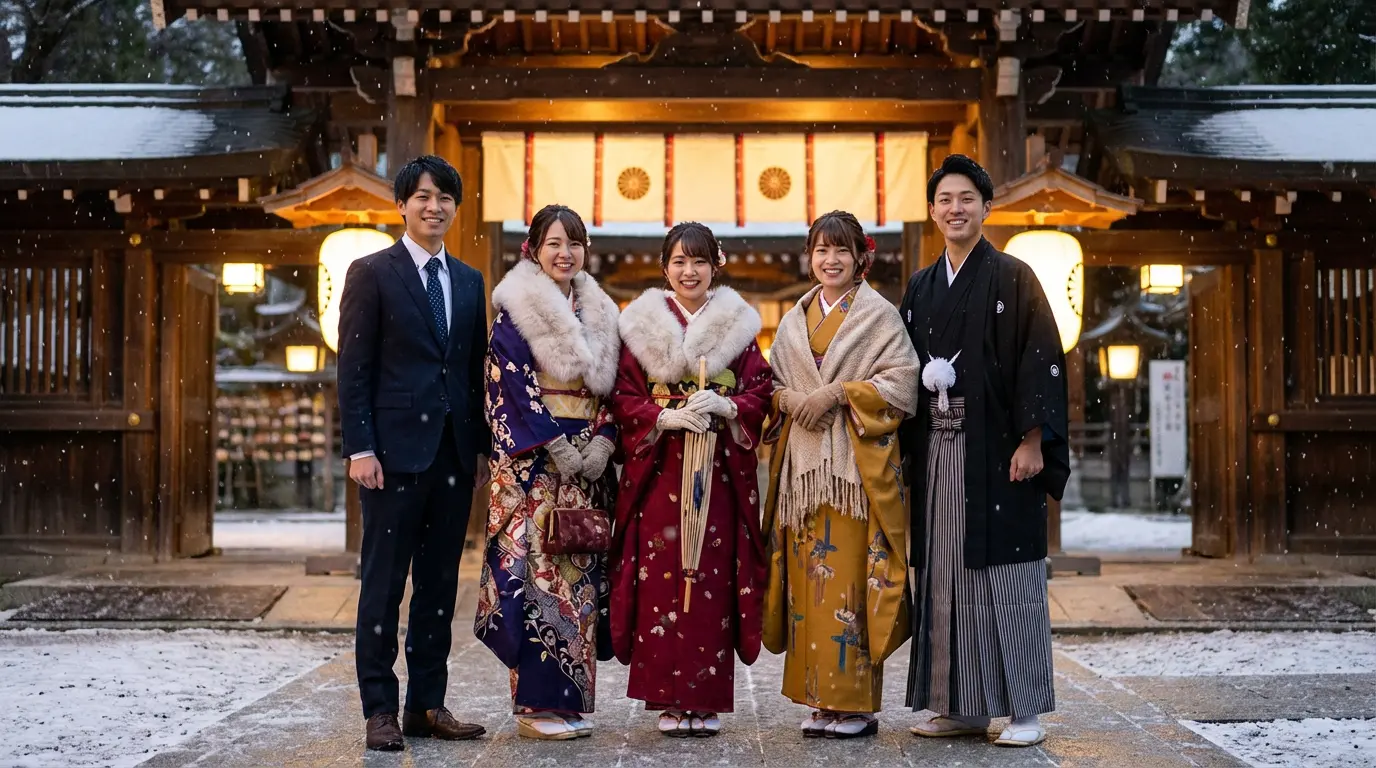
Photo credit: Pixta
Coming of Age Day (Japan): Adulthood rights comparison
For clarity, the table below outlines key legal differences before and after April 1, 2022. Use it to track progress as you study adulthood in Japan.
- Table includes: drinking age 20, smoking age 20, betting tickets 20+, mobile phone contracts.
| Category | Before April 1, 2022 | After April 1, 2022 |
|---|---|---|
| Legal adulthood age | 20 | 18 |
| Drinking age | 20 | 20 (unchanged) |
| Smoking age | 20 | 20 (unchanged) |
| Marriage without parental consent | Parental consent often required until twenty | Can marry without parental consent at eighteen |
| Ability to enter contracts (mobile phone contracts, loans) | Contracts often required parental consent until twenty | Can enter contracts at eighteen (no parental consent needed) |
| Gambling purchasing age (betting tickets) | 20+ | 20+ (unchanged) |
This concise comparison gives clarity about what changed and what did not. In addition, it offers progress visibility so you can note which rules affect attendance and ceremony planning.
Checkpoint: After April 1, 2022 legal adulthood dropped to eighteen, yet drinking smoking and gambling ages remain at twenty.
CONCLUSION
Coming of Age Day (Japan) remains a meaningful moment that links family, community, and changing law. The holiday shows how tradition adapts to legal shifts such as the move to legal age 18 in 2022. As a result ceremonies vary by prefecture and by season.
In many regions timing and customs adjust for weather and local practice. For example some towns move ceremonies to May or around Obon to avoid winter travel in kimono. In addition this flexibility keeps the rites accessible and safe.
Nihoner.com is an all in one learning platform that helps you connect language and culture. It offers a large Japanese dictionary, a pronunciation trainer, structured courses, smart SRS flashcards, quizzes, game based practice, and cultural guides about cities and prefectures. This online presence makes it easy to study vocabulary and customs tied to real places and everyday situations.
Progress tracking promise
Sign up free and save prefecture notes to track your learning and ceremony planning here.
Checkpoint: Coming of Age Day blends long standing ritual with modern law, and learning about local variations shows clear next steps for study and travel.
Frequently Asked Questions (FAQs)
When is Coming of Age Day observed?
Coming of Age Day usually falls on the second Monday in January. Historically it was on January 15, but a 2000 revision moved it to create long weekends.
Who is legally an adult now in Japan?
The legal age of majority is eighteen since April 1, 2022. Drinking smoking and gambling ages remain at twenty.
Do municipalities still celebrate twenty year olds?
Yes. Many local governments continue ceremonies for people who are twenty to honor tradition.
What do people wear and how does winter affect plans?
Attendees wear formal attire such as kimono and suits. Some towns reschedule to May or around Obon for warmer weather and easier photos.
Can eighteen year olds sign contracts and marry without consent?
Yes. At eighteen people can enter contracts and marry without parental consent, though other age-restricted activities remain at twenty.
What does Seijin Shiki (成人式) mean and how is the term used?
成人式 (Seijin Shiki, romaji: seijin-shiki) means Coming of Age Ceremony. The term Seijin Shiki or Seijinshiki refers to local Coming-of-Age ceremonies held around Coming of Age Day.
How do prefectures schedule ceremonies and what should I expect?
Most hold ceremonies on the national holiday but snowy prefectures like Akita Yamagata and Niigata sometimes move dates for safety. Check your municipality or prefecture website for the exact schedule.