What is Winter in Japan like for travelers?

Winter in Japan: How kairo, Heavy Snow Alerts, and Athlete Events Shape Daily Life
Winter in Japan brings practical routines, severe weather planning, and major sporting moments. In this guide we examine kairo disposable warming packs, heavy snow alerts, and athlete events that influence daily life. First, we explain how inexpensive kairo heat packs work and where to buy them safely.
Next, we describe heavy snow alerts from Hokkaido to Kyushu and what those alerts mean. Then we highlight travel disruptions, whether trains pause or flights face cancellations during storms. Meanwhile, we outline how winter athlete events influence local schedules and public attention. This overview stays informational and safety focused, not promotional, so you can plan with confidence. However, expect simple preparedness steps such as winter tires, warm layers, and reliable timing.
Readers will gain clarity about everyday winter gear, public warnings, and community rhythms. Checkpoint: Try packing one pair of emergency kairo and a waterproof layer to reduce travel anxiety.
Kairo are disposable warming packs that produce heat through a simple chemical reaction. When you open a pack, iron powder inside oxidizes and releases oxidation heat. These disposable warming packs come in many sizes and shapes, and they work without batteries or plugs. For clarity and certainty, they provide predictable warmth for short outdoor or commuting use.
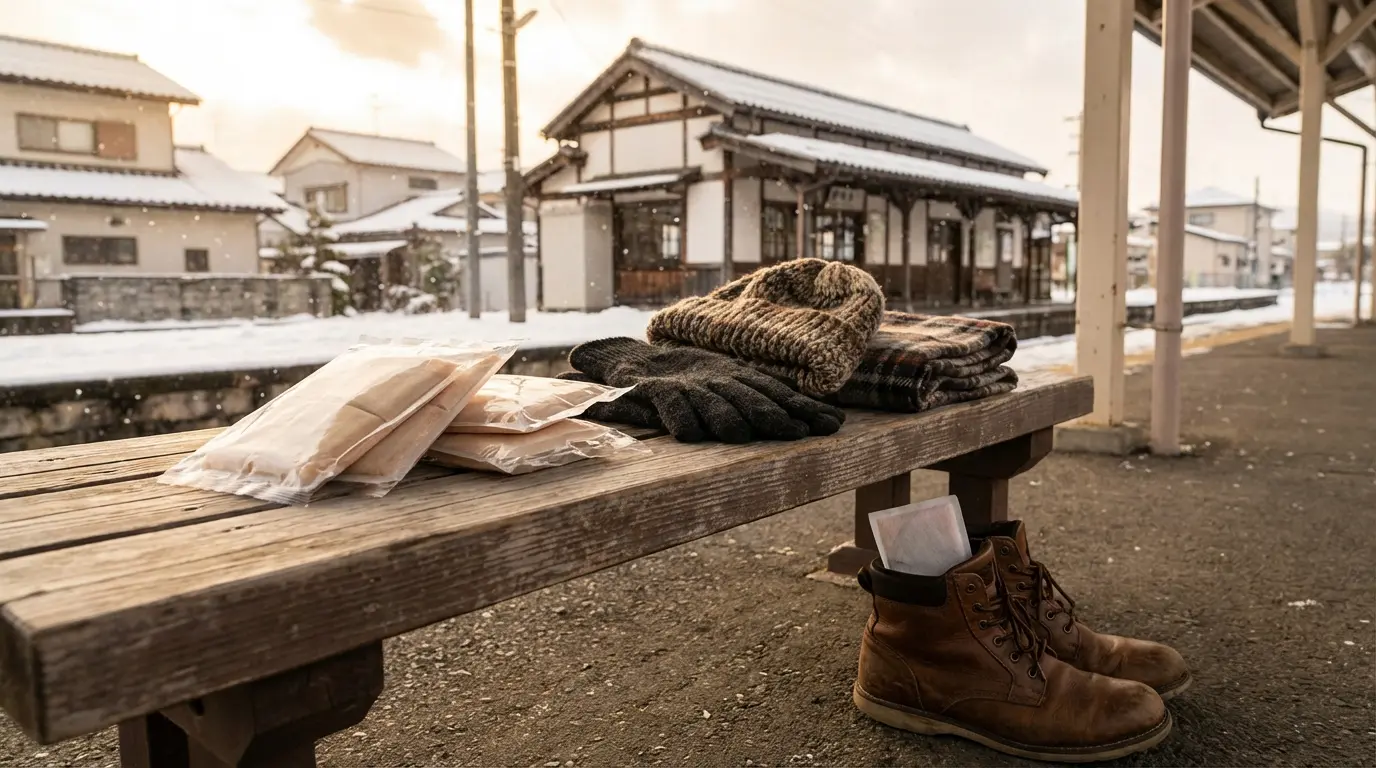
Varieties include stick on options for clothing and thin shapes that fit inside shoes. Some last longer while others heat up faster. You can buy kairo at drugstores, convenience stores, and supermarkets across Japan. In addition, prices are low and availability is high during the winter season.
Kairo are practical for Winter in Japan because they are compact and easy to use during heavy snow alerts or cold commutes. For example, commuters slip a pair into gloves or pockets and keep moving comfortably. Meanwhile, travelers find them useful during unexpected train delays.
Progress tracking promise: Celebrate small wins by noting one item you packed for the day and repeating it tomorrow. Join a free learning membership to keep consistent and track your winter vocabulary progress: Nihoner Free Membership.
If you want better pronunciation of words like kairo and other winter gear, consider Nihoner premium pronunciation training with native audio for clearer speaking. Learn more here: Nihoner Premium Pronunciation Training.
Try this now: Place one kairo in a coat pocket and feel warmth within five to ten minutes.
Learn pronunciation and practice with the AI trainer for natural sounding speech: Nihoner AI Pronunciation Trainer.
Winter in Japan: Heavy snowfall along the Japan Sea side
A very cold air mass will bring heavy snowfall from Hokkaido to Kyushu. In some areas, snow will fall for five or more days, creating prolonged travel challenges. Because snow accumulates quickly, local authorities issue heavy snowfall alerts to warn residents. As a result, trains may stop and airplanes may stop when conditions become unsafe. Drivers should use winter tires and remain cautious of avalanches when traveling in mountain regions.
For clarity and reduced anxiety, prepare a simple emergency kit before you travel. Pack warm layers, spare footwear, a charged phone power bank, and kairo or other disposable warming packs. If a service suspension occurs, stay updated via official channels and follow station staff instructions. Trains may stop with little notice, and flights sometimes cancel, so confirm schedules in advance.
Practical tips include
- Check weather and route updates early in the day
- Fit winter tires if you plan to drive
- Avoid steep snow slopes and heed avalanche warnings
Join a free membership to stay steady and confident while learning winter travel phrases: Nihoner Free Membership.
Premium feature suggestion: Save and review personal vocabulary lists to remember critical winter travel phrases and safety terms in Japanese. This feature helps you recall key words when you need them most. Learn about this premium option here.
For focused practice, use the vocabulary hub to collect the terms you encounter and review them later: Nihoner Vocabulary Hub.
Summary Checkpoint: Keep plans flexible and list two alternate routes before you leave home.
| Product type | Typical usage | Availability | Cost | Effectiveness |
|---|---|---|---|---|
| Pocket kairo (disposable warming packs) | Single use pocket warmer producing oxidation heat when opened; useful in gloves and coat pockets | Drugstores, convenience stores, supermarkets | Low | Reliable short term warmth for commutes and delays |
| Stick on kairo | Adhesive packs that attach to clothing for torso warmth | Drugstores, convenience stores, supermarkets | Low | Focused warmth for chest and back |
| Shoe insert kairo | Thin packs placed inside shoes to warm feet | Drugstores, convenience stores | Low | Effective for foot comfort in cold weather |
| Reusable electric hand warmers | Rechargeable heat source for repeated use | Electronics shops and online retailers | Higher | Adjustable heat and longer lasting warmth |
| Thermal gloves and hats | Insulating winter gear for core and hands | Department stores, outdoor shops, supermarkets | Moderate | High when layered with other clothing |
| Winter tires | Tread designed for snow and ice to improve traction | Tire shops and auto stores | Higher | Critical for vehicle traction and safety |
Winter in Japan: Milano-Cortina Winter Olympics
The Milano-Cortina Winter Olympics will take place in February from February 6 to February 22. This global event shapes local schedules and public attention across Japan. Athletes gathered in Chiba Prefecture on January 18 to prepare, showing how training and travel become part of Winter in Japan life. For example, local communities often balance daily routines with athlete arrivals and practice sessions.
Named athletes who took part in the Chiba gathering include 坂本花織 (Sakamoto Kaori) meaning “Kaori Sakamoto” used to identify the athlete, and 森重もりしげ航わたる選手 (Morishige Wataru) meaning “Wataru Morishige” used to identify the athlete. These names appear in reports and announcements about Olympic preparation and team activities.
Media attention and public interest rise as teams finalize plans. Meanwhile, broadcasters including NHK provide updates and background stories that keep fans informed. For social proof and identity reinforcement, many learners follow athlete coverage to connect with Japanese culture and language practice.
If you follow Japanese winter sports and want to learn related vocabulary, join a free membership to deepen your understanding and feel part of the community: free membership.
Premium suggestion: Try premium learning games to stay motivated while studying sports and culture vocabulary. The games make practice engaging and help you keep momentum. Learn more here: premium learning games.
Checkpoint: Choose one athlete name and say it aloud three times while reviewing its pronunciation.
Conclusion
Winter in Japan brings practical routines, safety planning, and cultural moments that shape everyday life. Kairo disposable warming packs, heavy snowfall alerts, and major athlete events influence how people travel and prepare. In addition, public services and communities adapt during prolonged snow and during the Milano Cortina Olympics. Therefore understanding simple gear and common warnings helps you travel safer and enjoy seasonal culture.
Nihoner.com is an all in one platform built for real progress in Japanese. It combines a large Japanese dictionary, a pronunciation trainer with native audio, structured courses from beginner to advanced, smart SRS flashcards, quizzes, and game based practice. Cultural guides and travel phrases connect language learning to real Japan experiences.
- Large dictionary
- Pronunciation trainer with native audio
- Structured courses
- Smart SRS flashcards
- Quizzes and games
Progress tracking promise: Join a free membership to keep practicing winter travel phrases and monitor your progress visually here.
For clarity and certainty, use these resources to plan and learn. Track progress visibility by setting small goals and reviewing what you learned after each trip. Enjoy Winter in Japan with more confidence and curiosity.
What are kairo and how do I use them?
Kairo are disposable pocket warmers that produce heat through iron oxidation, useful as pocket warmers or shoe inserts for short term warmth. For safe use follow these simple steps:
- Remove outer packaging and place the pack in a pocket or shoe
- Do not cut or puncture the pack
- Replace after single use and avoid direct skin contact for long periods
Where can I buy disposable warming packs in Japan?
You can find kairo at drugstores, convenience stores or supermarkets across Japan, especially during winter months. Popular retail options include local konbini chains and pharmacy counters.
How will heavy snowfall affect travel?
Heavy snow can cause train suspensions, flight cancellations and road hazards, so expect delays and service interruptions. Practical precautions include:
- Check operator updates early and often
- Allow extra travel time and use alternative routes when possible
- Fit winter tires if you must drive and obey local safety advisories
How long can snow last in affected areas?
Snowfall can persist for several days in some regions, especially along the Japan Sea side from Hokkaido to Kyushu. Prolonged accumulation increases the likelihood of travel disruptions.
How do the Milano Cortina Olympics change local life?
Athlete arrivals and training bring increased media coverage and occasional schedule changes in host communities. Broadcasters such as NHK expand coverage, and local events may shift around training sessions.
Key takeaways
- Kairo provide quick disposable warmth for commuting and delays
- Buy kairo at konbini, drugstores or supermarkets during winter
- Expect train and flight disruptions during heavy snow and plan backups
- Snow can last multiple days in exposed regions
- Major sporting events increase media attention and can affect local schedules