How does スマホ法と訪日外国人の動向 reshape Japan tourism?


スマホ法と訪日外国人の動向
is becoming central to life in Japan. This year Japan welcomed a record 39 million visitors, and tourism continues to reshape urban life. At the same time new smartphone regulations are changing how tourists use mobile services.
The law called スマホ法 (pronounced sumaho hou) restricts certain default app practices and promotes fair competition among platform owners. Because iPhone devices include Apple’s browser and Android phones include Google’s browser by default, regulators aim to increase user choice and lower costs. Therefore the Fair Trade Commission seeks to make good services available at lower prices.
For tourists this matters in practical ways. Maps, payment apps, and local travel guides rely on default settings and preinstalled services. As a result, changes to app rules can affect navigation, connectivity, and the cost of mobile services. Moreover, small policy shifts can influence where visitors spend time and money. In short, the intersection of スマホ法 and inbound tourism shows how tech rules shape the travel experience in Japan.
スマホ法と訪日外国人の動向 — スマホ法とは
スマホ法と訪日外国人の動向は密接に結びついています. The new law, called スマホ法 (pronounced sumaho hou), limits certain default app practices on phones. As a result, regulators want to boost competition and user choice. The law targets how platforms set default browsers and services on smartphones.
スマホ法と訪日外国人の動向 — 主要企業の役割と実務影響
アップル (pronounced appuru, English meaning Apple) and グーグル (pronounced guuguru, English meaning Google) supply default browsers on phones. For example, iPhone ships with Apple’s browser. Android devices often include Google’s browser. Therefore changes to default rules affect maps, payment apps, and travel guides. Tourists rely on these apps for navigation, translation, and local payments. Because of this, policy shifts may change connectivity and service costs.
The 公正取引委員会 (pronounced Kosei Torihiki Iinkai, English meaning Japan Fair Trade Commission) aims to make services cheaper and better. The commission argues that increased competition lowers prices and improves quality. As a result, consumers, including tourists, could see more choice and lower roaming or app fees.
External resources with more context include the Japan National Tourism Organization for visitor trends Japan National Tourism Organization and company pages such as Apple Apple and Google Google.
Key points summary
- スマホ法 expands user choice over default apps, therefore promoting competition.
- アップル and グーグル provide built in browsers on iPhone and Android respectively.
- 公正取引委員会 seeks lower prices and better services through regulation.
- For tourists this affects maps, payments, and local guide apps, so connectivity may change.
- As a result, small app rule changes can influence where and how visitors spend money.
Pronunciation and short meanings
- スマホ法: sumaho hou — smartphone law. It regulates default app practices.
- アップル: appuru — Apple. Major provider of iPhone hardware and software.
- グーグル: guuguru — Google. Major provider of Android services and browser.
- 公正取引委員会: Kosei Torihiki Iinkai — Japan Fair Trade Commission. Regulator promoting market fairness.
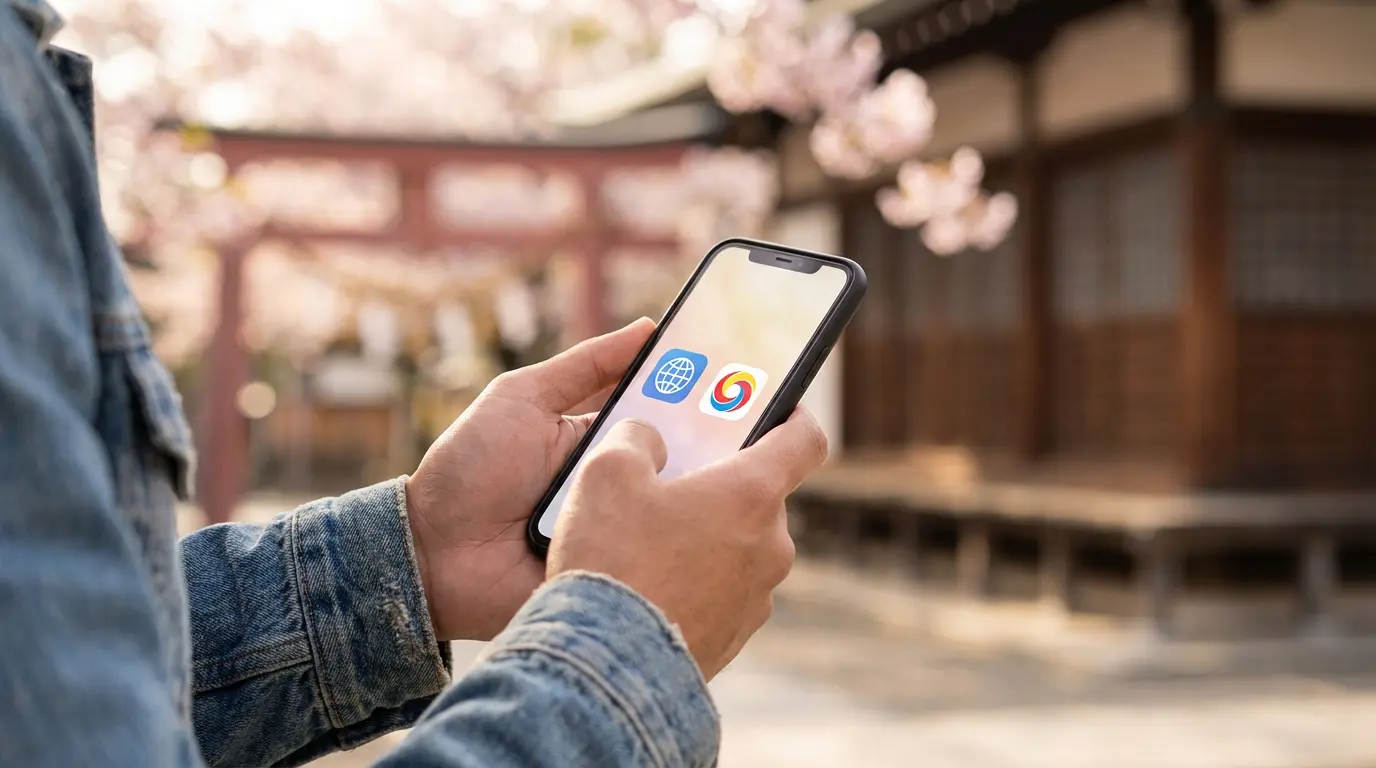
スマホ法と訪日外国人の動向 — 観光動向の分析
Japan saw over 39 million foreign visitors from January to November. However the growth pattern varied by market. For example Chinese arrivals totaled about 560,000 in November. Because overall growth had exceeded 10 percent earlier in the year, November’s roughly 3 percent rise stood out as a slowdown.
According to the Japan National Tourism Organization, inbound totals set a new record this year. Visit the full data at Japan National Tourism Organization for yearly and monthly breakdowns. Therefore analysts have focused on factors behind the slower November increase. One major factor was a mid November advisory from Chinese authorities asking citizens to avoid travel to Japan. As a result fewer travelers booked last minute trips in that period.
The 春節 period plays an outsized role in yearly patterns. 春節 (pronounced shunsetsu — English meaning Spring Festival or Chinese New Year) often drives large spikes in arrivals. Travel agencies watch the timing and strength of 春節 demand closely because it influences hotel bookings, local retail sales, and seasonal flights.
Impact on tourism and local services
- Travel timing shifted because advisories created short term uncertainty.
- November’s 560,000 Chinese arrivals reflected both demand and political signals.
- Peak seasons like 春節 produce concentrated spending in urban centers.
- Changes in visitor flows affect transport, retail, and regional businesses.
- Technology rules such as スマホ法 can shape tourist behavior by altering app availability and costs.
Implications for businesses and planners
Tour operators and local governments should plan for variability. For instance they should prepare flexible staffing and refund policies. Moreover retailers can adjust inventory ahead of 春節 spikes. Finally understanding both policy signals and app access helps communities manage visitor needs and opportunities.
| Stakeholder Name | Role / Description | Impact on Tourists or Market | Related Keywords |
|---|---|---|---|
| アップル (appuru — Apple) | Major smartphone maker and app platform operator. Controls default browser on iPhone. | Affects which browsing and map apps tourists see first. Can influence app costs and compatibility. | アップル, iPhone, default apps, app ecosystem |
| グーグル (guuguru — Google) | Provider of Android services and default browser on many devices. Runs app store and mapping services. | Shapes Android user experience. Changes can alter navigation and local search for visitors. | グーグル, Android, Google Maps, デフォルトブラウザ |
| 公正取引委員会 (Kosei Torihiki Iinkai — Japan Fair Trade Commission) | Regulator promoting fair competition and consumer choice. Enforces rules on default app practices. | Aims to lower prices and improve service quality for users, including tourists. | 公正取引委員会, competition, regulation, 消費者保護 |
| 日本政府観光局 (Nihon Seifu Kankōkyoku — Japan National Tourism Organization) | National tourism agency tracking visitor data and promoting Japan. Provides official travel guidance and statistics. | Uses arrival data to guide marketing. Helps regions prepare for seasonal spikes like 春節. | 日本政府観光局, JNTO, tourism data, visitor trends |
| 旅行会社 (ryokō gaisha — travel agencies) | Organize tours, flights, and bookings. Coordinate with carriers and hotels. | React quickly to demand shifts and advisories. They plan for 春節 demand and refund policies. | 旅行会社, travel agencies, bookings, seasonal demand |
Conclusion
スマホ法と訪日外国人の動向 shows how tech rules and visitor flows shape daily life in Japan. The smartphone law changes default app choices, therefore it affects navigation, payments, and travel services. Meanwhile tourism patterns, including record arrivals and fluctuations from Chinese visitors, influence local demand and business decisions.
In short, regulation and travel trends interact. For example, app availability can guide where tourists go, and advisories can shift demand before peak seasons like 春節 (shunsetsu — Spring Festival). As a result, businesses and planners should monitor both policy and visitor data and prepare flexible responses.
Nihoner.com is an all-in-one platform for learning Japanese. It offers a dictionary, pronunciation trainer, structured courses, flashcards, quizzes, game-based practice, and cultural content linking language to real life. Therefore learners gain practical skills fast and with confidence. Finally, use Nihoner.com to study efficiently and navigate Japan with ease.
Frequently Asked Questions (FAQs)
What is スマホ法 (sumaho hou — smartphone law)?
スマホ法 (sumaho hou — smartphone law) limits default app practices to boost competition and user choice.
How does the law affect tourists?
It can change default browsers and app availability. Therefore maps and payment apps may behave differently for visitors.
What are recent tourism trends in Japan?
Japan recorded over 39 million visitors from January to November. However November growth slowed, partly due to advisories.
How did Chinese travel advisories affect numbers?
Chinese advisories in mid-November reduced bookings. As a result arrivals from China dipped and monthly growth cooled.
What should travelers do with their smartphones?
Download alternative browsers and travel apps before arrival. Also check roaming plans and app permissions for maps and payments.