Why visit Nishi-Maizuru historical sites now?


Nishi-Maizuru historical sites unfold along narrow canals and salt-stained streets, inviting slow walks through seafood markets, bathhouses, and temple-lined lanes. Here you sense Edo era rhythms and twentieth century port life in equal measure. The market stalls brim with Sea of Japan fish, while cozy bathhouses keep old wood and tiled roofs alive. Because the town preserves castle ruins, merchant alleys, and designated cultural bathhouses, history feels close and tangible.
In this article, I will guide you through Maizuru Port Tore Tore Center and Tanabe Castle. I will also visit Maizuru Park and the bathing treasures Hinodeyu and Wakanoyu. Along the way, expect local stories, seasonal seafood tips, walking routes, and practical advice for visitors. Therefore pack comfortable shoes and a curious mind, because nostalgia and discovery await in every lane.
Finally, this stroll balances history, flavor, and quiet charm to inspire slow tourism in Kyoto Prefecture. Moreover, you will learn about Tanabe Castle’s role in Sekigahara and local heritage sites. As a result, this piece mixes maps, brief histories, and savory market notes for easy planning. With vivid photos and step by step directions, you will leave ready to walk and savor Nishi-Maizuru’s gentle past.
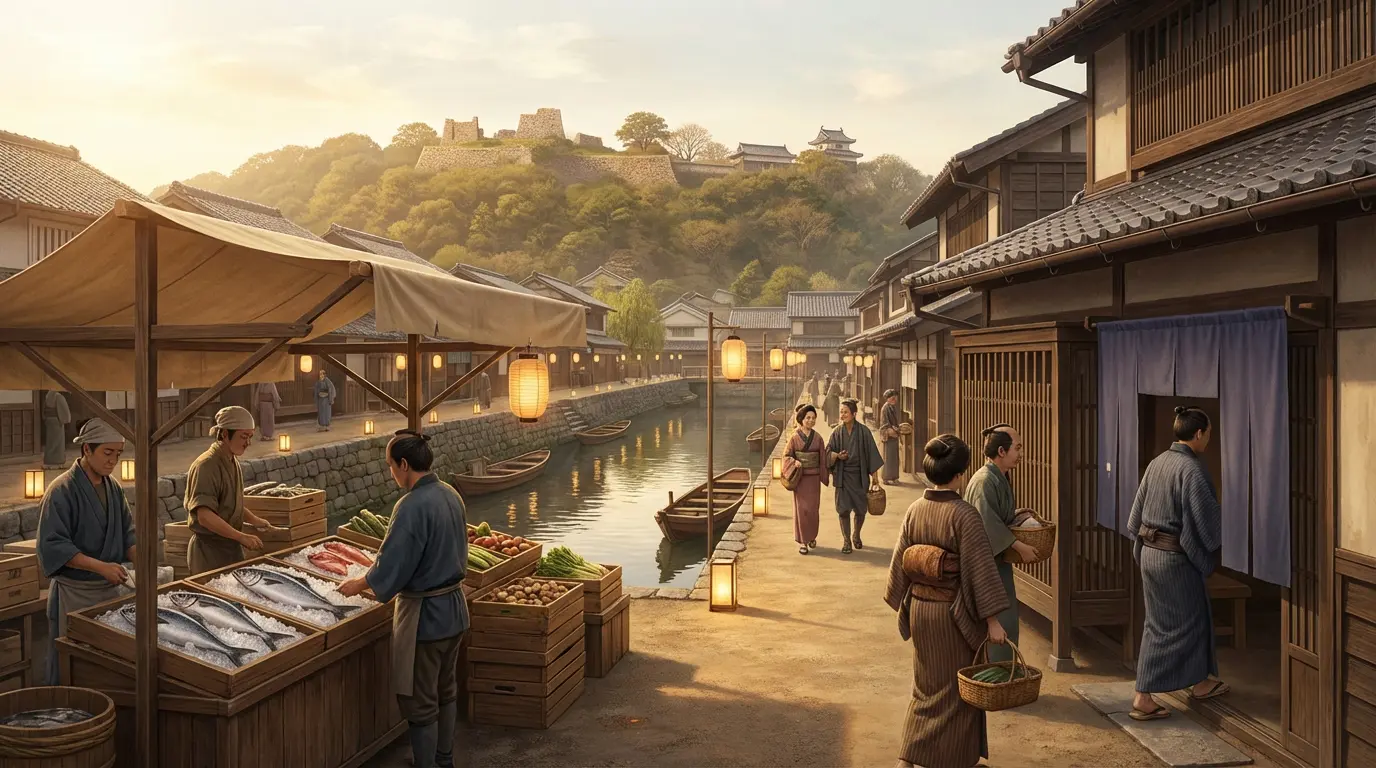
Tanabe Castle and Nishi-Maizuru historical sites
Perched above a gentle rise, Tanabe Castle once watched over the coast and commerce of Tango province. Built in 1582 under the direction of Hosokawa Yūsai (also known as Hosokawa Fujitaka), the castle combined practical stonework with the measured elegance of a samurai stronghold. Today only earthworks and a few reconstructed features remain, but the site still breathes the stories of late Sengoku Japan.
Because Tanabe stood at the crossroads of regional power, it played a dramatic role in the events that led to Sekigahara in 1600. Hosokawa Yūsai defended the castle during a costly two month siege, holding out against far larger forces after the burning of nearby Miyazu. His stubborn resistance helped shape the movement of armies and attention in the region, and therefore affected how the decisive battle unfolded elsewhere.
Maizuru Park preserves these ruins with thoughtful landscaping and quiet paths. The park keeps the castle footprint visible, with interpretive plaques and a small museum that place the stones in context. Visitors arrive within ten minutes on foot from Nishi-Maizuru Station, and then find broad lawns, shaded walks, and the ruined moats that once encircled the keep.
Key facts
- Foundation year: 1582 under Hosokawa Yūsai
- Notable event: 52 day siege during conflicts leading to Sekigahara
- Present site: Ruins preserved within Maizuru Park, near Nishi-Maizuru Station
- Nearby points: Tanabe Castle Museum for artifacts and local histories
Strolling the park, you see how nature reclaims stone. Moss softens fallen walls, and the channel of an old moat reflects sky. Therefore the ruins offer a tactile, melancholy link to the past. Because the park combines open spaces and interpretive exhibits, it remains one of the most accessible Nishi-Maizuru historical sites for visitors seeking both calm and history.
| Name | Historical or cultural significance | Location | Notable features | Visitor tips |
|---|---|---|---|---|
| Tanabe Castle ruins | Founded 1582 by Hosokawa Yūsai; key site in Sekigahara struggles. | Maizuru Park, near Nishi-Maizuru Station | Earthworks, ruined moats, interpretive plaques, Tanabe Castle Museum | Walk from Nishi-Maizuru Station in under 10 minutes. Visit the museum for artifacts. See details: here. |
| Maizuru Park | Preserves the castle footprint and parkland around ruins. | Central Maizuru, adjacent to Tanabe Castle site | Broad lawns, shaded paths, seasonal cherry blossoms, views over former ramparts | Bring a picnic and a camera. Because paths are uneven, wear good shoes. More info: here. |
| Hinodeyu and Wakanoyu bathhouses | Designated National Tangible Cultural Properties; classic public baths. | Traditional neighborhoods near Yoshiwara and downtown Maizuru | Wooden architecture, tiled roofs, communal baths, historic noren | Check opening times. Therefore arrive early to avoid crowds. See local guide: here. |
| Maizuru Port Tore Tore Center | One of the Sea of Japan coast’s largest fish markets. | Port area, short bus or taxi from station | Fresh seasonal seafood stalls, restaurants, hands-on stalls for tourists | Go early for the best catch. Bring cash. Directions: here. |
| Yoshiwara Irie canal | Picturesque canal district shaped by low tidal range | Yoshiwara district, along Maizuru Bay canals | Stone embankments, narrow lanes, canal reflections like Venice | Visit at low wind for calm reflections. Read more: here. |
Hinodeyu and Wakanoyu: Nishi-Maizuru historical sites
Stepping into Hinodeyu or Wakanoyu feels like entering a living photograph. The wooden beams creak with age, and warm steam blurs tiled walls. Because both baths are designated National Tangible Cultural Properties, they preserve original fittings and community rituals. Also their noren and timber facades show classic seaside town design. Local patrons still follow long-held routines, and visitors can learn bathhouse etiquette quietly.
Quick facts
- Designation: National Tangible Cultural Properties
- Architecture: traditional woodwork, tiled roofs, communal basins
- Atmosphere: intimate, communal, quietly historic
Visiting tips
- Check posted hours before you go. Bathhouses often close midday.
- Bring small bills and respect local customs. Shower thoroughly before entering the bath.
- Therefore speak softly and follow signage. Staff will assist when needed.
For cultural background and a guide to these baths, see this article. This article offers insider context and photos that help prepare first time visitors.
Maizuru Port Tore Tore Center and local seafood markets
At the port, early morning light turns silver on fish scales. Maizuru Port Tore Tore Center ranks among the Sea of Japan coast’s largest markets. Vendors lay out seasonal catch on ice, and small restaurants grill or serve sashimi nearby. Because the market handles diverse species, you can taste local specialties from Tango province.
Market tips
- Go at dawn for the best selection and lively auctions.
- Bring cash for small vendors, and carry reusable bags for purchases.
- Therefore try seasonal items such as squid in spring or fatty fish in winter.
For directions and visitor access, see the market page. Visiting the market links you to the local palate and the region’s maritime history. As a result, the markets and bathhouses together form a sensory map of Nishi-Maizuru—smoke, steam, and salt air.
Conclusion
Nishi-Maizuru’s charms blend history, culture, and everyday life in compact streets. These Nishi-Maizuru historical sites offer a compact, living museum of regional life. Because Tanabe Castle ruins, Maizuru Park, bathhouses, markets and canals sit close together, visitors enjoy layered experiences. Therefore travelers who seek authentic local life will find rich rewards here.
To connect more deeply, use Nihoner.com. It offers a large dictionary, structured courses, and a pronunciation trainer. Moreover it includes cultural content tied to places like Tanabe Castle and local customs. As a result learners build vocabulary and cultural context together.
Use the site for steady progress and growing confidence in Japanese. Because it pairs practical language practice with cultural notes, you will read signs and chat with vendors more easily. Finally plan your walk in Nishi-Maizuru, learn a few phrases, and enjoy each moment. Explore the parks, markets, and bathhouses with curiosity and respect. You’ll return richer for the experience. Start planning today, confidently.
Frequently Asked Questions (FAQs)
How do I reach the main historical sites?
Most are within a ten minute walk of Nishi-Maizuru Station. Maizuru Park and Tanabe Castle sit closest. Therefore they are easy to reach on foot. The Maizuru Port Tore Tore Center needs a short bus or taxi ride.
When is the best time to visit markets and bathhouses?
Go to the market at dawn for the freshest catch. Bathhouses open mornings and evenings, however some close midday. Therefore check posted hours.
Do I need Japanese to enjoy the sites?
No, basic phrases help visitors. Also a translation app makes buying fish or asking directions easier. Learning simple etiquette shows respect.
Are the bathhouses public and are there rules?
Yes, they are public and often gender segregated. Shower before entering and leave towels out of the water. Tattoos may be restricted.
What practical tips should I follow?
Bring cash because many vendors prefer it. Wear good walking shoes and check opening times. Moreover ask locally for seasonal specialties.