How Japan’s markets and traditional foods unfold in Ameyoko?


Japan’s markets and traditional foods: Ameyoko to Hokkaido’s salmon
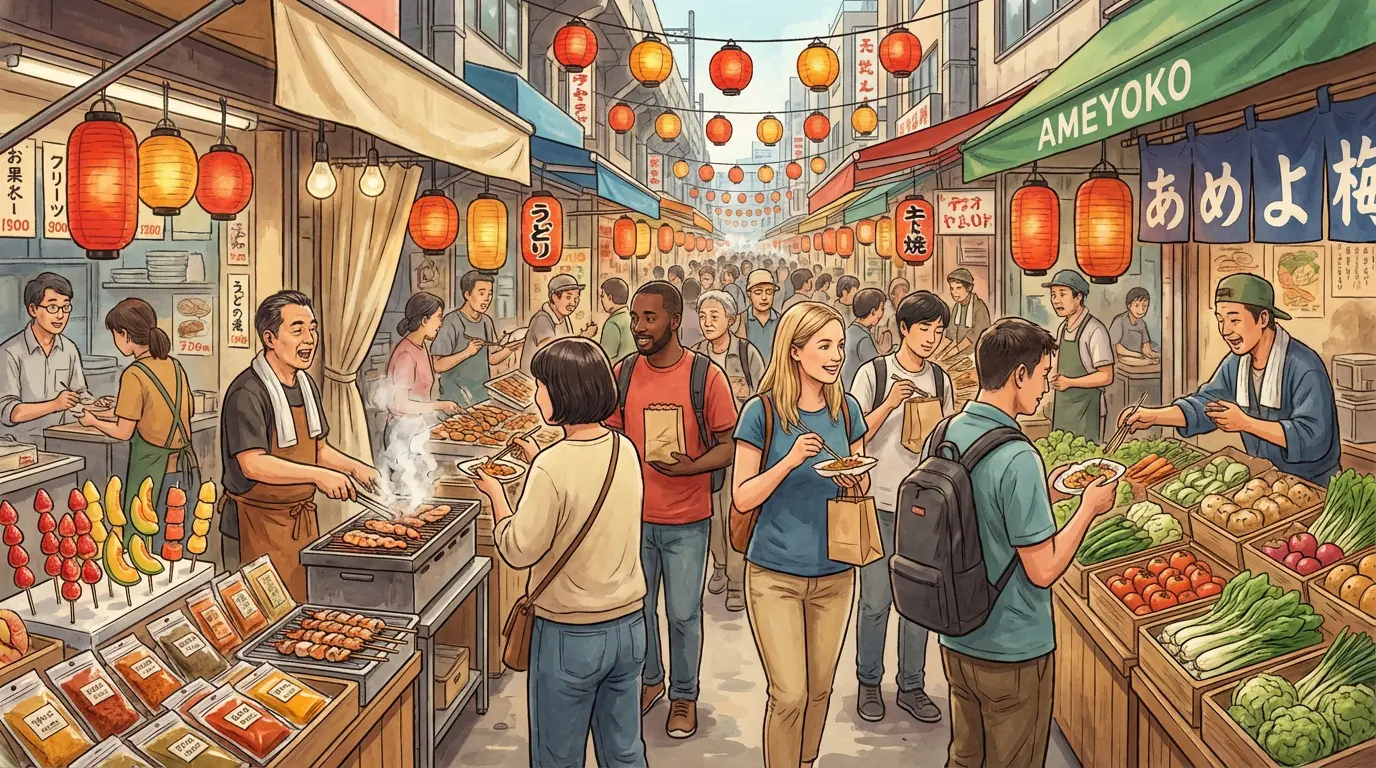
Discover Japan’s markets and traditional foods in one inviting journey. Tokyo’s Ameyoko offers vibrant markets and living history. It stretches along a 500 meter shopping street between Ueno Station and Okachimachi Station. Because it began as a post war black market, the street keeps old world character and bargains. Visitors taste street food such as fresh fruit on sticks and classic snacks.
Meanwhile in Hokkaido, traditional salmon dishes tell Ainu stories. For example, Satchép from Shiraoi preserves salmon by salting and drying outdoors. Producers then smoke the fish for about two months so it stores well. As a result, this food appears at Ainu events and cultural gatherings.
Readers and tourists can learn from both places because they show craft, resilience and flavor. Also this guide will point to markets, recipes and cultural sites for deeper exploration. Come ready to eat, ask questions and honor local traditions.
Japan’s markets and traditional foods: Ameyoko Market
Ameyoko, or Ameya Yokochō, runs about 500 meters between Ueno and Okachimachi Stations on the Yamanote Line. Because it grew from a postwar black market, the street still hums with history and energy. Visitors find shops packed with clothing, snacks and lively stalls that invite haggling and discovery.
History and name origins
After World War II, traders sold surplus goods on this strip. As a result, Ameyoko became a hub for bargains and daily needs. The name may come from the Japanese word ame meaning candy, or from American goods sold during the occupation. For more background and cultural context, see the Ameyoko feature on Nippon.com.
What to shop and eat
Ameyoko mixes retail and street food. Shoppers often choose:
- Bargain clothing, shoes and accessories
- Packaged local foods and seasonings
- Fresh fruit on sticks and grilled seafood
- Snacks and sweets for quick tasting
Street food proves irresistible because vendors prepare items to eat while walking. Try skewered fruit for a sweet, portable treat.
Culture, photography and credibility
The shopping alley appears in many travel features, and the banner photo for this article is credited to Pixta. Therefore, photographers and stock sites often highlight the crowd scenes and colorful stalls. Visit Pixta for images and licensing.
Tips for visitors
- Go early to avoid peak crowds and to see fresh goods. However, evenings offer neon-lit energy.
- Bring cash because small vendors may not accept cards. Also, ask before photographing goods or people.
- Combine a walk through Ueno Park for museums and calmer spaces after the market.
Ameyoko teaches visitors about Tokyo’s market traditions and local commerce. Consequently, it stands as a lively example of Japan’s markets and traditional foods in an urban setting.
Japan’s markets and traditional foods: Satchép from Hokkaido
Satchép is a traditional salmon product from Shiraoi in Hokkaido that grew from Ainu preservation methods and communal food culture. Produced and demonstrated at the National Ainu Museum and Park, Upopoy, Satchép links seasonal work, ritual, and tasting for visitors. It preserves salmon for months, sustaining families through winter and appearing at festivals and ceremonies.
Preparation follows time honored steps. First, fishermen salt the salmon to draw out moisture. Next, they hang fish outdoors on racks to air dry until mid February. Then, producers smoke the fish slowly for about two months, infusing smoky flavor and extending shelf life. The result stores well without refrigeration for extended periods.
Key steps and notes
- Salt the fish evenly to begin curing
- Air dry outdoors until mid February on racks or lines
- Smoke slowly for roughly two months for flavor and preservation
- Store in a cool dry place to extend keeping quality
Cultural context and tasting tips
Ainu communities treat Satchép as both everyday sustenance and ceremonial food, reflecting respect for salmon and seasonal cycles. Visitors can taste it at Upopoy demonstrations and at Shiraoi events and markets; see Upopoy for seasonal programs here and Shiraoi festival listings here. Because drying occurs through winter, the best time to see production and fresh tastings runs from late winter into early spring.
Try Satchép sliced thin with warm rice or in small shared plates at cultural events to appreciate texture and smoky umami.
Japan’s markets and traditional foods: Quick comparison
| Feature | Ameyoko Market (Tokyo) | Satchép (Shiraoi, Hokkaido) |
|---|---|---|
| Location | 500-meter shopping street between Ueno and Okachimachi Stations | Shiraoi town, eastern Hokkaido; Ainu cultural region |
| History | Began as a post WWII black market; evolved into a bargain district | Rooted in Ainu preservation methods; created at Upopoy |
| Food Types | Street food, fresh fruit on sticks, grilled seafood, packaged goods | Salted, air-dried and smoked salmon; festival food |
| Cultural Importance | Urban market culture, daily commerce, street food tradition | Central to Ainu events, seasonal festivals, communal sharing |
| Unique Features | Bargains, lively stall culture, historic name origins (ame or American) | Long shelf life, dried until mid-February, smoked about two months |
Conclusion
Japan’s markets and traditional foods come alive in places like Ameyoko and Shiraoi. Ameyoko shows urban market energy and postwar history. Satchép reveals Ainu skill in preserving salmon through salt, cold air and slow smoking. Together they map food, memory and resilience across regions.
Both sites carry living traditions worth tasting and respecting. Ameyoko invites visitors to haggle, sample street snacks and observe daily commerce. In contrast, Satchép appears at Ainu events, where it connects families and ceremonies. Therefore, each place teaches about culture through flavor and techniques.
Travelers should taste, ask and learn while visiting. Also, photograph with permission and support local vendors. Try Satchép with warm rice and buy small treats at Ameyoko to compare textures and stories. As a result, your trip will become a meaningful culinary lesson.
For learners who want deeper cultural and language context, Nihoner.com helps bridge the gap. It presents structured courses, quizzes and smart SRS flashcards. The platform also offers cultural insights to help learners make real progress and better understand local customs.
In short, enjoy Japan’s markets and traditional foods with curiosity and respect. Explore markets, attend cultural events and return home with new tastes, facts and memories.
Frequently Asked Questions (FAQs) — Japan’s markets and traditional foods
What is Ameyoko and where is it located?
Ameyoko, also called Ameya Yokochō, is a lively shopping street in northeastern Tokyo. It runs for about 500 meters between Ueno and Okachimachi Stations on the Yamanote Line. Because it began as a postwar black market, the area kept its energetic bargaining culture. For background and travel tips, see Nippon.com.
What foods should I try at Ameyoko?
Try a range of quick bites that show Tokyo street food culture. Popular items include:
- Fresh fruit on sticks for a sweet snack
- Grilled seafood skewers and yakitori
- Packaged local seasonings and snacks to take home
Also, many vendors prepare food to eat while you walk. Therefore, bring curiosity and small change.
What is Satchép and how is it made?
Satchép is a salmon product from Shiraoi, Hokkaido. First, the fish is salted to draw out moisture. Next, locals hang it outdoors to dry until mid-February. Then, they smoke it slowly for about two months to preserve flavor and texture. As a result, Satchép can store for a long time and appears at community events. Learn more about Upopoy where it was developed.
Can visitors taste Satchép and where?
Yes. Visitors can often taste Satchép at the National Ainu Museum and Park, Upopoy, and during Shiraoi events. Also, local festivals and markets sometimes offer samples. For seasonal event listings, see Shiraoi Tourist Association. For easy background reading, consult NHK Easy.
What practical tips help when visiting markets and trying traditional foods?
Bring cash because small stalls may not accept cards. Also, go early for fresher goods and smaller crowds. Ask vendors about ingredients if you have allergies. Do not photograph people without permission. Finally, taste respectfully and buy small items to support local sellers.