What are Lesser-Known Shinkansen Stops from Tokyo to Kyushu?


Lesser-Known Shinkansen Stops from Tokyo to Kyushu
Experience the thrill of Japan’s bullet trains and discover Lesser-Known Shinkansen Stops from Tokyo to Kyushu. Travelers love the speed because Shinkansen regularly exceed 250 kilometers per hour. However, the best part is the way quiet stations reveal local life and flavor. This guide shows how convenience meets culture at lesser stops, from food stands to hidden viewpoints.
A continuous route links Tokyo to Kagoshima-Chūō by the Tōkaidō, San’yō, and Kyūshū Shinkansens. It takes about seven hours in total, therefore many travelers prefer to break the trip. Along the way you can sample regional ramen, visit castles, and see volcanic calderas. Read on to uncover lesser-known stations, travel hacks for QR tickets, and the best platforms for Mt. Fuji views.
Whether you ride Tōkaidō express services or local San’yō connectors, you will find surprises. Moreover, this piece gives practical booking tips, explains QR ticket use, and highlights Triplabo as a helpful option. Join us and map a faster, richer journey through Japan’s heart because great stops await.
The continuous route and notable stops: Lesser-Known Shinkansen Stops from Tokyo to Kyushu
Japan’s high speed rail network threads Tokyo to Kagoshima-Chūō via a continuous corridor formed by the Tōkaidō, San’yō, and Kyūshū Shinkansens. This single, connected path lets you travel long distances quickly, because trains often run at more than 250 kilometers per hour. However, the joy of the route lies not just in speed but in the many lesser-known stations that reveal regional culture, cuisine, and landscapes.
Why break the journey
- The full trip from Tokyo to Kagoshima-Chūō takes about seven hours, therefore breaking it up adds comfort and discovery.
- Stopping lets you taste local specialties, visit castles, and explore volcanic scenery without rushing.
- Many travelers prefer to split the route across two or three days to enjoy rail-adjacent towns and hidden attractions.
Key Kyūshū Shinkansen stops and what makes them special
- Hakata (Fukuoka): A major gateway and food capital where Hakata ramen awaits. From here you can connect to local lines for city sights.
- Kurume: Often overlooked yet good for traditional crafts and quieter city strolls. It is a low-key option for travelers who like offbeat museum visits.
- Kumamoto: Visit Kumamoto Castle, whose main keep reopened to the public in June 2021 after restoration. The castle grounds and nearby samurai districts showcase regional heritage and gardens.
- Shin-Yatsushiro: A convenient stop for visiting coastal views and small-town seafood, therefore ideal for short cultural detours.
- Shin-Minamata: Near the Minamata area known for environmental history and coastal wetlands; it offers a different, contemplative travel experience.
- Sendai (Kagoshima Prefecture): Not to be confused with the Tohoku Sendai, this smaller stop gives access to local hot springs and island ferries.
- Izumi: Famous for the winter spectacle of thousands of migratory cranes. Visit between October and March to see the cranes and learn about conservation efforts at Crane Park Izumi. See more at Crane Park Izumi.
- Kagoshima-Chūō: The southern terminus with dramatic views of Sakurajima across Kagoshima Bay. Take a bay ferry to get close to the volcanic island, and remember that access to parts of the Mt Aso caldera can close suddenly due to volcanic activity. For Sakurajima access details see Sakurajima Access.
Practical tips for exploring lesser-known stops
- Plan stops that align with regional festivals or markets because local events amplify the cultural experience.
- Use online ticket services to book seats ahead, and accept QR tickets delivered by email for smooth gate entry. Triplabo offers English-friendly Shinkansen ticketing options and can simplify reservations.
- Check restoration and access updates for sites such as Kumamoto Castle before you visit. For official reopening details visit Kumamoto Castle Reopening.
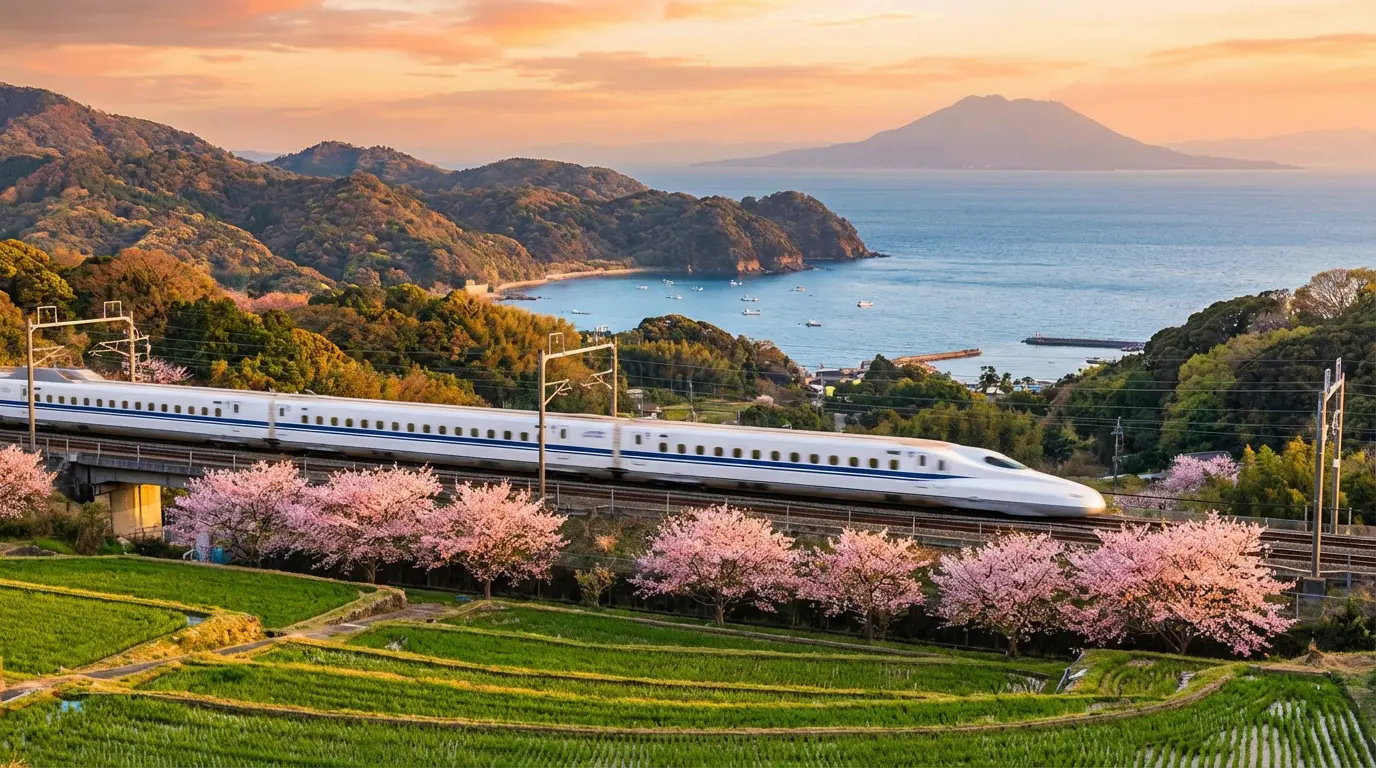
Practical booking tips: Lesser-Known Shinkansen Stops from Tokyo to Kyushu
Travel smart and save time with simple booking hacks. Below are steps and tips to book seats, use QR tickets, and move smoothly between stations. This guidance helps you focus on hidden stops rather than logistics.
Book and use QR code tickets
- Many providers email a QR code that you can scan at ticket gates, therefore you can avoid long lines.
- If you prefer a paper copy, print the QR code because gates accept both formats.
- For calm boarding, arrive at the platform early, and validate connections if you break the trip.
Choose the right online service
- Triplabo offers a Japanese booking hub and useful options for travelers. See Triplabo for details.
- For English focused booking, try SmartEX or Japan Bullet Train because they issue QR tickets in English.
- Klook also sells Shinkansen tickets and local transfers. Check Klook for promotions.
Seat selection and passes
- Reserve a seat when possible, therefore you avoid crowding on peak trains.
- Consider the Kyun♥ Pass for regional travel options, and confirm included routes before buying.
- Travel with only essential luggage, because older platforms can be narrow.
Final tips for a smooth trip
- Check timetables and site updates before you travel, because attractions can close or change hours.
- Keep screenshots of QR tickets and confirmations for backup.
- Lastly, ask station staff if unsure, because many provide bilingual help at major stops.
| Station | Unique attractions | Travel tips | Notable nearby sights |
|---|---|---|---|
| Kurume | Traditional crafts, quiet city strolls, local sweets | Visit small museums, try goma-dofu, arrive mid-morning to avoid crowds | Local craft shops, Kurume kasuri textiles |
| Kumamoto | Kumamoto Castle, samurai districts, garden parks | Check castle access updates, allow 2-4 hours for grounds, bring a camera | Kumamoto Castle, Suizenji Jojuen garden, local ramen |
| Shin-Yatsushiro | Coastal views, seafood markets | Short stop for fresh seafood, rent bike for shore rides | Coastal promenades, local fish markets |
| Shin-Minamata | Environmental history, wetlands | Visit museums early, respect memorial sites, combine with coastal walks | Minamata disease memorial museum, tidal flats |
| Sendai (Kagoshima) | Hot springs, island ferry links | Confirm ferry schedules, pack light for onsen visits | Ibusuki sand baths (via local transfer), local islands |
| Izumi | Winter migratory cranes, Crane Park Izumi | Best from October to March, bring binoculars, join guided viewing | Izumi cranes reserve, wetlands and observatory |
| Kagoshima-Chūō | Sakurajima views, gateway to Amami and Yakushima | Take the bay ferry, check volcanic activity notices, stay for sunset | Sakurajima, Kagoshima bay, local seafood and hot springs |
Conclusion
Exploring Lesser-Known Shinkansen Stops from Tokyo to Kyushu transforms a fast transit into a series of discoveries. Because these stops reveal local food, history, and landscape, trips feel richer. Moreover, breaking the route into chapters lets you savor castles, cranes, and volcanic bays without rush. As a result, your journey becomes a curated cultural tour, not just travel.
Nihoner.com is an all-in-one platform for learning Japanese with real progress. It offers a large dictionary with pronunciation support, therefore you can read and speak with confidence. Structured courses guide beginners to advanced learners step by step. SRS flashcards reinforce vocabulary, and quizzes test active recall. Cultural content links lessons to real life in Japan, so language learning connects to your travels.
Use Nihoner to prepare for local conversations and signs before you go. Then explore Japan confidently, because language opens doors and deepens experiences. Start small, practice key phrases, and return with stories from unexpected places.
Frequently Asked Questions
What are the best Lesser-Known Shinkansen Stops from Tokyo to Kyushu to include on my trip?
The best lesser-known stops to consider are Kurume, Kumamoto, Shin-Yatsushiro, Shin-Minamata, Izumi, and Kagoshima-Chūō. Kumamoto features Kumamoto Castle and garden parks. Izumi is famous for thousands of migratory cranes between October and March. Kagoshima-Chūō gives dramatic views of Sakurajima across the bay. Therefore, break the route across two or three days to explore each stop.
How do QR tickets and online booking work for Shinkansen travel?
Many vendors email a QR ticket that you scan at gates. For example, Triplabo sells tickets and offers English support at Triplabo. In addition, SmartEX and Klook provide English QR tickets at SmartEX and Klook. Therefore, book seats online to reserve space. Finally, print a backup if you worry about phone issues.
Can I use passes like the Kyun♥ Pass on this route?
Some regional passes cover parts of Kyūshū. However, the Kyun♥ Pass may not include all high speed services. Thus check pass terms carefully before purchase. If a pass does not cover a leg, buy single Shinkansen tickets instead. Moreover, compare costs because point to point tickets can sometimes be cheaper.
When should I visit Izumi cranes and Sakurajima for the best experience?
Visit Izumi between October and March for peak crane numbers. Bring binoculars and warm clothes for morning viewing. For Sakurajima, go at sunset for dramatic photos. Also check Sakurajima access and volcanic notices at Sakurajima Access because access can change.
What practical tips help me enjoy Lesser-Known Shinkansen Stops from Tokyo to Kyushu?
Reserve seats where possible, and travel light because platforms can be narrow. Use QR tickets for speed, and save screenshots as backup. Check attraction opening hours before you go. Finally, plan at least one overnight stay per region to explore deeply.