How to master the nuance of いいですね in convo?


Understanding the Nuances of “いいですね?” in Japanese
Have you ever found yourself stumped by the seemingly straightforward Japanese phrase “いいですね?” While it might appear to be a simple expression of agreement or approval, the nuance of いいですね can transform dramatically depending on the context. This everyday phrase is steeped in layers of meaning that extend far beyond its surface appearance. Understanding these subtleties not only enhances your comprehension of Japanese grammar but also enriches your ability to communicate effectively in conversational Japanese.
In this article, we will dive into the intriguing realm of Japanese sentence nuances, uncovering how something as simple as いいですね can carry distinct connotations that vary with the situation. For learners and enthusiasts of Japanese, grasping these nuances is more than a linguistic skill—it’s a cultural exploration that bridges the gap between textbook learning and authentic Japanese interactions. Join us as we explore the multifaceted dimensions of everyday phrases, with a keen focus on mastering the art of interpreting いいですね creatively and accurately.
Understanding the nuance of いいですね
いいですね (ii desu ne) literally means “It’s nice, isn’t it?” However, its everyday use covers agreement, approval, admiration, and more. Because tone and context change meaning, learners must pay attention to speakers and situations. This short section explains common uses and gives simple examples.
Common contexts where you’ll hear いいですね include:
- Agreement or approval: それはいいですね。
sore wa ii desu ne.That’s good. Use this to show you agree. - Admiration or praise: 新しい車、いいですね。
atarashii kuruma, ii desu ne.Your new car looks great. - Invitation or acceptance: 一緒に行きましょうか。いいですね。
issho ni ikimashou ka. ii desu ne.Sounds good, let’s go. - Confirmation or softening: これでいいですね?
kore de ii desu ne?Is this okay? Here it seeks approval. - Sarcasm or avoidance: ああ、いいですね。
aa, ii desu ne.Oh, right. Tone can make this ironic.
In Japanese grammar, particles and intonation shape the phrase. Also, the addition of a polite form or casual form shifts nuance. Therefore, practice listening for context to master common phrases like this one.
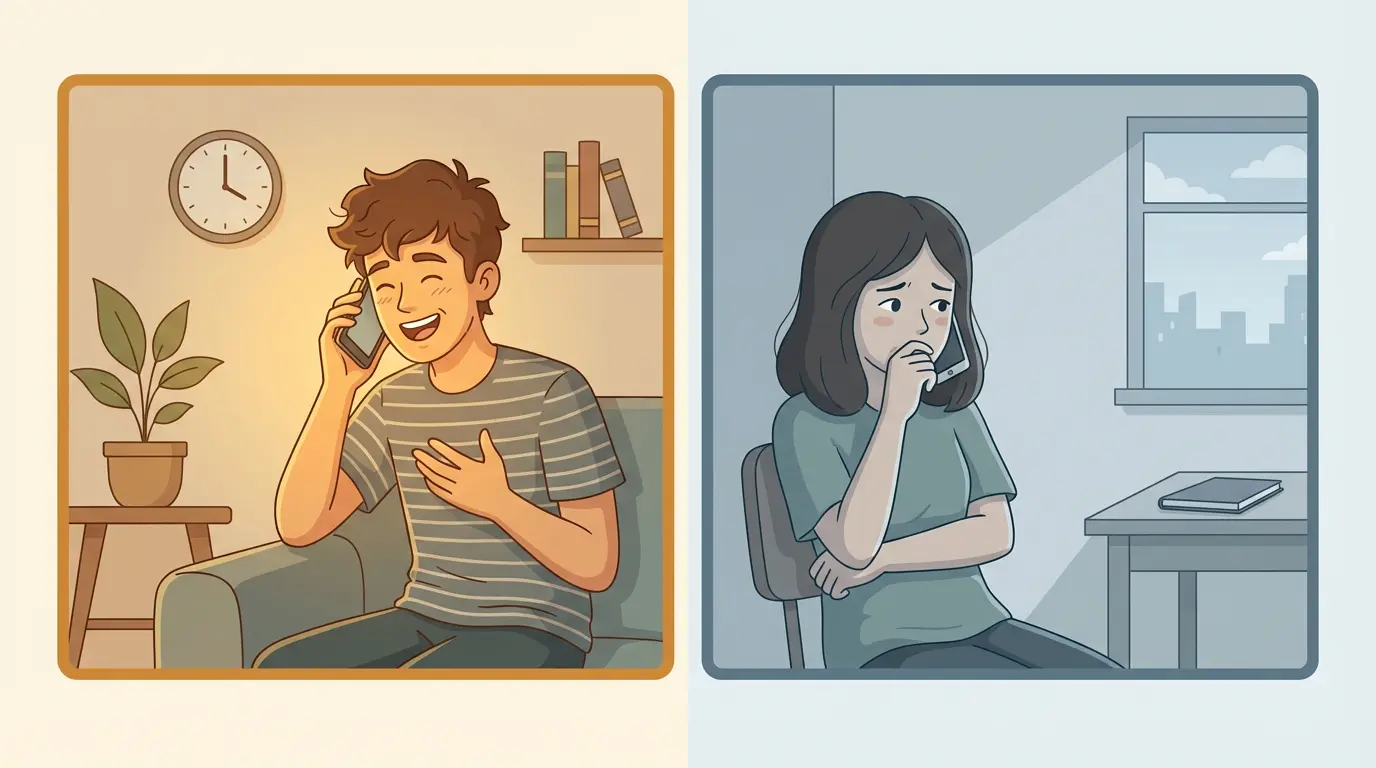
Reading the nuance of いいですね in the phone exchange
In the phone scene between two siblings, いいですね (ii desu ne “It’s nice, isn’t it?”) rarely carries only its literal meaning. Instead, it can mask hesitation, avoidance, or quiet disagreement. Because affect and context shape the line, careful listening reveals clues about the speaker’s true stance.
Consider these short excerpts from the call:
- “Aa, ii desu ne.” aa, ii desu ne. Oh, right. (hesitant, distancing)
- “Sore wa ii desu ne.” sore wa ii desu ne. That would be good. (polite acceptance with reservation)
- “Ii desu ne…” ii desu ne… Sounds fine. (trailing off signals reluctance)
In this two siblings exchange, the sister avoids the brother. Therefore, いいですね often reads as a buffer phrase. It softens refusal and preserves harmony. As a result, listeners must infer emotion from pauses, pitch, and timing.
For learners, compare plain approval with avoidance. Listen for changes in intonation and length. Also note particles and follow up questions. For more on how context shapes meaning, see Japanese Stack Exchange discussions and the grammar guide. These resources clarify how small shifts change Japanese sentence nuance.
Finally, stay inquisitive. Because いいですね can hide discomfort, ask follow up questions in conversation. Doing so reveals intent and prevents misreading subtle emotional cues.
Quick comparison: nuance of いいですね
| Context | Example (Japanese / Romaji) | Implied nuance | Detection cues |
|---|---|---|---|
| Casual agreement | それはいいですね。sore wa ii desu ne. | Simple agreement; neutral | Even tone; short, flat delivery |
| Polite approval | それはいいですね。sore wa ii desu ne. (polite) | Respectful acceptance | Slight rise at end; calm pace |
| Enthusiasm | いいですね!ii desu ne! | Excitement; genuine praise | Higher pitch; quick tempo; smile |
| Hesitation or avoidance | いいですね… ii desu ne… | Reluctance; soft refusal | Trailing off; long pause; low energy |
| Ironic or sarcastic | ああ、いいですね。aa, ii desu ne. | Sarcasm or dismissal | Exaggerated flat tone; eye roll |
Caption: A side-by-side comparison to see how context, tone, and timing shape the phrase. Therefore, use this when you analyze Japanese sentence nuance in conversation, for example with two siblings on the phone.
CONCLUSION
The nuance of いいですね matters because small shifts change meaning in real conversation. In many cases it signals agreement or praise. However, it can also hide hesitation, avoidance, or mild disagreement. Therefore, learners should listen for tone, pauses, and context to read intent accurately.
Nihoner.com offers focused support for this kind of learning. As an all-in-one platform, it provides a large dictionary, a pronunciation trainer, structured courses, and cultural content. Also, it gives practical exercises that train listening and speaking in real contexts. Because Nihoner combines resources, learners study more efficiently and gain real progress.
Practice with real dialogues, and pay attention to subtle cues in speech. With patience and tools like Nihoner, you can grow confident in interpreting Japanese sentence nuance. Finally, keep asking questions and listening closely to master conversational subtleties.
Frequently Asked Questions (FAQs)
What does いいですね mean in daily speech?
Literally it means It’s nice, isn’t it. (ii desu ne). In everyday use it shows agreement, praise, or interest. However, tone and context change the meaning quickly. Therefore listeners should watch pauses and pitch.
How can I tell the nuance of いいですね in a conversation?
Listen for intonation and timing. A bright, quick delivery signals enthusiasm. A trailing, low delivery signals hesitation or avoidance. Also notice surrounding words and particles.
Can いいですね be polite or casual?
Yes. The polite form ii desu ne fits formal situations. Casual speech drops desu as ii ne. Because Japanese grammar affects tone, form choice changes perceived politeness.
In the two siblings phone example, what does いいですね likely mean?
It likely acts as a buffer to avoid direct refusal. The sister uses it to soften disagreement. As a result, the phrase masks true reluctance and preserves harmony.
How can learners practice these subtle cues?
Practice with real dialogues and shadow native speakers. Record yourself and compare pitch and timing. Also study Japanese sentence nuance in context, and ask native speakers for feedback. Stay curious.