What is function of に particle in existential sentence (部屋にキッチンがあります)?


Function of に Particle in Existential Sentence
The function of に particle in existential sentence (部屋にキッチンがあります) (heya ni kicchin ga arimasu) meaning “There is a kitchen in the room” used to show where something exists is a common point of confusion for learners.
In this opening hook we promise a clear, step by step explanation of how に marks location and how that differs from purpose.
For example, に often points to the place where something exists in sentences with ある or いる, while other uses of に indicate direction or purpose.
Therefore this piece focuses only on the location function as shown in the example sentence 部屋にキッチンがあります (heya ni kicchin ga arimasu) meaning “In the room a kitchen exists” and explains why に attaches to 部屋 to mark the point of existence.
This guide gives clear rules so you can be certain when to choose に. In addition it reduces study anxiety by breaking the structure into simple blocks and showing natural word orders.
Checkpoint: You will be able to identify に as the location marker in existential sentences and explain its role in one short sentence.
This section explains how the に particle works in existential sentences using the example sentence 部屋にキッチンがあります (heya ni kicchin ga arimasu) meaning “In the room a kitchen exists”. For learners this clarifies the location function of に particle and shows the simple pattern you can use with ある and いる. Clarity and certainty come from a clear step by step breakdown.
The sentence splits into a three block breakdown that makes parsing easy. For example:
- 部屋に (heya ni) meaning “in the room” used to mark the point of existence.
- キッチンが (kicchin ga) meaning “kitchen” marked by が as the subject that exists.
- あります (arimasu) meaning “exists” or “there is” as the verb of existence.
As the article states, “The function of に is as you have learned it so far. It follows a noun (部屋) to indicate the point of existence of something (キッチン).” 部屋 (heya) means “room” and キッチン (kicchin) means “kitchen”. Also remember the quoted note that “部屋に marks the location of existence.” This reinforces that に marks where something exists, while が marks the subject of the verb ある.
You can reorder the blocks without changing basic meaning. For example キッチンが/部屋に/あります (kicchin ga heya ni arimasu). However word order shifts focus.
Try this now: Replace 部屋に (heya ni) with 学校に (gakkou ni) meaning “at school” and create 学校に図書館があります (gakkou ni toshokan ga arimasu) to mean “There is a library at the school.” Expect to identify に as the location marker.
Progress visibility tip: track how many sentences you can parse using the three block breakdown to see real improvement.
For extra practice see the Nihoner grammar lessons at Nihoner Grammar Lessons.
Ready to practice with guided tracking? Join for progress tracking promise and personal exercises: Nihoner Free Membership.
| Word order | Naturalness | Focus or emphasis | Particle roles and notes |
|---|---|---|---|
| 部屋にキッチンがあります (heya ni kicchin ga arimasu) meaning “There is a kitchen in the room.” | Most natural for simple existence statements. | Balanced or location oriented. The sentence reads like an observation about what exists in that place. | に particle marks the location of existence. が marks the subject that exists. This follows the three block breakdown: 部屋に/キッチンが/あります。 |
| キッチンが部屋にあります (kicchin ga heya ni arimasu) meaning “The kitchen is in the room.” | Natural but slightly marked compared to the first order. | Emphasizes the kitchen as the topic or contrast. Use this when you want to highlight the kitchen. | Particle functions stay the same. が highlights the subject. に still marks the location of existence. Word order change shifts focus without changing basic meaning. |
Micro win invitation: Want to practice rearranging sentences and tracking improvement with clear feedback and progress visibility? Try a quick exercise on Nihoner and see immediate results.
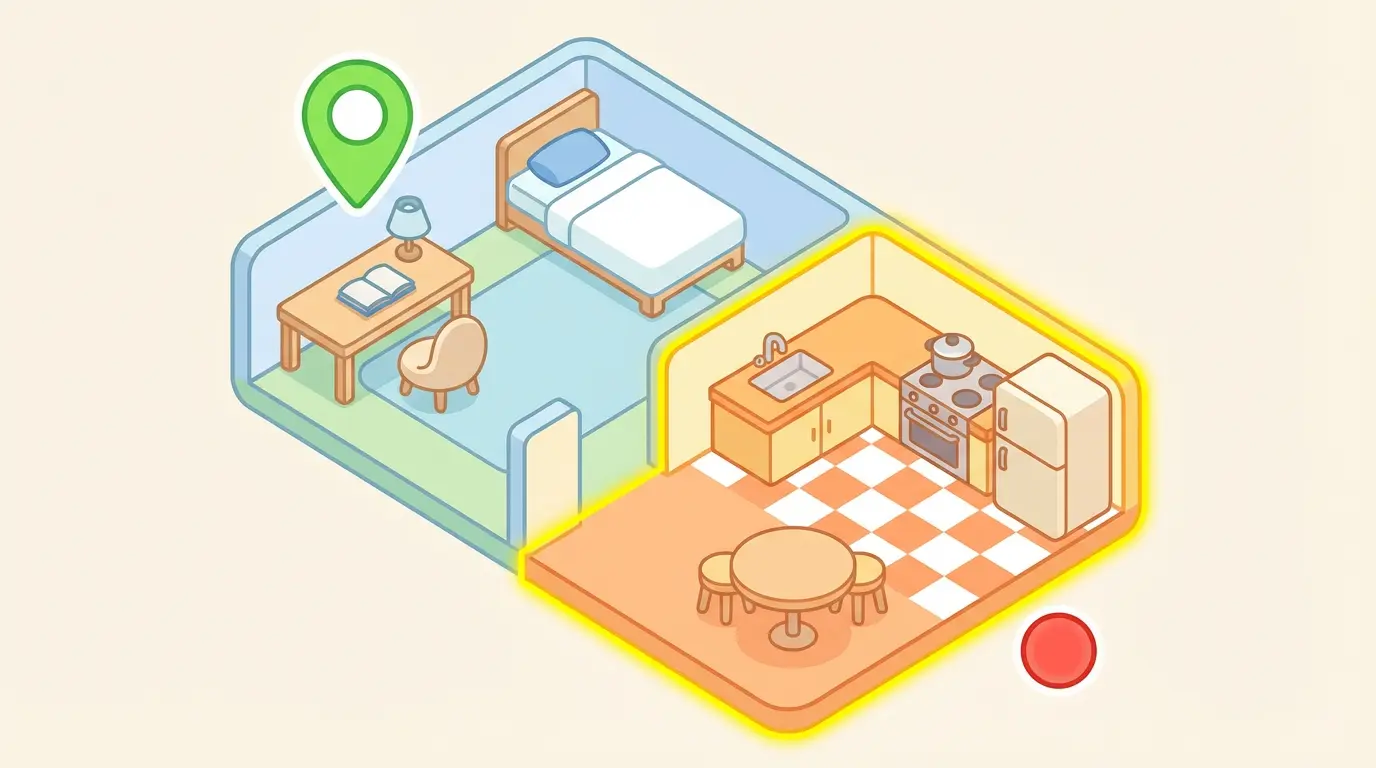
Many learners make a few recurring mistakes with に in existential sentences. Keep these points in mind to improve accuracy. Related keywords: location marker, existential particle, existence verb ある and いる.
-
Mistake: Confusing particles. Some learners swap
にwithでorへ. Useにwhen the verb expresses existence.
Example Correct:部屋にキッチンがあります(heya ni kicchin ga arimasu) meaning There is a kitchen in the room.
Incorrect for existence:部屋でキッチンがあります. -
Mistake: Misplacing
にafter the subject. The location marker must attach to the place noun not the thing that exists.
Example Correct:部屋にキッチンがあります.
Incorrect:キッチンに部屋がありますwhich misassigns location. -
Mistake: Omitting
にwhen stating existence. Leaving out the particle makes the sentence ungrammatical or unclear.
Example Correct:学校に図書館があります(gakkou ni toshokan ga arimasu) meaning There is a library at the school.
Incorrect:学校図書館があります.
Actionable tip: Before you write or speak check three things in order: Find the place noun and attach に. Mark the existing thing with が. Then use ある or いる.
CONCLUSION
This article clarified the function of に particle in existential sentences, using the example function of に particle in existential sentence (部屋にキッチンがあります) (heya ni kicchin ga arimasu) meaning “There is a kitchen in the room” used to show the location of existence. You should now see that に marks the location of existence, が marks the subject, and あります expresses existence. Breaking sentences into the three blocks 部屋に (heya ni) meaning “in the room” marks the place, キッチンが (kicchin ga) meaning “kitchen” marks the subject, あります meaning “exists” makes parsing simple and reliable. In practice, changing word order can shift emphasis, though the particles’ roles remain stable.
Nihoner.com is an all in one platform designed for learners who want real progress. It combines a dictionary, pronunciation trainer, structured courses, smart SRS flashcards, quizzes, and game based practice. It also offers cultural and travel content to support real use. As a result you gain clarity and certainty about grammar rules and clear progress visibility as you study. Use consistent practice and these tools to build speed, clarity, and confidence when you speak Japanese.
Frequently Asked Questions (FAQs)
What does に mark in sentences like 部屋にキッチンがあります?
部屋にキッチンがあります (heya ni kicchin ga arimasu) meaning “There is a kitchen in the room” shows に marks the location of existence. In other words, に points to the place where something exists. This FAQ gives clarity and certainty about that core function.
Why is が used with キッチン in this sentence?
が marks the subject that exists. For example, キッチンが部屋にあります (kicchin ga heya ni arimasu) meaning “The kitchen is in the room” keeps が on キッチン while に still marks the place.
Can I swap the order of 部屋に and キッチンが?
Yes, you can swap them. However, word order changes the focus. The particles keep their roles even if the order moves.
I confuse に with で or へ. How do I avoid that?
First, ask whether the verb means existence. If it does, use に for location with ある or いる. This simple check reduces anxiety when you choose particles.
Any quick tip to practice?
Break sentences into three blocks: placeに/thingが/あります. Try writing five examples and checking focus changes.
Progress tracking promise: Try these steps with guided exercises and tracking at Nihoner.