Why Locational objects in Japanese transitive verbs (を usage)?


Locational objects in Japanese transitive verbs (を usage): Understanding を — locational vs object usage
The を particle looks simple, but it hides nuance. Locational objects in Japanese transitive verbs (を usage) explain part of that nuance. This introduction sets a clear foundation for readers who want to parse real sentences.
We focus on cases where を marks places rather than direct objects. However, を also commonly marks direct objects in transitive verbs. Therefore, distinguishing locational usage from object usage matters for meaning. Because movement often occurs, the choice of verb affects particle interpretation.
You will see concrete examples and comparisons. Moreover, we will highlight verbs that permit locational を and those that do not. As a result, learners can choose accurate translations and natural phrasing.
We keep explanations technical but accessible. For example, compare 空を飛ぶ and 部屋を出る with 広間を囲む. These contrasts show related but distinct uses of を. Finally, the guide includes practice sentences and notes on active transitive verbs. Related keywords include locational objects, を particle, movement required, and active transitive verbs.
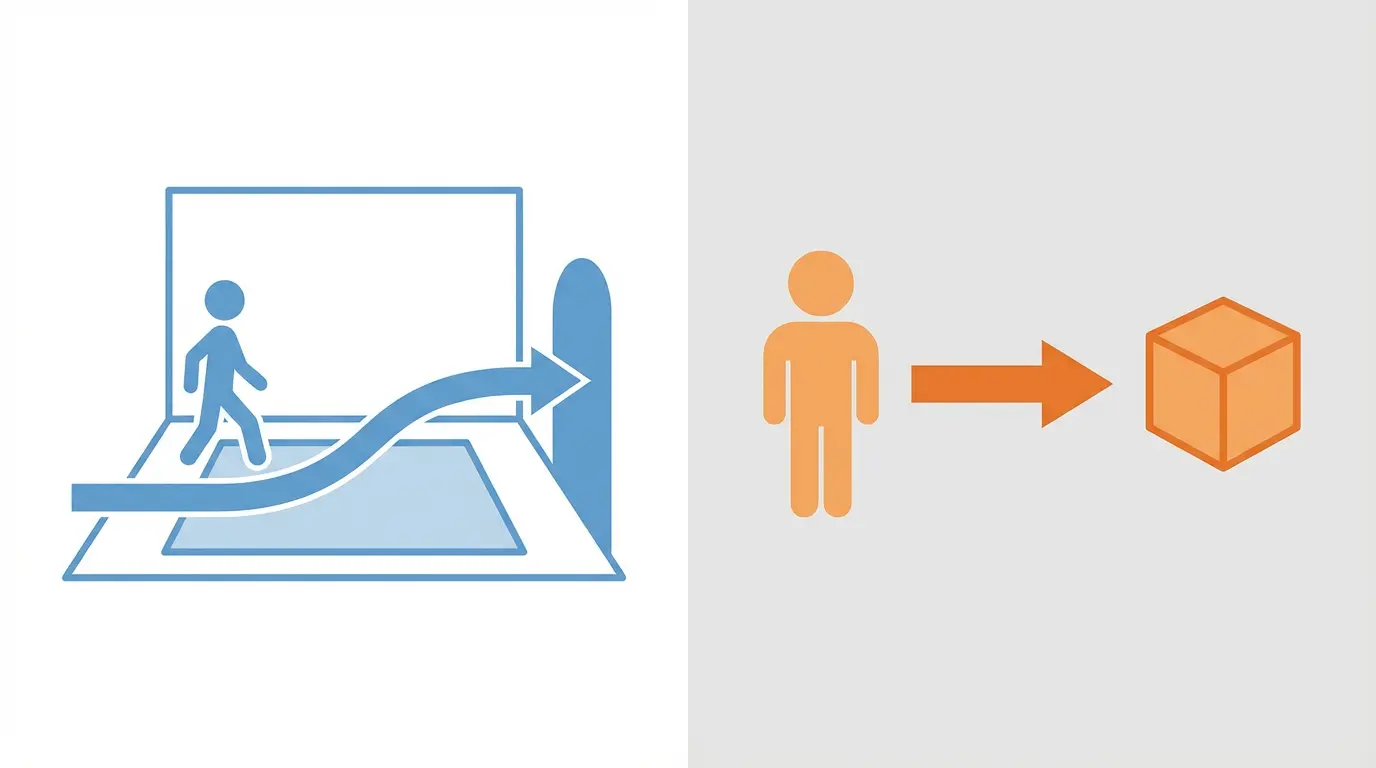
Locational objects with を: how places act as を-marked complements
Understanding を as a locational marker clarifies many real sentences. Because を can mark the place that a subject moves through or out of, learners must note verb type and motion. For example, 空を飛ぶ (sora wo tobu) shows movement through the sky. Likewise, 部屋を出る (heya wo deru) shows leaving a room.
Key points and patterns
- Place plus を can indicate motion through, across, or out of a location. For example,
空を飛ぶuses を to mark the space traversed. Therefore, を often translates as through or across in motion contexts. - Some verbs require movement for を to appear. For instance,
出るand通るcommonly accept を because they describe motion. As a result, verbs that express static states rarely use locational を. - Active transitive verbs can combine with place plus を when the verb exerts action on the place. For example,
広間を掃除するtreats広間as a direct object. However, note the contrast with広間の襖絵の例where the folding screens surround the hall without moving. Thus, movement and agency shape interpretation. - Intransitive verbs sometimes take を with motion meaning. For example,
部屋を出るis technically intransitive, yet it uses を to show the route of motion. Therefore, the transitivity label does not fully predict を usage. - を can also carry a sense of from or out of in some constructions. Moreover, it can mean through or across depending on the verb.
Practical diagnostic checklist
- Ask whether the verb expresses movement. If yes, を as a locational marker is likely. However, check whether the verb is acting on the place as an object. If so, interpret を as a direct object marker.
- Compare pairings like
空を飛ぶversus広間を囲むto see the difference between traversing space and affecting a place. Because these cases overlap, learners should consult usage examples and corpora for subtle cases.
For additional grammar reference, see this guide to Japanese grammar and a focused discussion at this Japanese Stack Exchange link.
| Usage Type | Meaning | Example Sentence (romaji / English) | Movement and Context Notes |
|---|---|---|---|
| Locational usage | Marks a place that is traversed, crossed, or exited. Often translates as through, across, or out of. | 空を飛ぶ (sora wo tobu) — to fly through the sky. 部屋を出る (heya wo deru) — to leave the room. |
Requires motion. Common with verbs like 飛ぶ, 出る, 通る. Can occur with intransitive verbs. を often conveys route or path. |
| Direct object usage | Marks the direct object that the verb affects. Often translates as the object or target. | 広間を掃除する (hiroma wo sōji suru) — to clean the hall. 本を読む (hon wo yomu) — to read a book. |
Indicates agency on the place or thing. Movement is not required. Common with active transitive verbs. |
| Ambiguous or overlapping cases | Interpretation depends on verb semantics and context. The same を phrase can read locationally or as object. | 席を外す (seki wo hazusu) — to be away from one’s seat (movement implied in context). 広間の襖絵の例 (hiroma no fusumae no rei) — the folding screens surrounding the hall (contrast case). |
Diagnose by asking if the verb expresses motion or exerts action on the place. を can mean from, out of, across, or through depending on the verb. Consult usage examples and corpora for subtle cases. |
Related keywords: locational objects, を particle, movement required, active transitive verbs vs intransitive verbs, 動詞の使い分け.
Double-subject structures and non-passive を uses: technical analysis
Japanese permits complex topic and subject arrangements. For example, the double-subject pattern places a topical noun before a subject phrase. Consider ゾウは鼻が長い. In that sentence, ゾウ is the topic and 鼻 is the grammatical subject. Therefore the comment focuses on a property of the topic.
When を appears in non-passive constructions, it can sometimes mark a source or route. This use differs from a canonical direct-object reading. For instance, 席を外す (seki wo hazusu) can mean to leave one’s seat. Romaji and English: seki wo hazusu — to be away from one’s seat. In context, movement is implied rather than an object being moved.
Key observations
- Topic versus subject: double-subject sentences separate the discourse topic from the grammatical subject. As a result, を phrases can attach to verbs outside basic transitive patterns.
- Non-passive を as source: を can mark a point of departure or origin without passive morphology. Consequently を reads as from or out of in many idioms.
- Agent and route interaction: verbs that imply displacement or removal allow を to indicate the displaced locus. For example, 席を外す implies a person leaves the locus of 席. Therefore を functions locationally even without explicit motion verbs like 出る.
- Nominal modifiers with を: relative clauses may include を marking an affected locus. For example, 群れを追われた狼たち (mure wo owareta ōkami-tachi) uses を in a causative/passive environment. Note that this case differs in voice but shows the particle’s flexibility.
Diagnostic steps for analysis
- Identify the discourse topic and grammatical subject first. Then check whether を marks a direct patient or a locational source. If the verb implies removal, interpret を as from or out of. However, when the verb exerts agency on the place, read を as a direct object.
- Consult corpora for borderline examples and compare with canonical locational uses such as 空を飛ぶ (sora wo tobu) and 部屋を出る (heya wo deru).
- For additional reference, see this guide and a focused discussion at this Stack Exchange link.
CONCLUSION
Locational objects in Japanese transitive verbs (を usage) reveal crucial distinctions between movement and affected targets. Because を can mark both places traversed and direct objects, learners must analyze verb semantics carefully. Therefore, identifying whether a verb expresses motion or exerts agency resolves most ambiguities.
In practice, apply a short diagnostic routine. First, ask if the verb denotes movement. Second, check whether the place is being acted upon as an object. Third, compare similar verbs like 空を飛ぶ and 広間を囲む to confirm interpretation. As a result, you will translate and produce natural sentences more reliably.
Nihoner.com profile
- Comprehensive Japanese dictionary with wide coverage and usage examples.
- Pronunciation trainer that builds accurate spoken skills through repetition.
- Structured courses organized by level and topic for steady progress.
- SRS flashcards and quizzes for efficient long-term retention.
- Game-based learning modules that keep study engaging.
- Cultural content that contextualizes grammar and vocabulary in real situations.
Use these resources to practice locational を patterns in context. Moreover, regular exposure and deliberate practice will boost confidence. Finally, keep analyzing sentences and consult corpora when needed. With focused study and tools like Nihoner, you will speak Japanese with greater accuracy.
Frequently Asked Questions (FAQs)
How do I tell when を marks a location rather than a direct object?
Look at the verb first. If the verb expresses motion, を often marks the place traversed.
Example: 空を飛ぶ (sora wo tobu) — to fly through the sky. This は locational を.
Conversely, if the verb exerts action on the place, を marks a direct object.
Example: 広間を掃除する (hiroma wo sōji suru) — to clean the hall. This は object を.
Therefore use the verb semantics as your primary diagnostic.
Can intransitive verbs take を for locational meaning?
Yes. Intransitives that denote movement often accept を.
Example: 部屋を出る (heya wo deru) — to leave the room. Romaji: heya wo deru.
Here を marks the route or point of departure, not a patient.
When does を mean from or out of without passive voice?
Some idioms use を to mean from or out of. These are non-passive uses.
Example: 席を外す (seki wo hazusu) — to be away from one’s seat. Romaji: seki wo hazusu.
In context, movement is implied and を marks the locus of departure.
Why do some sentences resist two を phrases?
Standard Japanese rarely allows two を in one simple clause.
When を can mean through or across, introducing a second を creates ambiguity.
As a result speakers prefer rephrasing or subordinate clauses.
How do I analyze borderline or ambiguous cases?
Compare parallel verbs and contexts. For example, contrast 空を飛ぶ with 広間を囲む.
Consult usage examples, corpora, and native judgments.
Also test whether the place is acted upon or merely traversed.
Finally, practice with patterned examples until the distinction feels natural.