When should you use the Difference between 見せてもらった and 見てもらう?


Understanding the Difference Between 見せてもらった and 見てもらう
Mastering the nuances of Japanese grammar can elevate your communication skills to a whole new level. One subtle yet critical distinction is between the expressions 見せてもらった (misete moratta) and 見てもらう (mite morau). These phrases involve acts of giving and receiving, making them key elements for clear interactions. Different uses can alter meanings significantly, so understanding these differences is crucial for anyone learning the language. In this article, we will explore how relying on these small grammatical details can vastly improve your expressiveness in Japanese.
Usage and meanings
First, literal meanings help you see the direction of the action. The phrase 見せてもらった (misete moratta) meaning “I received the favor of being shown” emphasizes that someone showed something to you. The phrase 見てもらう (mite morau) meaning “to have someone watch or to receive the favor of someone watching” focuses on someone watching on your behalf. These distinctions sit at the heart of clear 日本語文法 (nihongo bunpou) meaning “Japanese grammar” learning.
見せてもらった(misete moratta) used when someone shows you something. Use it to thank or confirm receipt. For example,映像を見せてもらった(eizou o misete moratta) meaning “I received your kind act of showing me the video” shows appreciation and confirmation.見てもらう(mite morau) used when you ask or expect someone to watch something for you. It describes receiving the action of watching rather than being shown the content.- Context matters. If you want to confirm that someone showed you a file, only
見せてもらったfits naturally. If you want to say someone watched a file for you, use見てもらった.
Checkpoint: The first phrase thanks for being shown something while the second credits someone for watching it.
Progress tracking promise: Keep learning with focused practice and clear milestones to see steady progress. Join a free membership to lock in your next practice session here.
Nihoner premium feature: Pronunciation training with native audio helps you hear subtle differences in phrasing and timing. Learn more here.
For extra practice, try the Nihoner pronunciation trainer: here.
| Expression | Meaning in English | Usage context | Nuance of giving vs. receiving action | Example sentence with English translation |
|---|---|---|---|---|
| 見せてもらった (misete moratta) | “I was shown something by someone” | Use to confirm or thank when another person showed you content directly | Emphasizes the receiver of a showing action. The speaker benefited from being shown something | 映像を見せてもらった (eizou o misete moratta) meaning “I received your kind act of showing me the video”. Translation: “You showed me the video, thank you.” |
| 見てもらう (mite morau) | “To have someone watch something for you” | Use when you ask someone to watch or when someone watched on your behalf | Emphasizes receiving the watching action rather than being shown content | 映像を見てもらった (eizou o mite moratta) meaning “I received your kind act of watching the video”. Translation: “You watched the video for me.” |
Progress tracking promise: This comparison gives clarity and certainty about when to use each phrase. See your progress as you practice these contrasts. Join a free membership to save your study plan and keep steady milestones here.
Nihoner premium help: Pronunciation training with native audio helps you hear timing and emphasis that clarify these expressions. Learn more at this page.
Nuances and practical usage tips
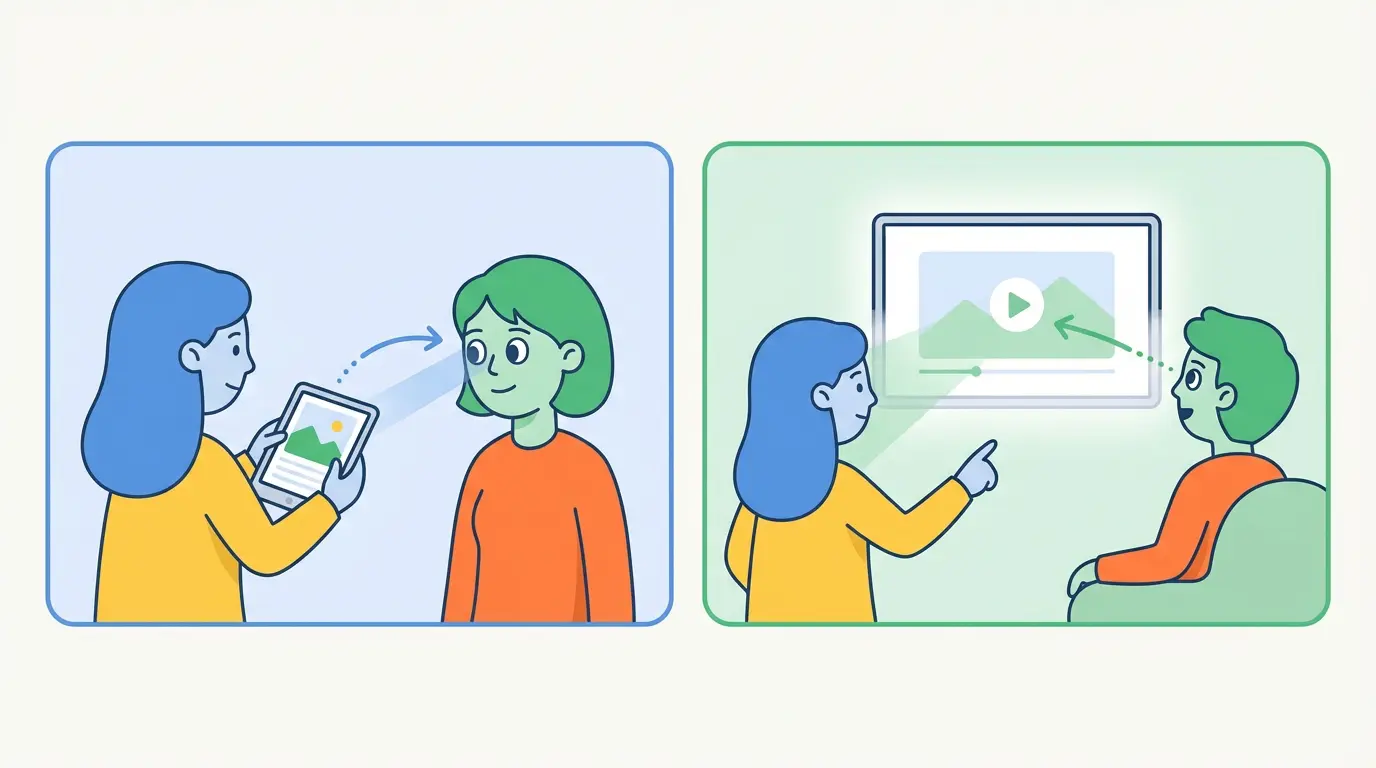
Understanding small differences gives you clearer meaning. The expression 見せてもらった (misete moratta) literally means “I received the favor of being shown.” The expression 見てもらう (mite morau) means “to have someone watch or receive the favor of someone watching.” These two forms create the core show vs watch nuance.
- 受け取りの確認 (uketori no kakunin) meaning “confirmation of receipt” is a key use case. Use
見せてもらったto confirm that someone showed you something. For example,映像を見せてもらった(eizou o misete moratta) meaning “I received your kind act of showing me the video” confirms you received the content. - 感謝 (kansha) meaning “gratitude” pairs naturally with
見せてもらった. The phrase lets you thank the giver for showing something to you. In contrast,映像を見てもらった(eizou o mite moratta) meaning “You watched the video for me” credits the helper who watched it. It does not confirm that the speaker was shown the file.
Why only 見せてもらった fits as a confirmation of receipt:
見せてもらったmarks the speaker as recipient of a showing action. Therefore it signals successful handoff and receipt.見てもらったmarks that someone performed watching. It does not imply the speaker received a show action. Therefore it feels odd as a receipt confirmation.
Usage tips
- When thanking someone for handing or showing a file, prefer
見せてもらった. - When noting that someone watched a file on your behalf, use
見てもらった. - Practice short roleplay lines to fix the difference.
Checkpoint: 見せてもらった thanks the person who showed you something. 見てもらった credits someone who watched it for you.
Micro win invitation: Ready to practice one short sentence now? Save your first correct sentence in a study plan with a free account here.
Premium help: Full access to courses and certification provides guided examples and quizzes that make mastering these nuances faster. See pricing at this page.
For clearer pronunciation practice try the Nihoner pronunciation trainer here.
CONCLUSION
Knowing the Difference between 見せてもらった and 見てもらう removes common confusion and makes your Japanese responses clearer. 見せてもらった shows that you received the action of being shown something. 見てもらう or 見てもらった focuses on someone performing the watching action for you. This simple shift changes whether you are confirming receipt or crediting a helper.
Summarize the key points
- 見せてもらった confirms that someone showed you something and often carries 感謝 (kansha) meaning “gratitude.”
- 見てもらう emphasizes that someone watched content for you and credits their action.
- For 受け取りの確認 (uketori no kakunin) meaning “confirmation of receipt” use 見せてもらった.
Why this matters
Using the right form improves clarity in emails, messages, and spoken Japanese. It helps you accurately express thanks and to confirm handoffs or completed tasks.
Nihoner as your all in one platform
Nihoner.com offers a large dictionary, native pronunciation support, a pronunciation trainer, structured courses, flashcards, quizzes, game based practice, travel phrases, and cultural guides to support real progress in Japanese. If you want guided practice that builds real confidence and measurable progress, Nihoner puts everything in one place.
Frequently Asked Questions (FAQs)
What is the core difference between 見せてもらった and 見てもらう?
見せてもらった (misete moratta) meaning “I received the favor of being shown” puts the speaker as recipient. 見てもらう (mite morau) meaning “to have someone watch” focuses on someone performing the watching action. In other words, the first confirms a showing action and the second credits a watcher.
Which form should I use for 受け取りの確認 (uketori no kakunin) meaning “confirmation of receipt”?
Use 見せてもらった. For example, say 映像を見せてもらった (eizou o misete moratta) meaning “I received your kind act of showing me the video” to confirm you got the file. Therefore 見てもらった feels odd as a receipt confirmation.
Can I use 映像を見てもらった when I want to thank someone?
映像を見てもらった (eizou o mite moratta) meaning “You watched the video for me” credits their action. It does not express that you were shown the video. Use 見せてもらった to pair with 感謝 (kansha) meaning “gratitude.”
How can I avoid confusion between show and watch in practice?
Focus on the direction of the action. Ask who was given and who acted. Then choose 見せてもらった or 見てもらう accordingly.
Where can I practice these differences with feedback?
Try short roleplay lines and check them. Clear answers give certainty about correct usage. Track your progress with saved practice to see steady improvement. Join a free account to start practicing now here.