How should residents respond to 鳥取県と島根県での強い地震?


Earthquake Reports and Language Learning
On the morning of January 6, 2026, strong earthquakes struck western Japan. The headline event, 鳥取県と島根県での強い地震, affected coastal communities. Reports show the strongest shaking reached 震度5強 in several cities.
For language learners, this news offers practical listening and reading practice. Therefore, studying local reports helps learners learn place names and safety vocabulary. In particular, words like 境港市, 松江市 and 安来市 appear repeatedly in coverage. Moreover, articles mention damages such as broken school windows and blocked roads.
Because these reports include official terms, they teach formal written Japanese. As a result, learners gain cultural context about how communities respond to disasters. This article guides readers through key place names, essential terms, and comprehension questions.
It also links vocabulary to real events to improve retention and practical use. We use NHK phrasing and short transcripts for targeted listening practice. Additionally, readers will find comprehension questions that reinforce reading skills. By the end, learners will better understand earthquake reports and emergency language.
Understanding earthquake intensity and affected areas: 鳥取県と島根県での強い地震
Japan uses a seismic intensity scale called 震度 to describe shaking at locations. This section explains the scale and focuses on the severity labeled 震度5強. Because official definitions help learners, consult the Japan Meteorological Agency for technical details: Japan Meteorological Agency. The report 鳥取県と島根県での強い地震 affected coastal cities and triggered visible damage.
At 震度5強, people find it hard to stand. Smaller furniture can move and unsecured items often fall. Structures designed to code usually remain sound, however nonstructural damage occurs. Therefore, schools and older buildings can show broken windows or fallen plaster. Emergency responses often focus on checking injuries and road safety.
Specific places with recorded 震度5強 include Sakai-minato city in Tottori and Matsue and Yasugi cities in Shimane. Local reports from NHK describe on-scene damage. Key reported facts include:
- About 20 classroom windows broke at a primary school in Sakai-minato.
- Three people were transported to hospital from downtown Matsue.
- Stones fell onto roads, causing partial road blockages and unsafe sections.
- Aftershocks continued, complicating inspections and cleanup.
For more on how Japanese media report earthquakes, see NHK coverage: NHK Coverage. In summary, 震度5強 signals strong local shaking and notable nonstructural damage. Stay informed and follow local safety instructions.
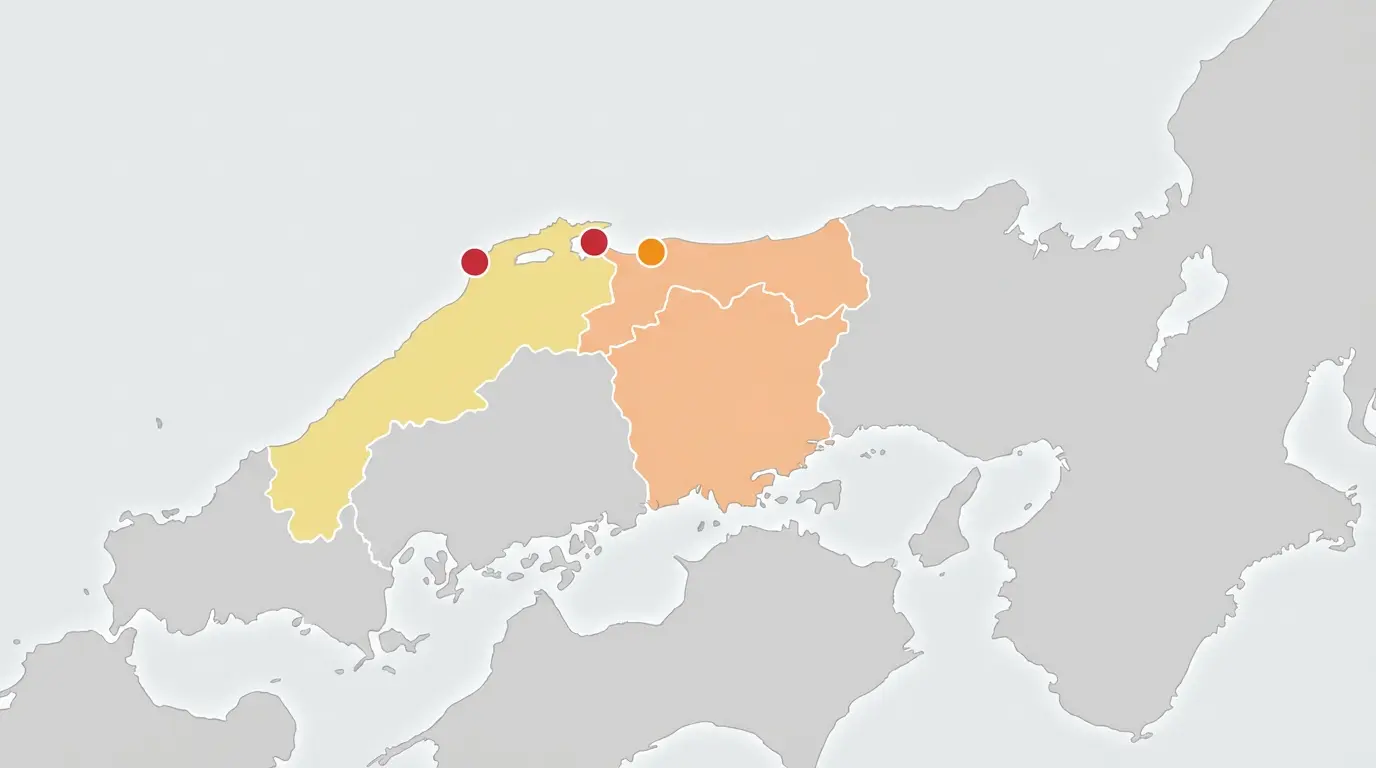
City-by-city effects: 鳥取県と島根県での強い地震
For context, the table below summarizes local impacts from 鳥取県と島根県での強い地震. Therefore, it helps compare key facts quickly.
| City | Earthquake intensity (震度) | Reported damage | Number of hospitalizations | Road conditions |
|---|---|---|---|---|
| Sakai-minato (境港市) | 震度5強 | About 20 school windows shattered at a primary school | No specific hospitalizations reported | Stones fell on roads; some sections blocked |
| Matsue (松江市) | 震度5強 | Reports of injuries and local damage | Three people transported to hospital | Some roads reported unsafe or blocked due to debris |
| Yasugi (安来市) | 震度5強 | Local nonstructural damage reported; details limited | No specific hospitalizations reported | Nearby areas reported road blockages from fallen stones |
Notes: Data come from local reports and NHK transcripts. Therefore, details may change as officials update information.
Ongoing tremors
After the main quake, smaller shocks continued across Tottori and Shimane prefectures. As a result, residents face repeated shaking and uncertainty. Officials emphasize monitoring and caution because aftershocks can destabilize damaged structures. Key vocabulary includes aftershocks, continued seismic activity, and tremors which appear often in local reports.
Road hazards
Local reporters noted falling stones and debris on routes. One on scene quote reads “道に石が落ちて通ることができないところもあります。” (Romaji: Michi ni ishi ga ochite tooru koto ga dekinai tokoro mo arimasu. English: Stones fell onto roads, making some areas impassable.) This concise phrase teaches road hazard words used in emergency news.
Public safety actions
Another common report phrase is “鳥取県や島根県では、そのあとも地震が続いています。” (Romaji: Tottori-ken ya Shimane-ken dewa, sono ato mo jishin ga tsuzuiteimasu. English: In Tottori and Shimane prefectures, earthquakes continued afterward.) Officials use such wording to explain ongoing risk and justify inspections.
Key hazards and safety tips
- Hazards
- Aftershocks that cause additional collapses and falling objects
- Blocked roads from fallen stones and debris that delay aid and transport
- Damaged school buildings and public facilities needing inspection
- Safety tips
- Follow official evacuation instructions and local updates from authorities
- Keep clear of unstable buildings and avoid blocked roads to allow emergency access
- Prepare emergency kits and check on neighbors especially elderly or isolated residents
Conclusion
The recent events in western Japan show the real impact of earthquakes. On January 6, 2026, strong shaking hit coastal communities. The highest reported intensity reached 震度5強 in Sakai-minato, Matsue, and Yasugi. As a result, nonstructural damage appeared, including about twenty broken school windows. In addition, three people were taken to hospital in Matsue. Roads also became hazardous because stones and debris fell onto routes.
Aftershocks continued, which complicated inspections and recovery. Therefore, local authorities focused on safety checks and clearing roads. For residents, ongoing tremors raised stress and delayed repairs. Moreover, emergency crews needed to prioritize access to medical care and safe routes.
For learners of Japanese, these reports provide practical vocabulary and cultural context. Because news coverage uses consistent terms, learners can connect words to real situations. As a result, reading and listening tasks about earthquakes build useful comprehension skills.
Nihoner.com supports that learning approach. The platform functions as an all-in-one Japanese learning site with structured courses, a large dictionary, pronunciation trainers, quizzes, and cultural content. It links language with real places and situations and helps learners make steady, measurable progress.
Frequently Asked Questions (FAQs)
What does 震度5強 mean?
震度5強 means strong local shaking on Japan’s seismic intensity scale. People find it hard to stand. Furniture moves and unsecured items fall. Because nonstructural damage is common, inspections follow.
Which cities were most affected?
The strongest shaking occurred in Sakai-minato, Matsue, and Yasugi. In particular, Sakai-minato reported large window damage. Matsue reported hospital transports. These place names appear often in local reports.
What damage and hazards were reported?
Reported effects include broken school windows, injuries, and blocked roads. About 20 classroom windows broke in Sakai-minato. Three people were taken to hospital in Matsue. Stones fell onto roads, making some routes impassable.
What safety steps should residents take?
Follow local evacuation orders and official updates. Secure loose items and stay away from damaged buildings. Avoid blocked roads, and therefore keep emergency routes clear. Check for aftershocks and use emergency kits.
How can learners use this news to study Japanese?
Use short NHK transcripts for listening practice. Read reports to learn place names, emergency vocabulary, and verbs used in news. As a result, learners connect words to real situations and improve practical comprehension.