Role of the first particle と in this sentence—meanings?


Deep dive into the particle と: role of the first particle と in this sentence — real-sentence uses and nuance
In this article the role of the first particle と in this sentence is examined closely. Understanding Japanese particles matters for accurate parsing and fluent expression. Here we focus on particle と across real-sentence contexts and practical nuance. Because the sentence contains two instances of と we analyze each function. First we identify syntactic roles and possible ambiguity in meaning. Then we compare the second と with 言う which often denotes ‘called’ or ‘named’. Moreover we survey conditionals quotation and listing uses to show contrasts.
Practical examples and annotated translations will support clear learning. Therefore this technical guide helps intermediate learners improve parsing and production. Finally we provide tips for spotting nuance in everyday Japanese texts and speech. We analyze real examples such as the new Smartphone Law and app-related sentences. By the end readers will master subtle differences between the two instances of と. This article targets learners, teachers, and linguists seeking precision.
role of the first particle と in this sentence
Overview
The example sentence contains two instances of と. In this section we isolate the role of the first particle と in this sentence. Because particles guide syntax, identifying their function prevents misreading. We consider the conditionals/quotation/listing uses of と and show diagnostics for each.
Grammatical functions to consider
- Quotation:
とcan mark direct or indirect quotations. - Listing:
とcan join nouns in a list. - Conditional:
とcan create natural consequence conditionals. - Simulative or comparative uses:
とsometimes appears in set phrases.
How to tell which function applies
- Word order: If
とfollows a noun then言うoften follows the secondと. Therefore look for言うafter the secondと, which signals ‘called’ or ‘named’ as in our sentence. - Verb after
と: If a verb of saying or naming appears, expect a quotation function. - Contextual markers: Adverbs or modality often prefer conditional readings.
Comparison with the second と plus 言う
In our sentence the second と combines with 言う to mean called or named. For example the quoted phrase 「スマホ法」という新しい法律が始まりました。 (romaji: “Sumaho-hou” to iu atarashii houritsu ga hajimarimashita.) Translation: A new law called “Smartphone Law” has started. Therefore the second と marks the quoted name.
Practical diagnostic checklist
- Is the element a noun phrase? then listing or quotation is likely.
- Does a consequence follow immediately? then conditional is likely.
- Does
言うor思うfollow? then quotation is likely.
For further reading see GuidetoJapanese.org on particles, JLPT Sensei on particle と, and NHK’s learning resources.
Practice with varied sentences.
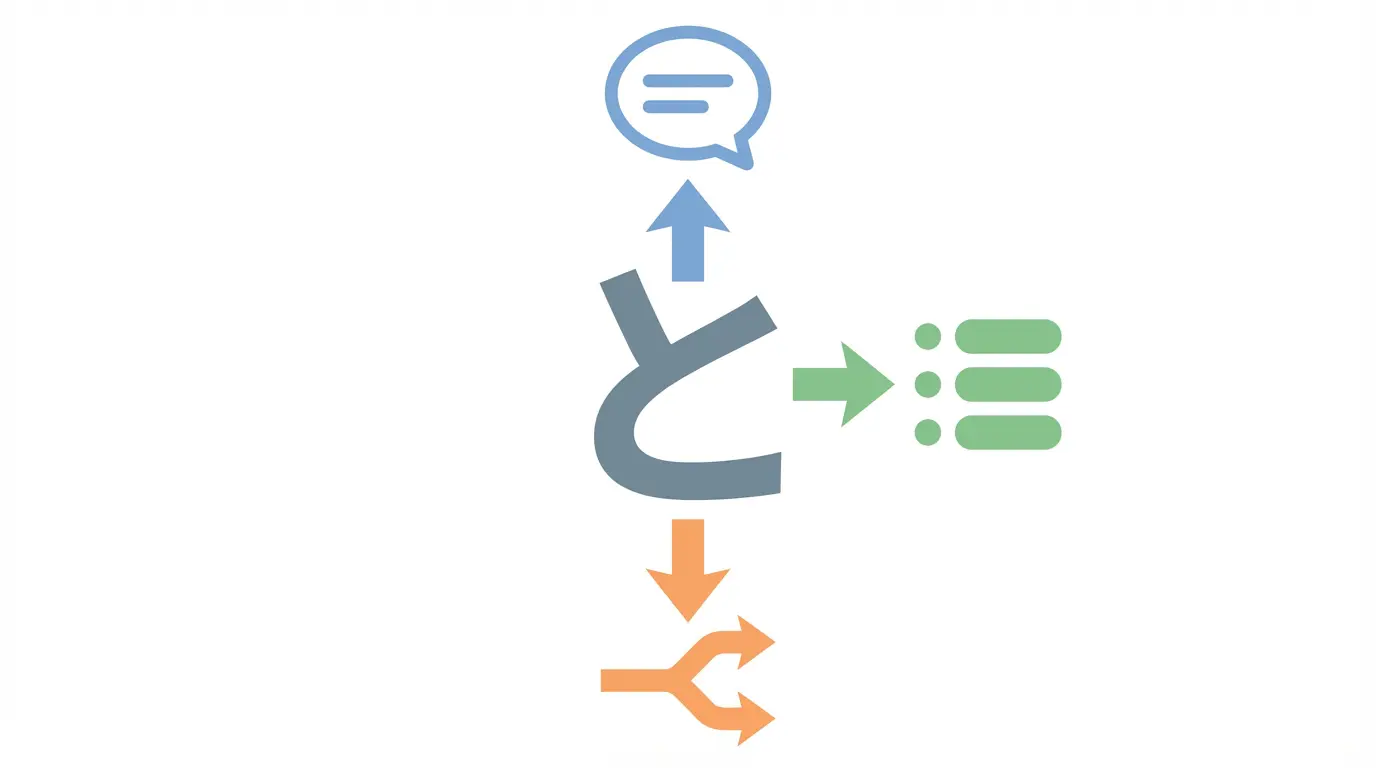
second と with 言う: meaning ‘called’ or ‘named’
In Japanese the pattern XというY frequently signals naming. In this construction the second と pairs with 言う. Therefore it indicates that a phrase or label is being reported. For example the sentence 「スマホ法」という新しい法律が始まりました。 (romaji: “Sumaho-hou” to iu atarashii houritsu ga hajimarimashita.) translates as A new law called “Smartphone Law” has started. Here the second と with 言う shows the quoted name.
How the construction works
- The quoted element appears before と. Then 言う follows to mark the naming.
- The と introduces the quote or label, while 言う marks the act of saying or naming.
- Because of this pairing, the phrase functions like an apposition in English.
Nuance and usage notes
- The structure XというY often reduces speaker commitment to the label. Therefore speakers can present a name without endorsing it.
- In media and legal contexts the pattern signals reported names or formal titles. For example 新しい法律 often pairs with Xという to report official names.
- Compared to direct quotation, XというY feels more nominal and concise.
Short practice examples
- 「スマホ法」という法律
- 彼は『先生』という肩書きを持っている
For technical explanations see this resource and this resource. These resources expand on the second と with 言う (called/named) and provide additional examples.
Comparison table: common uses of と (visual differentiation)
Below is a compact table that compares common uses of the particle と. It clarifies the role of the first particle と in this sentence and other functions. Therefore use the table to spot differences quickly.
| Use | Typical form | Example (Japanese · romaji · translation) | Explanation | Role of the first と in our sentence? |
|---|---|---|---|---|
| Conditional (natural consequence) | Verb-dictionary + と | 雨が降ると道が濡れる。 · Ame ga furu to michi ga nureru. · If it rains, the road gets wet. | Marks an automatic or habitual result. Consequence follows inevitably. | No — this is not the first と in our target sentence. |
| Quotation (speech/thought) | Xと言う / Xと思う | 彼は「行く」と言った。 · Kare wa “iku” to itta. · He said “I will go.” | Marks direct or indirect quotes when paired with 言う/思う. | No — the second と in our sentence is this naming pattern. |
| Listing / coordination | NounとNoun | りんごとバナナを買った。 · Ringo to banana o katta. · I bought apples and bananas. | Joins items or alternatives in a list. It is coordinative like “and”. | Yes — in the article’s sentence the first と most likely joins noun phrases. |
| Naming / apposition with 言う | XというY | 「スマホ法」という新しい法律が始まりました。 · “Sumaho-hou” to iu atarashii houritsu ga hajimarimashita. · A new law called “Smartphone Law” has started. | The と introduces a label or quoted name; 言う marks the naming. | No — this is the second と in the sentence. |
| Simulative/comparative or set phrase | Xのようだと / Xとすれば | 彼の声を聞くと、学生時代を思い出す。 · Kare no koe o kiku to, gakusei jidai o omoidashita. · When I hear his voice, I remember school days. | Overlaps with conditional uses, but often evokes memory or comparison. | Possibly — context dependent; not the primary role here. |
Quick note: the table emphasizes role of the first particle と in this sentence. For our target sentence the first と functions coordinatively, while the second と combines with 言う to name the law.
CONCLUSION
This article analyzed the role of the first particle と in the sentence. It contrasted that role with the second と plus 言う. The first と functions coordinatively. It joins noun phrases and prevents ambiguity. Meanwhile the second と with 言う marks a quoted name, as in 「スマホ法」という新しい法律が始まりました。 Therefore accurate parsing requires attention to position and following verbs.
Understanding conditionals/quotation/listing uses of と reduces misreading. For example check whether 言う or 思う follows と to diagnose quotation. Also test whether a natural consequence follows to diagnose a conditional. Moreover practicing diagnostic checks helps learners parse sentences faster.
Nihoner.com is an all-in-one platform for learning Japanese. It supports real progress with a large dictionary, pronunciation trainer, structured courses, quizzes, and cultural content. As a result learners gain the tools to notice particle nuance and build speaking confidence.
Finally focus on real-sentence examples and repeated practice. By doing so you will internalize subtle differences between the two instances of と. Use annotated examples from this article to guide study and review regularly. Regular exposure to news and legal texts accelerates mastery. Continue iterative practice.
Frequently Asked Questions (FAQs)
What is the role of the first particle と in sentences that contain two instances of と?
The first と commonly functions as a coordinator that links noun phrases. Therefore it often serves the listing role similar to English and. However context can alter this reading. Check the following verb and sentence structure to confirm.
How do I distinguish conditionals, quotations, and listings when I see と?
Look for diagnostics. If a verb of saying or thinking follows, expect quotation. If a natural consequence follows immediately, expect conditional. If two nouns are adjacent, expect listing. Because Japanese relies on position, these tests work reliably.
What exactly does the second と with iu mean in practice?
The pattern X to iu Y marks naming. For example Sumaho-hou (romaji: Sumaho-hō; meaning: Smartphone Law) to iu atarashii houritsu (meaning: new law) shows a named label. Therefore the second と plus iu reports the label as “called” or “named.”
Can the first と ever be read as a conditional in similar sentences?
Yes, but only with verb forms and consequence markers. In contrast listing readings lack a resulting action. So always test for result clauses and temporal cues.
What practical exercises help internalize these nuances?
Read annotated sentences and news items. Then parse particles and predict functions. Finally compare English glosses and practice producing minimal pairs. Ultimately repeated exposure builds parsing speed and accuracy.