How to see plum blossoms in Tokyo this winter?

Experience Early Spring: Discovering Plum Blossoms in Tokyo
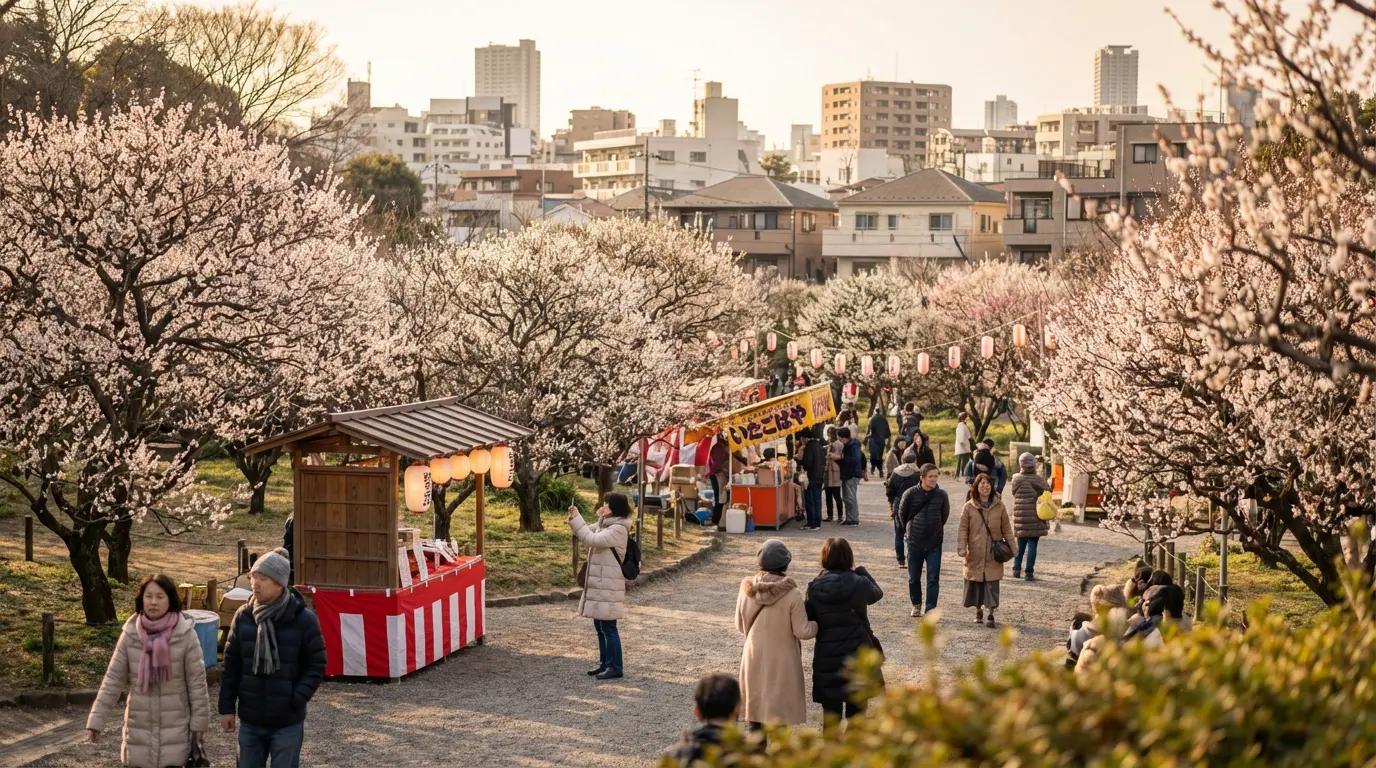
As the first signs of spring, plum blossoms in Tokyo offer a serene escape from the usual cherry blossom crowds. These delightful blooms, appearing between late January and mid-February, are a well-kept secret that promise a picturesque and tranquil viewing experience. Unlike their more famous counterparts, plum blossoms have a captivating fragrance and symbolize hope and renewal.
Curious to explore this unique side of Tokyo? Read on to uncover the best spots to enjoy these hidden gems of nature and create unforgettable spring memories. For those eager to start their journey, register here to access insider tips and guides.
plum blossoms in Tokyo: cultural and historical context
Plum blossoms have shaped Japan’s sense of early spring for over a thousand years. They were introduced from China during the Nara period, when cultural exchange reshaped court arts and gardens. In addition, the plum came to symbolize hope and vitality. For example, these blooms reassure people that warmer weather is coming.
- Introduced to Japan from China during the Nara period, 710 to 794 AD
- Symbolizes hope and vitality in Japanese culture
- Blooming season in Tokyo runs from late January through mid to late February
- Plum festivals, called ume matsuri, meaning “plum blossom festivals,” are used to celebrate the season
Plum trees carry a subtle fragrance that sets them apart from cherry trees. Meanwhile, ume matsuri draw locals and visitors to shrines and gardens. This introduction gives clear, practical context to plan visits. If you identify as a curious traveler, you will enjoy quieter viewing and cultural depth.
Identity based encouragement: Want to learn more about Japanese culture and language while exploring these spots? Join Nihoner for guided cultural notes and easy lessons at Nihoner Free Membership.
Checkpoint: Plum blossoms in Tokyo mark early spring and embody resilience and renewal.
Top spots to see plum blossoms in Tokyo
Below are Tokyo locations and festivals that highlight the season. Each entry lists what to expect, tree counts, festival dates, and special events for planning.
-
Hanegi Park
Expect about 650 plum trees across quiet park paths. Best visits are mid to late February when many varieties peak. Nearby events often fall under the Setagaya Plum Blossom Festival.
-
Setagaya Plum Blossom Festival
Usually held around mid February. Enjoy local stalls and peaceful hanami away from crowded central parks.
-
Koishikawa Kōrakuen
A historic garden with a smaller number of plum trees. Visit for classic landscape design paired with early blooms.
-
Yushima Tenjin Shrine
Yushima Tenjin Plum Blossom Festival runs from February 8 to March 8 and is free. The shrine hosts traditional performances and seasonal stalls.
-
Ushi Tenjin Kitano Shrine
The Ushi Tenjin Kitano Shrine Plum Blossom Festival runs from February 1 to February 25. Special event on February 8 lets 200 visitors take home a small plum twig.
-
Shiba Park
Festival runs from late January to early March. The park has about 70 plum trees and welcomes relaxed strolls.
-
Kameido Tenjin Shrine
Festival runs from February 7 to March 8 and is free. The shrine is known for photogenic trees and hanging plum branches.
-
Ikegami Baien (Ikegami Plum Garden)
Over 370 plum trees create dense clusters. Expect fragrant paths and seasonal viewing crowds.
Premium feature: For clarity and steady progress visibility, use Nihoner’s pronunciation training with native audio to master place names and cultural terms. It helps you learn correct pronunciation and track improvement. Learn more at Nihoner Pronunciation Training.
Progress tracking promise: Keep a simple bloom log and track which gardens you visited. Register to unlock guided notes and local tips at Nihoner Free Membership.
Checkpoint: Visit in mid to late February for the fullest displays and most festival activity.
| Festival Name | Location | Dates | Number of Plum Trees | Admission Fee | Special Events |
|---|---|---|---|---|---|
| Setagaya Plum Blossom Festival | Hanegi Park | Mid February | 650 | Free | Local stalls and peaceful hanami |
| Yushima Tenjin Plum Blossom Festival | Yushima Tenjin Shrine | Feb 8 – Mar 8 | Several | Free | Traditional performances, seasonal stalls |
| Ushi-Tenjin Kitano Shrine Plum Blossom Festival | Ushi Tenjin Kitano Shrine | Feb 1 – Feb 25 | Several | Free | Event on Feb 8 with take-home plum twigs |
| Shiba Park Plum Blossom Festival | Shiba Park | Late Jan – Early Mar | 70 | Free | Relaxed strolls, casual hanami setting |
| Kameido Tenjin Plum Blossom Festival | Kameido Tenjin Shrine | Feb 7 – Mar 8 | Several | Free | Photogenic trees and hanging plum branches |
| Ikegami Baien (Ikegami Plum Garden) | Ikegami Plum Garden | Mid to late February | 370 | Free | Dense clusters, fragrant paths |
| Jindai Botanical Garden Plum Blossom Festival | Jindai Botanical Garden | Feb 10 – Mar 1 | Varies | ¥500 | Array of flower displays |
| Kyōdo-no-Mori Plum Blossom Festival | Kyōdo-no-Mori Museum | Jan 31 – Mar 8 | 1,300 across 120 varieties | ¥300 | Cultural exhibits, diverse plum varieties |
For pronunciation and understanding of Japanese cultural terms, experience the Pronunciation Training with Native Audio feature from Nihoner. It offers clarity in mastering names and progress visibility in improving fluency.
CONCLUSION
Plum blossoms in Tokyo offer a different kind of hanami. Because they bloom earlier and often in quieter gardens, they give you a chance to enjoy fragrance, tradition, and calm away from large crowds. In addition, the season highlights deep cultural meanings of hope and renewal that cherry blossom viewing often overlooks.
Nihoner.com supports this kind of cultural learning in a single place. The site combines a large Japanese dictionary, structured courses, a pronunciation trainer, quizzes, and cultural content designed for learners at every level. For clarity and certainty, courses are organized so you see clear next steps. In addition, the platform reinforces your identity as a confident speaker by pairing cultural notes with speaking practice.
Confidence booster: Ready to connect language learning with real visits and local traditions? Join Nihoner to practice names, phrases, and cultural tips before you go at Nihoner Free Membership.
Visit Nihoner.com for more resources and guided lessons that make learning efficient and rewarding. Checkpoint: Visit mid to late February, enjoy quieter hanami, and use focused practice to speak about what you see with confidence.
Frequently Asked Questions (FAQs)
When is the best time to see plum blossoms in Tokyo?
The best window is typically late January to mid February, with peak displays often in mid to late February. Because weather varies, check garden updates before you travel.
How do plum blossoms differ from cherry blossoms?
Plum blossoms have a subtle fragrance and one flower per bud, while cherry blossoms often lack strong scent and have split ended petals. In other words, plum viewing feels quieter and more aromatic.
What should I expect at plum blossom festivals?
Festivals are usually relaxed. Expect seasonal stalls, small performances, and local food. Many events are free, though some gardens charge a small admission fee for special displays.
Why are plum blossoms important in Japanese culture?
Plum blossoms symbolize hope and vitality. Historically introduced from China during the Nara period, they mark the start of spring and appear in poetry, art, and shrine ceremonies.
What are practical tips for visiting?
Arrive early to avoid crowds, dress for chilly weather, and bring a camera or notebook. In addition, respect signs and shrine rules. For clarity and certainty, track bloom dates online before you go.
Progress tracking promise: Want to link visits with learning? Register for guided checklists and field phrases at Nihoner Free Membership.
For pronunciation help, consider Nihoner’s pronunciation trainer with native audio for place names and cultural terms: Nihoner Pronunciation Trainer.
Checkpoint: Plan for mid to late February, enjoy quieter hanami, and use small practice sessions for progress visibility in speaking about what you see.