How 育成就労制度 Reshapes Language Prep for Foreign Trainees?


育成就労制度: Japan’s new foreign-worker rules and what companies and trainees need to know
Japan replaces the old 技能実習制度 with the new 育成就労制度 starting April 2027. This change tightens Japanese language requirements for foreign trainees. Therefore, companies and trainees must adjust recruitment, training, and compliance plans.
For employers, this means clearer eligibility rules and added education needs. However, many supervising organizations worry about who pays for language instruction. Some will accept only candidates who pass Japanese language exams. Others plan to require prearrival or postarrival Japanese education for incoming trainees.
As a result, firms face potential cost, staffing, and operational impacts. To manage this, companies should assess budgets, partner with language schools, and set clear policies. Related concerns include 日本語教育, 日本語能力試験, 費用負担, 企業負担, and the role of 監理団体. Stakeholders should review contracts and training budgets early and carefully. In short, 育成就労制度 raises language, cost, and compliance issues for employers and trainees.
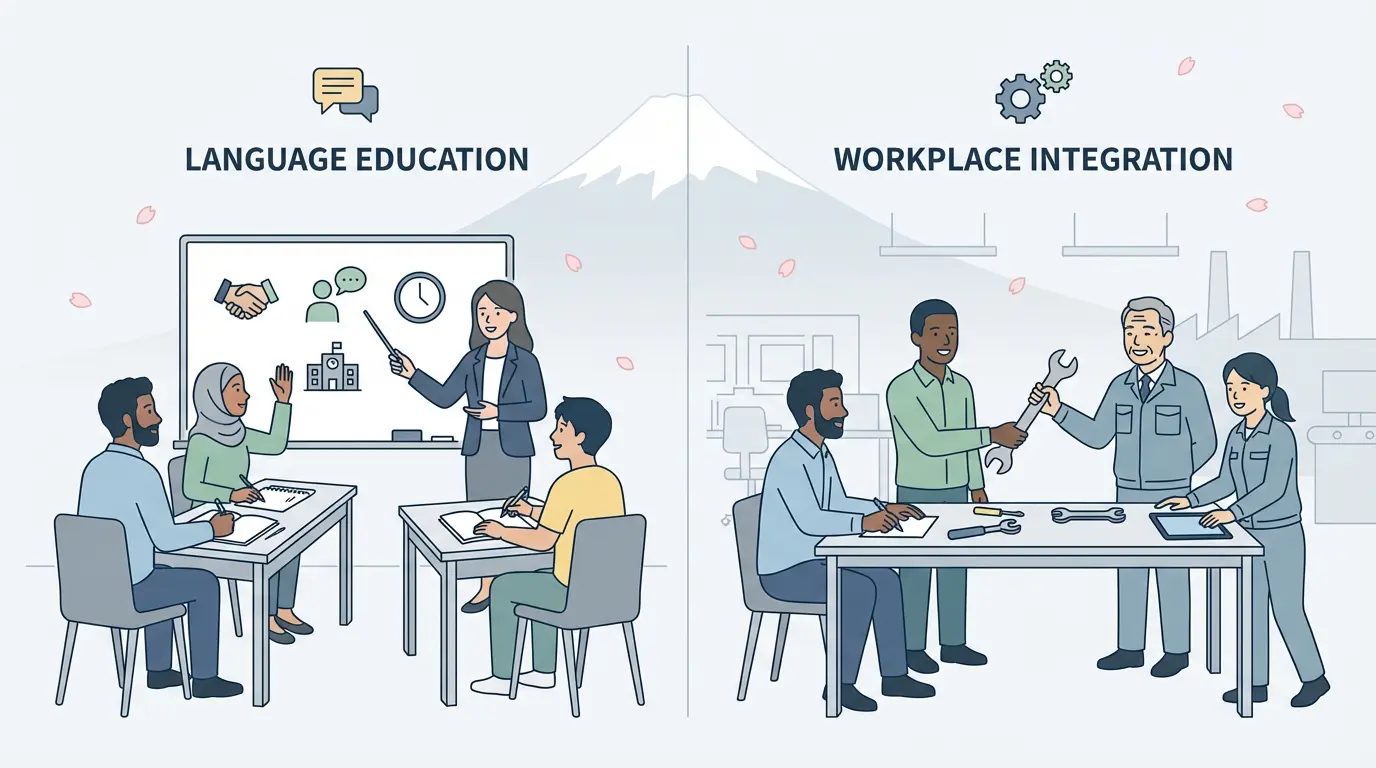
育成就労制度 and Japanese Language Requirements
The new 育成就労制度 raises Japanese language standards compared to the old 技能実習制度. Therefore, candidates must meet clearer ability conditions before and after arrival. The shift aims to improve workplace safety, communication, and career development for foreign trainees.
What changed from 技能実習制度 under 育成就労制度
- The law tightens language ability requirements. As a result, organizations now place more emphasis on test-based proof of ability. For example, 36% of supervising bodies said they will accept only applicants who pass a Japanese language exam.
- Some organizations require learning before travel. Specifically, 16% answered they will have trainees study Japanese at schools before coming to Japan.
- Other organizations will provide training after arrival. For instance, 10% plan to teach Japanese once trainees arrive in Japan.
- Because rules are stricter, companies must adjust recruitment filters, contracts, and training schedules.
Practical impacts for companies and trainees
- Costs: Many groups expressed concern over who pays for Japanese education. Consequently, companies must decide whether they will fund prearrival or postarrival lessons.
- Compliance: Employers should document language checks and training plans. This action helps meet regulatory expectations and reduces legal risk.
- Recruitment: Firms may favor candidates with certified language scores. Therefore, sourcing channels and partnerships with sending-country schools will matter more.
- Education options: Employers can partner with language schools, use online courses, or require tests such as the 日本語能力試験. In addition, companies should review guidance from authorities like the Ministry of Health Labour and Welfare: Ministry of Health Labour and Welfare.
In short, 育成就労制度 increases the role of Japanese language ability in selection and integration. Companies and trainees should plan early, because language readiness now affects eligibility, training cost, and workplace performance.
| Aspect | 旧技能実習制度 | 育成就労制度 |
|---|---|---|
| Language requirements |
|
|
| Education timing |
|
|
| Cost responsibility |
|
|
| Acceptance criteria |
|
|
| Compliance and documentation |
|
|
| Employer actions |
|
|
Cost concerns under 育成就労制度
The shift to 育成就労制度 raises clear questions about who pays for Japanese language education. Many supervising organizations express worry over cost burdens. As a result, companies face new budget choices and possible contract changes. Experts note that firms must consider how much of the expense they will cover, because unclear rules can cause disputes.
Key concerns and observed trends
- Budget pressure: 監理団体 and other groups worry about rising education costs, and they ask who will carry these costs.
- Prearrival costs: 16 percent of organizations said they require trainees to study before arrival, which shifts cost timing and responsibility.
- Postarrival training costs: 10 percent plan to provide lessons after arrival, raising ongoing expense for host firms.
- Certification demand: 36 percent said they will accept only exam passers, which may increase upfront costs for candidates and employers.
Practical steps for employers
- Assess budgets early and forecast language training expenses for hiring cycles.
- Negotiate agreements with sending organizations and language schools to share costs fairly.
- Consider blended delivery, because online classes can lower costs while keeping quality.
- Document cost-sharing in contracts to avoid disputes and to improve compliance.
For guidance, employers can consult official resources such as the Ministry of Health, Labour and Welfare and the Japan International Training Cooperation Organization. In short, 育成就労制度 makes cost planning essential, and employers should act now to set clear policies and budgets.
Conclusion
The shift to 育成就労制度 will change how companies recruit and train foreign workers. It raises Japanese language standards and adds documentation responsibilities. Therefore, employers and trainees must prepare earlier and more deliberately.
Understanding language requirements matters because eligibility now links to certified skills. However, cost responsibility remains a key concern among supervising organizations. Companies should model budgets and agree cost sharing in writing. In addition, clear training plans help meet compliance and support workplace integration.
Nihoner.com offers an all in one platform for learners and employers. It includes a large Japanese dictionary and a pronunciation trainer. Moreover, structured courses guide learners step by step and include quizzes. Cultural context lessons help trainees use language confidently at work. The platform also tracks real progress, which builds learner confidence. Furthermore, employers can use these features to support structured onboarding and training plans.
In short, 育成就労制度 raises the bar for language readiness and cost planning. Therefore, act early, plan budgets, and use proven educational tools like Nihoner.com. With careful planning, companies can reduce risk and help trainees succeed.
Frequently Asked Questions (FAQs)
What is 育成就労制度?
育成就労制度 is the new program replacing 技能実習制度 from April 2027. It focuses more on skill development and workplace integration. Therefore, language ability becomes a clearer eligibility factor.
How do Japanese language requirements change?
The new rules tighten language conditions. For example, 36 percent of organizations will accept only exam passers. In addition, 16 percent require prearrival study and 10 percent plan postarrival lessons. As a result, certified scores matter more.
Who pays for language education?
Cost responsibility remains unclear in many cases. Managing organizations express concern about expense burdens. Experts advise companies to decide how much they will bear, because disputes can arise without clear agreements.
What should companies do now?
- Assess training budgets early
- Negotiate cost sharing with sending bodies
- Partner with language schools or online providers
- Document language checks and training plans
How can trainees prepare effectively?
Start study before applying when possible. Take recognized tests and keep records of scores. Also, ask employers about training plans and cost sharing. Planning early improves eligibility and workplace readiness.