Why is 鳩 used as endearment in Paper Mario?

Decrypting ‘鳩’ as a Form of Endearment: Fascinating Twists in Gaming Dialogue
In the colorful world of games and anime, language usage often takes on uniquely humorous and endearing forms. Have you ever come across the intriguing use of 鳩 (hato) meaning “pigeon” as a form of endearment? This creative choice appears in the dialogue of popular titles like Super Paper Mario, where Koopa playfully refers to ピーチ姫 (Pīchi-hime) or Princess Peach, as “鳩.” While this might seem unusual, it adds a curious layer to character interactions that capture fans’ imaginations.
But why “鳩”? Is there a deeper cultural or linguistic reasoning behind this choice? Join us as we delve into the fascinating intersection of Japanese language and culture with gaming, unlocking why such unexpected terms enhance storytelling in surprising ways. Whether you’re a fan of Super Paper Mario, an enthusiast of Japanese culture, or simply curious about language, you’re in for an analytical journey!
The use of 鳩 (hato) meaning “pigeon” or “dove” as an endearment feels surprising at first. Yet in Japanese fiction, writers often play with unexpected nicknames. In games and anime, unusual terms give characters personality and tone. For example, a Koopa in Super Paper Mario calls out ピーチ姫 (Pīchi hime) meaning “Princess Peach” followed by 鳩. This scene suggests affection rather than literal comparison.
Compared with common endearments such as “darling” or “anata,” 鳩 reads playful and idiosyncratic. Authors may pick animal names to make speech feel quirky or comic. In addition, short animal nicknames can soften commands and show fondness without formal phrasing. Therefore, a brusque villain sounds kinder when using an odd pet name.
Because Japanese lets writers bend register freely in fiction, 鳩 as a form of endearment acts like a stylistic choice. It signals character, mood, and humor at once. If you want to study register shifting and nicknames further, read more about Japanese grammar at Japanese Grammar.
Micro FAQ
What does 鳩 imply when used affectionately?
It usually reads playful or teasing rather than literal. Context decides tone.
Is this common in real speech?
Rarely. It is mostly a fictional device.
Checkpoint: 鳩 here functions as a quirky affectionate tag that shapes character voice.
Join a progress tracking promise to study subtle nuance and register shifts at Register for Free Membership to build small wins and steady clarity and certainty as you learn.
Evidence from Super Paper Mario
The author replayed a childhood favorite in Japanese and observed the line: ピーチ姫~鳩 (Pīchi-hime 〜 hato) meaning “Princess Peach~pigeon” used as a shouted call. ピーチ姫 (Pīchi-hime) means “Princess Peach” and is a direct title used in the game.
The single word 鳩 (hato) means “pigeon” or “dove” and here likely functions as an affectionate or playful tag rather than a literal bird reference. 鳩 (hato) meaning “pigeon” can read quirky or teasing depending on tone and context.
The author notes the research gap: “I could not find any information on why he calls out like this.” This underlines how niche localization choices often lack clear documentation.
The author also asked: “My only guess is that its a form of endearment like ‘darling,’ is there a specific reason as to why this is used?” That hypothesis fits fictional register play.
Interpretations
Context suggests character humor and voice shaping. Using an odd animal name softens aggression and signals affection.
Fiction allows creative endearments that real speech rarely uses.
Try this now checkpoint: Rewatch the clip and note speaker tone to test whether 鳩 feels teasing or sincere.
For clearer pronunciation and native audio to master such nuances, explore Nihoner’s pronunciation training with native audio for targeted practice and feedback. See pricing at Nihoner’s pricing.
For practice exercises and tools, check Nihoner’s AI Pronunciation Trainer.
Join a micro win invitation at Nihoner’s Free Membership to start one small daily listening exercise and build clarity and certainty while earning steady micro wins as you learn.
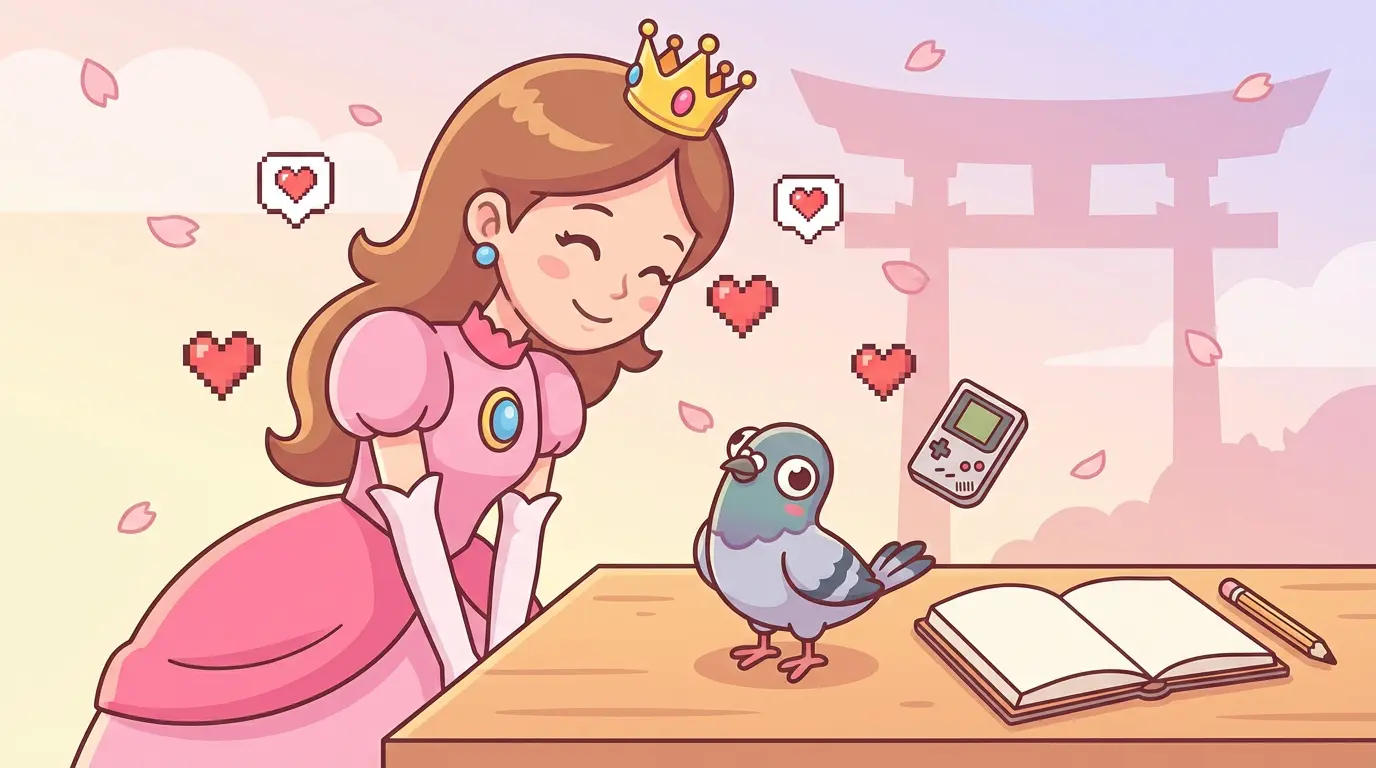
An example of a playful, unusual endearment in a game dialogue
鳩 as a form of endearment appears odd at first, yet it fits a pattern of playful, character driven nicknames in anime and games. Below is a concise comparison of common Japanese endearments and unusual or context specific tags such as 鳩 (hato). 鳩 (hato) meaning “pigeon” or “dove” used here reads quirky and affectionate in fictional speech.
| English label | Japanese example with note | Typical tone or register | Common contexts and perception |
|---|---|---|---|
| Darling | ダーリン (daarin) meaning “darling” borrowed from English. Used casually between lovers | Intimate, informal | Seen in romcoms and games as a cute loanword choice |
| Honey | ハニー (hanī) meaning “honey” borrowed from English. Sweet and cutesy | Affectionate, playful | Pop culture, lighthearted characters |
| Sweetheart | 愛しい (itoshii) meaning “beloved” more formal and serious | Deeply affectionate, earnest | Romantic scenes, less common in playful anime |
| You used affectionately | あなた (anata) meaning “you” often intimate when used by partners | Personal, can sound old fashioned | Real speech among couples, not used lightly in games unless deliberate |
| Nickname suffix | ちゃん (chan) meaning informal diminutive used on names | Cute, familiar | Common in anime and daily speech for close friends or children |
| Animal or odd tag | 鳩 (hato) meaning “pigeon” or “dove” used here as a quirky affectionate tag | Playful, teasing, idiosyncratic | Typical in fiction to shape a speaker voice such as a Koopa calling ピーチ姫 (Pīchi-hime) meaning “Princess Peach” with a cheeky tag |
Notes: Unusual tags like 鳩 (hato) function as stylistic shortcuts to show character attitude and to soften or mock a line without heavy grammar changes. In a game like Super Paper Mario, the choice reveals tone and adds humor while keeping phrasing tight for gameplay scenes.
For deeper study of register and playful nicknames, see Nihoner’s grammar resources at Nihoner’s grammar resources.
Micro win invitation: Try one short listening exercise today and notice how tone changes meaning. Register for guided practice at Nihoner’s free membership for steady progress and clearer confidence as you learn. Clarity and certainty plus micro wins will make quirky lines like this easier to decode.
Premium tip: If you struggle to hear nuance, consider Nihoner’s pronunciation training with native audio for focused feedback. Learn more at Nihoner’s pricing.
CONCLUSION
Our look at 鳩 as a form of endearment shows how playful register choices enrich character voice in games and anime. When Koopa calls out ピーチ姫~鳩 in Super Paper Mario, the single-word tag likely functions as a quirky affectionate marker rather than a literal bird reference. Because fiction accepts unconventional nicknames, writers use terms like 鳩 to signal teasing, warmth, or ironic affection and to shape a memorable speaker style.
Understanding these subtleties helps learners decode tone, character intent, and cultural nuance. As you study Japanese, noticing where authors bend register will sharpen listening and speaking skills and increase confidence when interpreting odd or playful lines.
Nihoner is an all in one platform for learners who want that edge. The site offers a large Japanese dictionary, a pronunciation trainer, structured courses, SRS flashcards, and cultural content that links language to real media examples. These tools help you move from curiosity to confident speaking by teaching nuance, tone, and register in context.
Try this now: practice listening for tone in a short clip and note whether a word feels teasing or sincere. If you want guided practice and native audio feedback, join Nihoner to build steady progress.
Frequently Asked Questions (FAQs)
What does 鳩 (hato) meaning “pigeon” or “dove” as a form of endearment mean in games and anime?
In fiction 鳩 as a form of endearment usually reads playful or teasing. For learners the mainKeyword 鳩 as a form of endearment signals a stylistic nickname. Because writers bend everyday register, the tag often softens lines and adds character flavor rather than literal meaning.
Is 鳩 used like this in everyday Japanese speech?
Rarely. In contrast most real speakers prefer clear terms such as darling or anata. Fictional media like anime and games popularize odd tags for comic or dramatic effect. Therefore treat 鳩 here as a creative device rather than common usage.
Why would Koopa call out ピーチ姫 (Pīchi hime) meaning “Princess Peach” followed by 鳩 in Super Paper Mario?
Context matters. Koopa calling ピーチ姫 (Pīchi hime) meaning “Princess Peach” plus 鳩 highlights teasing affection and character voice. For example the line suggests familiarity, mock romance, or playful insult depending on tone. Listen for vocal cues to decide whether it reads sincere or ironic.
How should learners approach unusual endearments when studying Japanese?
Focus on context, tone, and speaker role. Next, compare with common endearments like darling to see register differences. Finally practice with short clips and repeat aloud to build ear training.
How can I practice these nuances effectively?
Try short daily listening drills. In addition shadow characters aloud and note tone shifts. For targeted practice join a micro win invitation at Nihoner for one small daily exercise to boost clarity and certainty while earning steady micro wins as you learn.