How to use oshi and oshikatsu in conversation?


Oshi and Oshikatsu: Decoding Modern Japanese Fan Culture
Oshi and oshikatsu appear at the center of many online and offline fan conversations. Oshi (推し, oshi) meaning “a fan’s chosen favorite” tells you who a supporter loves. Oshikatsu (推し活, oshikatsu) meaning “activities done to support an oshi” shows how fans express that love through events and sharing. Because these terms shape how fans talk about idols, actors, and athletes, learning them gives you cultural clarity and reduces confusion.
This short hook explains why the terms matter. For example, knowing them helps you follow social posts, buy the right event tickets, and join conversations respectfully. In addition, learning the vocabulary makes navigating fandom less intimidating. As a result, you can participate with confidence and feel more like an informed observer.
Checkpoint: oshi names your favorite performer, and oshikatsu describes the actions you take to support them.
oshi and oshikatsu: origins and meaning
Oshi and oshikatsu come from the verb 推す (osu) meaning “to recommend”. 推す (osu) is the root that turned into the noun oshi, used when a fan picks a favorite performer or player. Oshikatsu combines that noun with 活動 (katsu) meaning “activity” to describe the actions fans take. Because these terms are common across idol, anime, and sports communities, they give clear cultural signals about loyalty and support.
The cultural significance runs deep. For example, oshi names who you emotionally support, and oshikatsu shows how you show that support in public. The phrase oshikatsu entered mainstream awareness and was longlisted for Japan’s Words of the Year in 2021, so it now shapes modern fan conversations. In addition, oshikatsu evolved from private enthusiasm into organized group activities, social posts, and shared rituals.
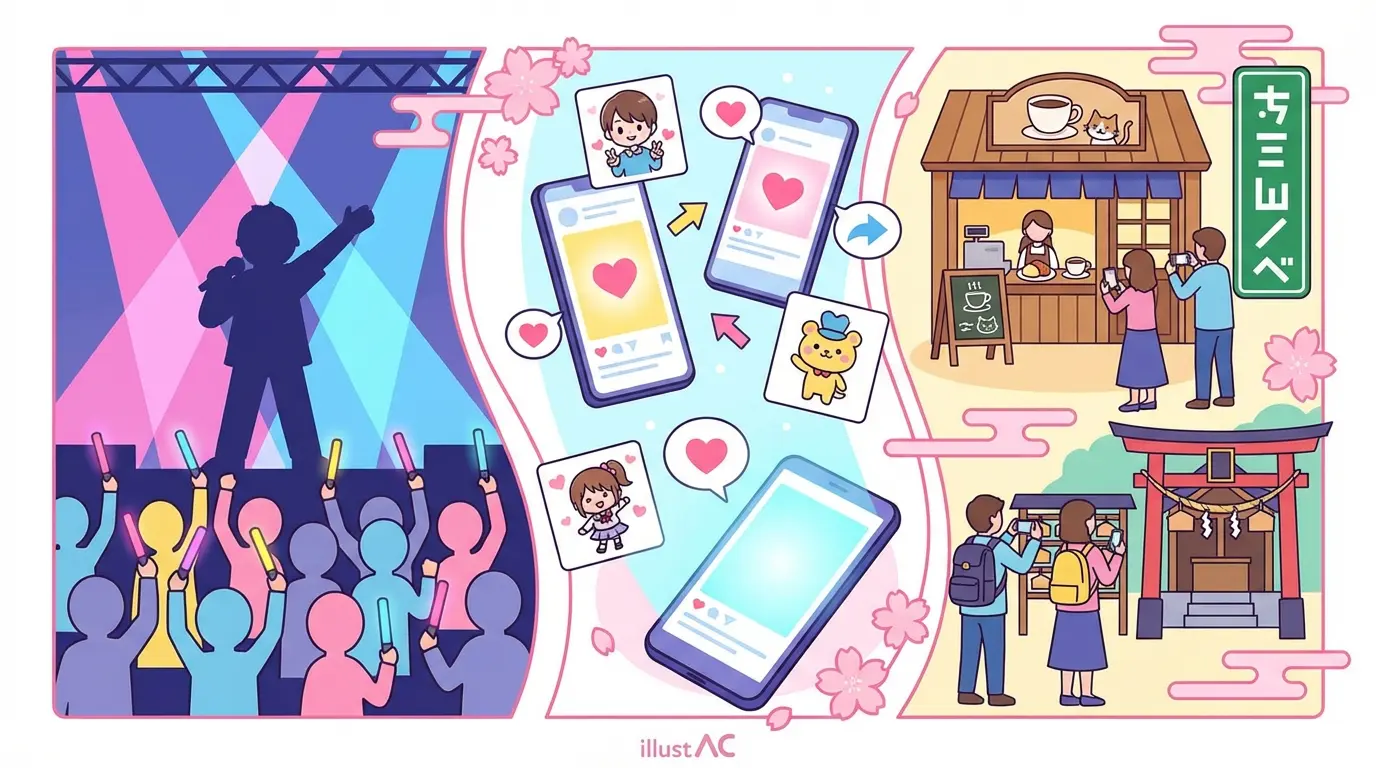
Common oshikatsu activities include:
- Attending concerts and live events to see the oshi in person
- Sharing recordings and fan art on social media to boost visibility
- Buying merchandise or grouped gifts at events
- Visiting real locations linked to the oshi as a form of pilgrimage
If you want a guided path, Nihoner helps you learn this slang and measure progress with clear milestones. Join to track your vocabulary growth and cultural fluency: Nihoner Free Membership.
For structured practice, see beginner lessons at Nihoner Beginner Lessons.
Checkpoint: oshi names your favorite, and oshikatsu describes the supportive actions you take.
Credit Illust AC
oshi and oshikatsu: common expressions and etiquette
Knowing these phrases offers clarity about fan roles and expected behavior. Below are the core expressions you will see in Japanese fandom, with romaji, translations, and usage notes.
- 推し (oshi) meaning “your chosen favorite”. Use when naming the idol actor or athlete you support. For example, say “My oshi is…” in casual chats.
- 推し活 (oshikatsu) meaning “support activities”. Use to describe what you do to help your oshi, like attending shows or sharing posts.
- 推しメン (oshi men) meaning “favorite member”. Often used in idol groups to point out one specific performer.
- 箱推し (hako oshi) meaning “box support” or “support for the whole group”. Use when you like every member rather than one person.
Etiquette and social rules to follow in Japanese fan communities:
- Respect privacy and personal boundaries. Do not follow performers outside public events.
- Follow venue and event rules. For example, obey photo and recording restrictions.
- Credit fan art and recordings when sharing. Give the original creator clear attribution.
- Be mindful online. Avoid targeted harassment and flame wars because they harm community trust.
If you struggle with pronunciation, Nihoner offers native audio for correct intonation. This feature helps you sound natural and reduces anxiety when speaking; see pricing details here: Nihoner Pricing. For hands on practice, try the AI pronunciation trainer: AI Pronunciation Trainer.
Try a quick micro lesson and register free to collect fan slang flashcards: Free Membership.
Checkpoint: Learn the phrase, practice the pronunciation, and track your progress with clear milestones.
oshi and oshikatsu activity comparison
| Activity or term | Meaning | Example | Etiquette notes |
|---|---|---|---|
| 推し (oshi) | meaning “your chosen favorite”. | The person a fan supports emotionally and publicly. | Saying “My oshi is…” in casual chat. Respect personal boundaries and avoid stalking outside public events. |
| 推しメン (oshi men) | meaning “favorite member”. | A single favorite within an idol or group. | Pointing out one performer during a group interview. Do not pressure others to change their oshi preferences. |
| 箱推し (hako oshi) | meaning “support for the whole group”. | Liking the entire group rather than one person. | Buying a group photo at an event. Share space and voice so every fan can enjoy the event. |
| 推し活 (oshikatsu) | meaning “support activities”. | Actions taken to promote or support an oshi. | Attending shows or sharing fan art online. Follow venue rules and give credit when sharing creations. |
| Concerts and live events | Live support where fans gather to see the oshi perform. | Using glow sticks and cheering on cue. | Follow venue recording rules and local noise guidelines. |
| Social media boosting | Sharing content to increase visibility for the oshi. | Posting clips or fan art with tags. | Attribute sources and avoid reposting private content. |
| Pilgrimage visits | Visiting locations tied to an oshi as a fan ritual. | Touring a cafe or shrine linked to the performer. | Be respectful to locals and private property when visiting. |
Quick note: this table helps you scan differences and follow etiquette with clarity.
Conclusion: why oshi and oshikatsu matter for learners
Understanding oshi and oshikatsu gives you direct access to modern fan conversations in Japan. When you know these terms, you follow social posts more easily, join event culture with confidence, and understand what fans mean by recommendations and pilgrimages.
Nihoner supports this learning with a clear, fast, and consistent platform. You get structured courses that build vocabulary logically and smart flashcards that help you review efficiently. Pronunciation training guides your speaking, and native audio helps you learn correct intonation so you sound natural in fan chats. In addition, Nihoner includes practical content about Japanese life and culture to make learning relevant and usable.
Because progress matters, Nihoner shows clear milestones so you see improvement at every step. Therefore you can measure gains and plan what to study next with certainty. For a focused start, try the beginner course here: beginner course.
Progress tracking promise: Join Nihoner free and keep a visual record of vocabulary and slang milestones. This helps you stay motivated and see steady improvement. Register now to begin: free membership.
Frequently Asked Questions (FAQs)
What does oshi mean and how is it used?
推し (oshi) meaning “your chosen favorite” identifies the performer you support. Use it in casual conversation to name who you admire. For example, say “My oshi is…” to introduce your favorite.
What is oshikatsu and what activities does it include?
推し活 (oshikatsu) meaning “support activities” covers attending concerts, sharing posts on social platforms, buying merchandise, and visiting places tied to the oshi. In addition, oshikatsu often becomes a shared ritual among fans.
Is oshikatsu only for idol fans?
No. Fans of actors, athletes, and creators also practice oshikatsu. For example, sports fans cheer for their athlete oshi at games and online.
What etiquette should I follow when joining fan groups?
Respect privacy and follow event rules. Credit creators when sharing fan art. However, avoid doxxing and public harassment because these actions harm the community.
How can I learn correct pronunciation of these terms?
Practice with native audio and short drills. In addition, listen to native speakers and repeat to build confidence.
Checkpoint: Know the terms, follow etiquette, and practice with native audio for clarity and progress visibility.